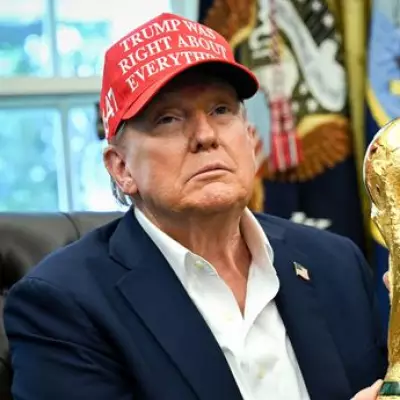
The political landscape for Britain's next general election may have been fundamentally altered by an unexpected intervention from across the Atlantic. Former US President Donald Trump's recent threat to launch a punitive trade war against Britain and its European allies, ostensibly over his desire to acquire Greenland, has sent shockwaves through Westminster, potentially influencing the fate of several key political figures.
Starmer's Sycophancy and a Prime Minister's Demise
The immediate fallout has exposed significant vulnerabilities within the current political establishment. Sir Keir Starmer, the Labour leader, emerges as a clear casualty. His history of what critics call embarrassing deference to Trump now appears profoundly misguided, particularly as the former President proposes vindictive new tariffs against America's supposed closest ally. This move has been labelled by some as the most shockingly anti-British act from Washington since the 1956 Suez Crisis.
Even Starmer felt compelled to offer a rare, tremulous criticism of his "domineering American master," though it is unlikely to salvage his position. Meanwhile, the current Prime Minister's strategy of sycophancy is seen to have yielded nothing, potentially sinking him lower in public esteem and hastening an inevitable political demise.

Nigel Farage's Trump Dilemma
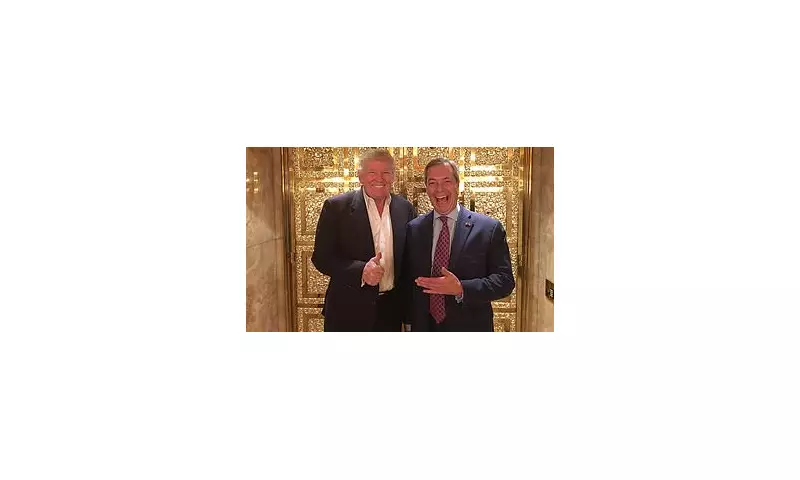
The most complex and potentially decisive impact, however, may be on Nigel Farage, the leader of Reform UK. Farage faces an acute dilemma. He has long been an open admirer and friend of Donald Trump, standing by him during legal challenges after his first term. The two share ideological ground on numerous issues, and Farage has publicly noted virtues in Trump's character.
This deep alignment makes it exceptionally difficult for Farage to disown Trump now, even if he wanted to create distance from the increasingly outrageous occupant of the White House. The risk is clear: Reform's support base is largely defined by patriotism and a desire for national sovereignty, having voted for Brexit to avoid being bossed by foreign powers. Trump's aggressive, anti-British trade threats directly contradict these core principles.
Farage is acutely aware of the precedent set in Canada's last federal election, where Pierre Poilievre's Conservatives slumped to defeat after voters judged him too close to Trump. Reform has moved quickly to condemn the tariff plan, with head of policy Zia Yusuf stating the party was "gravely concerned" and warning it would harm British manufacturers and workers.
The Burden of Past Sympathies
Compounding Farage's problem is his controversial past record regarding Russia. While often exaggerated, his past admiration for Vladimir Putin—whom he once said he admired more than any other world leader—and his party's historical links to pro-Putin figures like the jailed former MEP Nathan Gill, leave him vulnerable. This is a vulnerability that both Labour and the Conservatives are already exploiting.
The central question for voters becomes: would a Britain run by Nigel Farage stand up to Vladimir Putin and avoid being a lapdog to an unreliable American President? As Conservative leader Kemi Badenoch asserted, Reform presents itself as insurgent but displays "no serious interest in national security at all," a charge she underscored by noting Robert Jenrick's recent defection speech ignored foreign affairs entirely.
In an increasingly unstable world where the US appears as much an adversary as an ally, foreign policy credibility matters more than it has in decades. Nigel Farage, carrying significant baggage from his pro-Trump and past pro-Russian sentiments, has a mountain to climb to convince the electorate that a Reform government would conduct a robust, independent foreign policy that truly stands up for British interests.