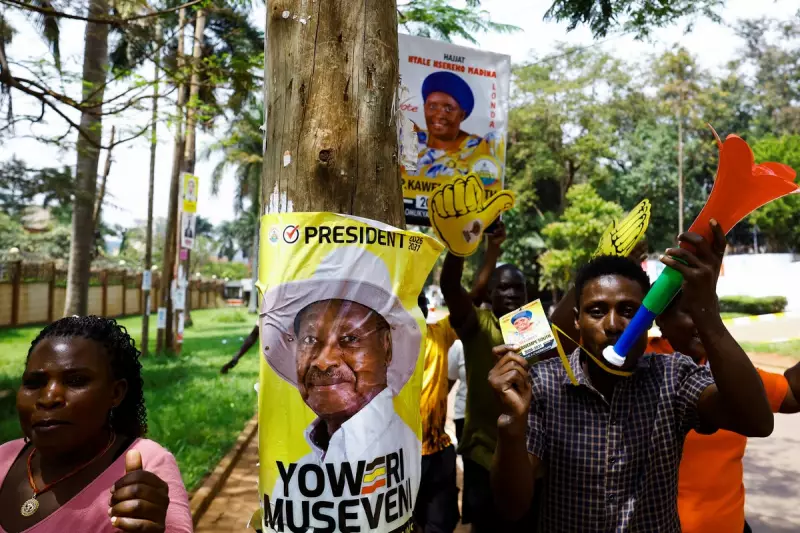
Uganda's long-standing leader, Yoweri Museveni, has been declared the winner of a controversial presidential election, securing an unprecedented seventh term in office. The official results, announced on Saturday 17 January 2026, handed the 81-year-old incumbent a commanding 71.65 per cent of the vote.
Opposition Leader Alleges Widespread Fraud
His primary challenger, the musician-turned-politician Bobi Wine, whose real name is Kyagulanyi Ssentamu, garnered 24.72 per cent and immediately rejected the outcome. Wine denounced what he called "fake results," alleging systematic manipulation to keep Museveni in power.
In a forceful statement, he claimed there had been "massive ballot stuffing" and that numerous agents from his National Unity Platform party had been abducted to prevent them from monitoring the count. He urged his supporters across Uganda to protest the result, but to do so peacefully.

An Election Marred by Technical Failures and Shutdowns
The voting process was far from smooth, particularly in areas known to support the opposition. Biometric voter identification machines failed in many districts, forcing officials to resort to a manual verification process that critics say was open to abuse.
Compounding the atmosphere of distrust, the government imposed a widespread internet shutdown during the election period, severely limiting communication and the ability to independently verify reports of irregularities from across the country.
A Nation Without Peaceful Presidential Transition
President Museveni, who first took power in 1986, has now extended his rule to over four decades. He has maintained his grip on the presidency by overseeing the removal of constitutional term and age limits. Uganda has never witnessed a peaceful transfer of presidential power since gaining independence from Britain.
This latest victory, disputed by the opposition and observed under a cloud of technical issues and media restrictions, ensures his political dominance continues, while raising serious questions about the democratic process in the East African nation.