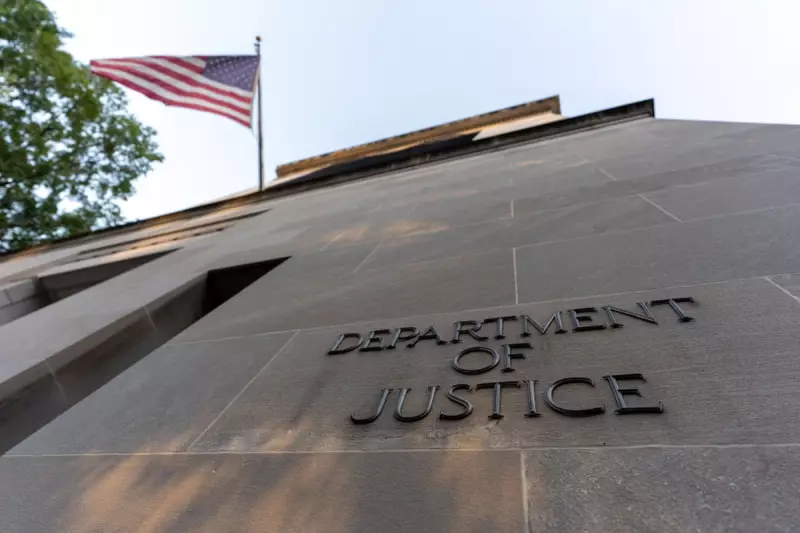
In a significant escalation of America's ongoing redistricting wars, the US Justice Department has formally intervened in a lawsuit seeking to block California's newly approved congressional map. The move sets the stage for a high-stakes legal and political showdown with national implications for the balance of power in the House of Representatives.
The Legal Challenge Escalates
The justice department announced on Thursday that it was joining a lawsuit originally filed by California Republicans. This legal action challenges the congressional map championed by the state's Democratic Governor, Gavin Newsom. The case is being heard in a federal court in California.
This redistricting effort, known as Proposition 50, was decisively approved by California voters, with nearly 65% voting in favour. The proposition suspended maps previously drawn by an independent commission and installed new House districts. Democrats have expressed confidence that these newly configured districts could help them flip up to five Republican-held seats in the 2026 midterm elections.

A Clash of Political Titans
The justice department's intervention pits the Trump administration directly against Governor Newsom, who is considered one of the president's chief antagonists and a potential contender in the 2028 presidential race.
US Attorney General Pam Bondi issued a strongly worded statement, declaring, "California's redistricting scheme is a brazen power grab that tramples on civil rights and mocks the democratic process." She added, "Governor Newsom's attempt to entrench one-party rule and silence millions of Californians will not stand."
In response, Brandon Richards, a spokesperson for Newsom, dismissed the legal challenge, stating, "These losers lost at the ballot box and soon they will also lose in court."
The Core of the Legal Argument
The plaintiffs in the case, represented by the Dhillon Law Group, assert that California's map improperly used race as a factor to heavily favour Hispanic voters, which they claim is a violation of the US Constitution. The lawsuit asks a judge to block the map from taking effect.
Jesus Osete, the second-highest ranking official in the Civil Rights Division, stated, "Race cannot be used as a proxy to advance political interests, but that is precisely what the California General Assembly did with Prop 50. Californians were sold an illegal, racially gerrymandered map, but the US Constitution prohibits its use in 2026 and beyond."
It is noteworthy that Harmeet Dhillon, founder of the Dhillon Law Group and now an assistant attorney general overseeing the US Department of Justice civil rights division, has been recused from this particular case.
National Implications for Power
This legal battle represents the most significant counterpunch by Democrats in an unprecedented redistricting conflict that began in Texas. The conflict has spread across the country as the Trump administration attempts to secure the House Republican's fragile majority for the final years of the president's second term.
Unlike in other states where Republican-led legislatures have enacted gerrymanders, California's plan required direct voter approval, which it received last week.
The outcome of this case carries immense weight. Democrats need to flip only a handful of Republican-held House seats to regain control of the chamber. The party that holds the majority will critically shape the final years of Trump's second term, determining whether a unified Republican Congress continues to advance his agenda or whether he faces renewed resistance, investigations, and the potential for a third impeachment attempt.