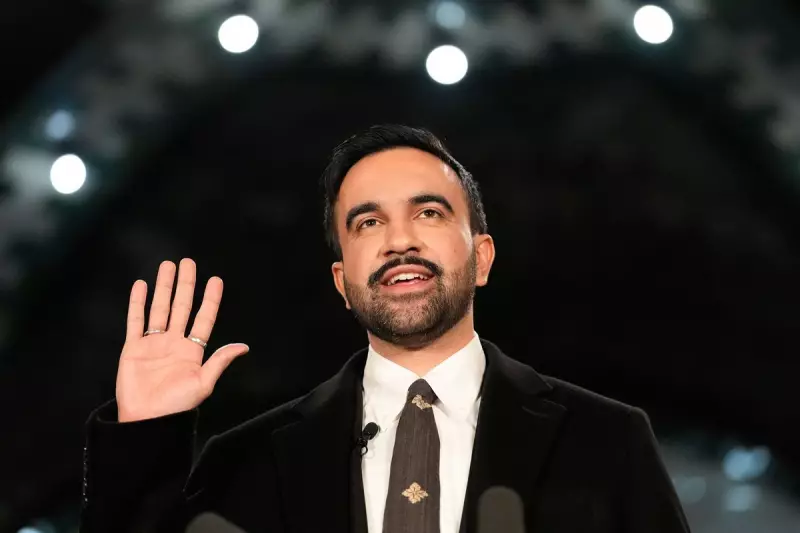
New York City has witnessed a historic and symbolic transition of power, as Zohran Mamdani was officially sworn in as its new mayor in the early moments of the new year.
A Ceremony of Firsts and Family Heritage
The inauguration took place at the symbolic stroke of midnight on New Year's Eve, marking the start of Wednesday 1 January 2026. In a powerful break with tradition, Mamdani became the first mayor in the city's history to take the oath of office using the Quran. This moment was deeply personal, as the sacred text used was a Quran once owned by his grandfather, adding a profound layer of familial heritage to the public ceremony.
The act of swearing in on the Quran underscored Mamdani's identity as New York City's first-ever Muslim mayor. His wife, Rama Duwaji, held the book for him during the solemn proceedings, which were conducted away from the typical grand settings.

An Unconventional Venue with Profound Meaning
Defying expectations, the historic event was held not in a grand hall but within an abandoned subway station situated directly beneath City Hall. Mayor Mamdani chose this unique location deliberately, imbuing it with significant symbolic weight for his administration's vision.
He explained that the forgotten underground space represented a city with the boldness to construct monumental projects aimed at transforming the lives of its working residents. Mamdani emphasised that this ambition to build great public works for the common good should not be relegated to history but must define the city's future.
Setting a New Tone for New York's Future
This dual symbolism—of the personal, religious text and the public, infrastructural venue—sets a distinct tone for Mamdani's mayoralty. It signals a leadership that intertwines personal conviction with a renewed commitment to public investment and civic ambition.
The midnight ceremony, rich in personal and political meaning, immediately establishes a narrative of change and representation. It marks a definitive moment in the diverse tapestry of New York's political history, highlighting the city's evolving identity and the new directions its leadership may pursue.