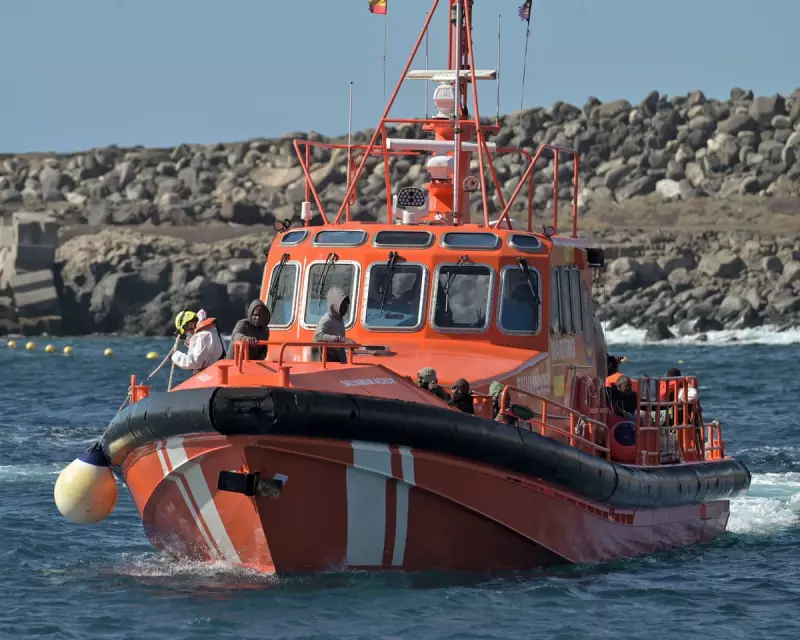
A new report has revealed that more than 3,000 people lost their lives attempting to reach Spain by sea in 2025, a significant decrease from the previous year's grim toll. However, human rights groups argue this decline is not a sign of safer passage, but a direct consequence of hardened border policies that are funnelling desperate migrants onto even more treacherous paths.
A Deadly Drop: Fewer Deaths, More Dangerous Journeys
According to data compiled by the non-governmental organisation Caminando Fronteras, a total of 3,090 individuals drowned between January and mid-December 2025. Among the victims were 192 women and 437 children. This figure, while staggeringly high, marks a steep fall from the 10,457 fatalities recorded in 2024.
Helena Maleno, the NGO's research coordinator, cautioned against interpreting the lower death toll as progress. She highlighted that the number of documented shipwrecks actually rose to 303, with approximately 70 boats vanishing completely without a trace. "This is because we've seen an increase in the number of embarkations on the dangerous route from Algeria to the Balearic Islands," Maleno explained. "These boats tend to carry around 30 people, whereas the ones on the Atlantic route to the Canary Islands may have up to 300 people on board."
The Impact of EU Border Deals and Shifting Routes
Official Spanish figures show a sharp decline in arrivals, with 35,935 irregular migrants reaching Spain by land and sea up to 15 December, compared to 60,311 in the same period of 2024. A major factor behind this drop is attributed to significantly tighter border policing, particularly in Mauritania.
In 2024, the north African nation entered into a €210 million migration partnership with the European Union. While aimed at curbing departures, a recent Human Rights Watch report accused Mauritanian authorities of systematic abuses against migrants, including rape and torture—allegations the government denies.
The Caminando Fronteras report details how these pressures are altering migration maps:
- The Atlantic route to the Canary Islands remains the deadliest, causing 1,906 deaths this year on voyages that can last up to 12 days.
- The Algeria-to-Balearic Islands passage is growing in popularity and proved fatal for 1,037 people in 2025.
- A new, extremely long route from Guinea to the Canaries, spanning 2,200km, has also emerged.
A Policy of "Necropolitics" and Inadequate Rescue Response
Maleno condemned what she described as a policy of "necropolitics," driven in part by far-right political influence, stating that "the persecution and witch-hunts of migrants is having a huge impact on human rights in Europe."
The report concludes that institutional responses to maritime disasters are "patently inadequate," citing persistent delays in launching rescue missions, insufficient resources, and a lack of political will to prioritise saving lives. The 3,090 victims originated from 30 countries across West and North Africa, as well as from nations including Pakistan, Syria, Yemen, Sudan, Iraq, and Egypt.