
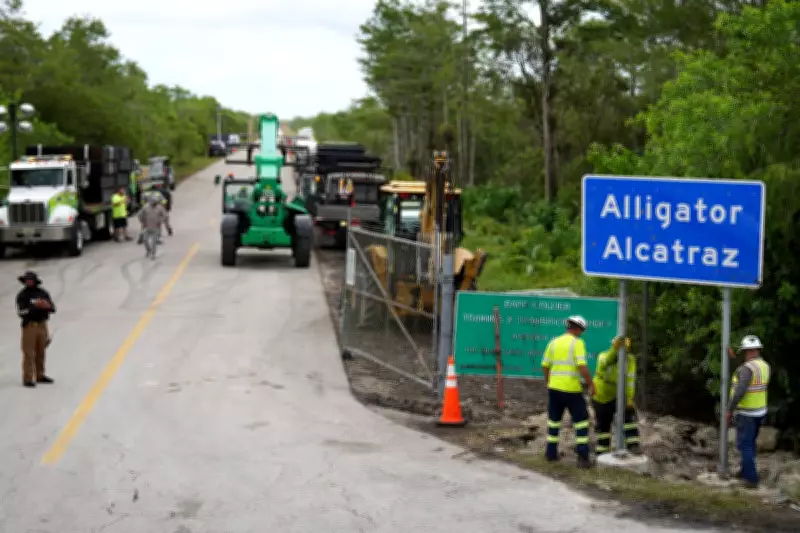
Florida's 'Alligator Alcatraz' Faces Legal Access Allegations
Former detainees at a Florida immigration detention centre, controversially nicknamed "Alligator Alcatraz," have testified that they faced punishment for attempting to secure legal advice. In disturbing video testimony presented in federal court, two men who have since been deported to Colombia and Haiti described being forced to write lawyers' contact information on walls and beds using soap, due to a severe lack of proper writing materials.
Restricted Communications and Coerced Signatures
The men testified remotely from their home countries during a two-day hearing in Fort Myers, using translators and only their initials to protect their identities. They claimed that monitored telephone calls to individuals outside the facility were routinely disconnected whenever they attempted to discuss legal matters or arrange representation. One former detainee from Haiti recounted being presented with documents he did not understand while at the facility, which he later discovered were for his self-deportation to Haiti—a country he feared returning to after seeking asylum in the United States.
He was subsequently given a second set of documents, which someone explained would lead to his self-deportation to Mexico. Out of fear of returning to Haiti, he signed these papers, but was ultimately sent back to Haiti regardless. This testimony forms part of a lawsuit alleging violations of First Amendment rights, with civil rights lawyers seeking a temporary injunction from US District Judge Sheri Polster Chappell to ensure detainees at the state-run Everglades facility receive equal access to legal counsel as those in federally-operated centres.
Systematic Barriers to Legal Representation
The detainees' lawsuit outlines multiple systematic barriers to legal access. Unlike other immigration detention facilities where attorneys can arrive during visiting hours, lawyers must schedule visits three days in advance at Alligator Alcatraz. Furthermore, detainees are reportedly often transferred to other facilities after their lawyers have made appointments, and scheduling delays have been so extensive that some have missed crucial legal deadlines entirely.
During Wednesday's hearing, Juan Lopez Vega, deputy field office director of ICE's enforcement and removal operations in Miami, testified that despite his job including oversight of detainees at the state-run facility, he had only visited the centre once. Vega had unsuccessfully attempted to quash a subpoena compelling his court appearance.
State and Federal Responses
State officials, who are defendants in the lawsuit, have denied restricting detainees' access to their lawyers, stating that any protocols were implemented for security reasons and to ensure adequate staffing. Federal officials, also named as defendants, asserted that no First Amendment rights were being violated. "Moreover, any Alligator Alcatraz policy regarding attorney-detainee communications is valid so long as it reasonably relates to legitimate penological interest," they wrote in court documents.
Multiple Legal Challenges and Expansion
This case represents one of three federal lawsuits challenging practices at the controversial immigration detention centre. Another lawsuit, concluded earlier this month, argued that immigration is a federal issue and Florida agencies and private contractors hired by the state lacked authority to operate the facility under federal law. In a third lawsuit, a federal judge in Miami last summer ordered the facility to wind down operations over two months because officials had failed to conduct an environmental impact review, though an appellate court panel has since put that decision on hold.
Florida has been at the forefront among states constructing facilities to support President Donald Trump's immigration crackdown. Beyond the Everglades facility, which began receiving detainees in July, Florida has opened another immigration detention centre in northeast Florida and is considering a third facility in the Florida Panhandle. The ICE detainee population, excluding Alligator Alcatraz and other state-run facilities, has roughly doubled to about 70,000 since President Trump took office, fuelled by a one-time injection of $45 billion for immigration detention.
Broader Pattern of Complaints
The Everglades facility is not alone in attracting criticism. Other detention centres across the United States, including ICE facilities at the Fort Bliss Army base in El Paso, Texas; one in Miami; and others in California City and Adelanto, both in California, face similar complaints regarding poor and insufficient food and lack of access to legal counsel. These allegations paint a concerning picture of systemic issues within immigration detention systems that extend beyond Florida's controversial facility.