Cartel Violence Leaves Puerto Vallarta in Ruins After Leader's Death
The gunmen may have departed, but their brutal signature remains etched across Puerto Vallarta. Scores of charred vehicles and burnt-out structures litter the city, each emitting the acrid odour of melted plastic. This grim aftermath is the singular local subject my taxi driver meticulously avoids during our journey from the airport, where police swarm the terminal. Later, a young barman will casually, yet inaccurately, refer to the events as 'the accident.'
A Deliberate Campaign of Terror
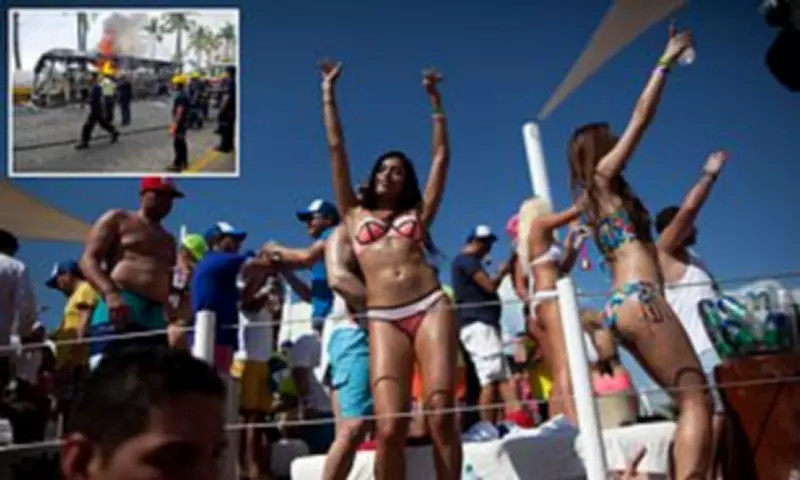
It was anything but an accident. However, discussing it with foreigners, particularly in a region Western governments have warned against all but essential travel, is a taboo. I arrived in picturesque Puerto Vallarta on a near-empty flight, an unthinkable scenario during peak season when holidaymakers typically flood its sun-drenched beaches and vibrant streets to enjoy mariachi music and margaritas.
Locals, whose livelihoods depend on tourism, desperately wish for that normality. Yet, startling global images last month of a beach resort resembling a war zone have shattered that hope. The US State Department recently issued a series of 'Do Not Travel' advisories, deterring thousands planning spring-break trips south.

Puerto Vallarta, long proud of its title 'la ciudad más amigable del mundo' (the friendliest city in the world), has been a premier Mexican destination since the 1960s when Richard Burton and Liz Taylor famously visited. Its allure has now dimmed.
The Spark: El Mencho's Demise
The chaos erupted following the Mexican government's killing of Nemesio Oseguera Cervantes, alias El Mencho, leader of the Jalisco New Generation Cartel (CJNG), Mexico's most feared criminal organisation. With crucial US intelligence assistance—the US had placed a $15 million bounty on his head—Mexican special forces tracked El Mencho to a remote mountain hideaway in Jalisco state.
The drug lord was killed on February 22 in a ferocious firefight that also claimed 25 troops and numerous cartel gunmen. In retaliation, the cartel unleashed a nationwide wave of violence, targeting Puerto Vallarta as a primary objective. El Mencho, a man so savage he forced recruits into cannibalism as initiation, had evaded capture for two decades, earning a 'ghost' reputation among investigators.
Tourist Haven Transformed
This marked a significant, albeit risky, victory for President Claudia Sheinbaum, who faces mounting US pressure to combat powerful narcotics cartels. The now-leaderless 20,000-member cartel exacted a heavy price, with shootings, roadblocks, and arson attacks spreading to 20 of Mexico's 32 states.
In a break from convention, the violence deliberately encroached on tourist areas. On February 22, thick black smoke billowed across Puerto Vallarta's typically flawless blue sky as young men armed with petrol cans and AK-47s torched vehicles, businesses, and petrol stations. Roads were blocked with burnt cars or spikes, and 23 inmates escaped after armed men rammed a prison gate.
Luis, a local waiter, explained: 'They hit our food, health, and transport. They wanted to tell people, 'We're not going to hurt you, but we're going to make you struggle.'' The greatest damage, he noted ruefully, was to the tourist economy, which sustains at least 70% of the local population.
Tourists Caught in the Crossfire
Miraculously, no fatalities were reported in Puerto Vallarta—drivers were removed before vehicles were ignited—as police avoided a major gunfight in the resort packed with tourists. Visitors were ordered to shelter in barricaded accommodations, witnessing the mayhem unfold. Some fled to the airport, with one US tourist describing a taxi driver praying with a rosary while dodging burning buses.
When the airport reopened, Scottish academic Robin Clugston and his family joined queues for 'rescue flights' back to Canada, having spent 48 hours confined to their resort. 'We certainly saw some agitated people,' he remarked, though the family vowed to return. A guest at a luxury hotel, once Burton's home, reported hearing gunshots and fearing a breach.

Broader Implications and Historical Brutality
Guadalajara, Jalisco's capital and a popular tourist destination, was similarly targeted, with false alarms causing panic. The city is slated to host 2026 FIFA World Cup matches, posing a nightmare for officials striving to portray Mexico as safe.
The CJNG's rise is marked by unspeakable savagery: dumping 35 bodies in Veracruz streets, raping and killing a ten-year-old girl, and operating an 'extermination ranch' with crematorium ovens. Equipped like a modern army, the cartel has shot down military helicopters and thrives on extreme violence.
El Mencho, son of poor avocado growers, began protecting cannabis fields as a teen, later serving as a state police officer before founding CJNG 15 years ago. His recruitment tactics included forcing initiates to consume victims' body parts, ensuring loyalty through terror.
Political Pressure and Future Uncertainties
President Sheinbaum faces a dire dilemma: crack down on cartels and risk a bloody war, or face potential US military action under pressure from figures like Donald Trump, who blames cartels for flooding America with fentanyl and illegal migrants. Fentanyl, responsible for nearly 70% of US overdose deaths, is a cheap, highly addictive product for cartels, with a kilo worth up to $30,000 in New York.
Trump has threatened to bomb Mexican fentanyl labs and cut cartels from the financial system, while critics argue that destroying one cartel only spawns others. The solution may lie in addressing US drug demand, but Sheinbaum must navigate between criminal ruthlessness and international pressure.
Despite government efforts led by security chief Omar Garcia Harfuch—who survived a 2020 cartel assassination attempt—Mexico's cartels have a history of resilience. Sheinbaum insists there is 'no risk' to World Cup fans, but how she can be certain after such devastation remains a haunting question for Puerto Vallarta and beyond.