Cocaine Bonded to Materials: New Smuggling Threat Evades Detection
In the 1980s, a peculiar shipment of blue jeans began arriving at American cargo terminals. These jeans were stiff, unusually heavy, and emitted a faint chemical odor reminiscent of mothballs. Officials grew suspicious upon noting their origin: Colombia. As investigations revealed, this was part of an elaborate smuggling plot orchestrated by drug lord Pablo Escobar. The jeans had been soaked in a solution of cocaine and water, then dried and hidden within legitimate clothing exports to the United States. Once across the border, the cocaine was extracted and sold at a significant profit.
The Evolution of Drug Trafficking Techniques
This ruse marked a revolution in drug trafficking. While smugglers had long concealed blocks of cocaine among everyday goods, embedding the drug into the goods themselves represented a new level of sophistication. Over the following decades, organized crime groups refined Escobar's approach by mixing cocaine with various carrier materials, including wax, printer ink, and paint. Cocaine has also been soaked into cardboard and even impregnated into plastic consumer products, such as fish tanks and car light fittings.
However, these methods of chemical concealment have inherent limitations. In each case, the cocaine is either mixed with another substance or dissolved in a solvent before being absorbed into a material. Since the drug remains present, it can typically be detected by sniffer dogs, chemical tests, and scanners. But law enforcement agencies have now identified a concerning development that challenges these traditional detection methods.

A New Frontier: Chemically Bonded Cocaine
According to the National Crime Agency (NCA), traffickers are no longer merely mixing cocaine with other substances. Instead, they are using sophisticated chemistry to chemically bond the drug to carrier materials. This process alters the cocaine's molecular structure, transforming it from cocaine hydrochloride into a different compound. As a result, sniffer dogs and conventional scanners often fail to detect it.
The NCA describes this chemically bonded cocaine as a relatively rare variant within the broader phenomenon of chemical concealment. Despite its rarity, concern has reached the highest levels of law enforcement. The NCA referenced the issue in its annual National Strategic Assessment for the first time this week, following a similar warning from Europol.
Graeme Biggar, the NCA's director general, explained that chemists are bonding the drugs in South America before flying to the UK to extract them at the destination. Police have identified 150 cases of chemical concealment worldwide since 2022, with a small number involving chemically bonded cocaine. Some cases also involve nitazenes, a synthetic opioid hundreds of times more powerful than heroin.
Case Studies and Law Enforcement Challenges
Adam Thompson, head of drugs threat at the NCA, has observed a really significant change in traffickers' techniques. Physical mixing and camouflaging have been occurring for years, but over the last two to three years, we've seen a real step change in the complexity of methods used by crime groups, he stated in an exclusive interview with the Daily Mail. They are not just mixing or impregnating the cocaine—they are changing its chemical make-up to bond it to the carrier material. That makes it a different substance, so a lot of the testing around the world has not been able to pick it up.
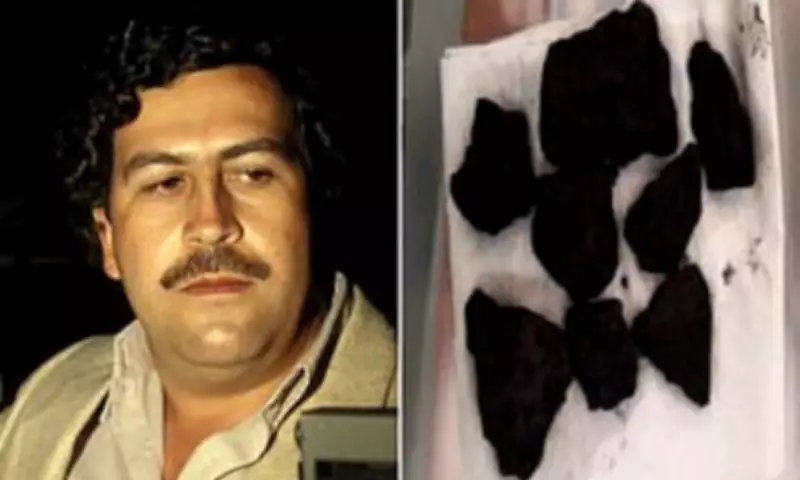
The technical prowess of modern drug traffickers was starkly illustrated in a shipment that arrived at London Gateway Port from Panama in June 2023. Upon opening the container, NCA officers found what appeared to be 800 sacks of charcoal. Closer inspection revealed it was fake and contained a chemically bonded form of cocaine. Two men, aged 50 and 31, were later arrested in Leicestershire on drug importation charges and have since been released under investigation.
In another plot busted in 2021, a gang smuggled £1 million worth of Colombian cocaine into the UK by dissolving it in varnish. They then brushed the varnish onto the handles of 580 brooms, rendering it invisible to the human eye. Six members of the gang were subsequently jailed.

Extraction Labs and International Implications
Labs linked to the extraction and processing of cocaine from carrier materials are being discovered across mainland Europe in significant numbers. Between 2020 and 2023, 76 such sites were found in the Netherlands alone. A year later, police identified the first cocaine extraction lab on UK soil.
Mr. Thompson emphasized that the processes used to chemically bond cocaine are so complex that the same chemist must be involved at each stage. Every chemist has a different recipe and methodology, so only the person who locked the cocaine into the carrier material knows how to unlock it—that's why we see them travelling from source to destination, he explained. We've had a handful of chemical extraction labs detected in the UK so far—less than ten. All are under active investigation, with two or three people discovered in each, including some South American nationals.
Impact on Drug Seizures and Broader Trends
Chris Dalby, director of policy advisory group World of Crime, has researched chemically concealed cocaine and calls it one of the most important and least addressed evolutions in drug trafficking. He believes it is a major factor behind lower cocaine seizures at large carrier ports like Rotterdam, Europe's largest, which reported a 40 percent decline between 2023 and 2024.
Laurent Laniel, an analyst at the European Union Drugs Agency (EUDA), described chemical camouflage as one of several hypotheses to account for the drop in seizures. However, other factors may also play significant roles. These include the rise of at-sea drop-offs, where drugs are carried from South America to Europe on container ships before being picked up by smaller boats offshore, and the use of narco subs to transport cocaine across the Atlantic to Europe. British police recently helped seize a record nine-tonne haul from a semi-submersible near the Azores.
Law Enforcement Response and Future Outlook
Adam Thompson stated that the NCA is adopting an intelligence-led approach to identify suspicious cargoes that warrant detailed forensic testing. The agency is also collaborating with international partners to develop new testing methods for deployment at borders.
Despite these efforts, with testing technology seemingly playing catch-up with cartels, questions arise about whether vast amounts of cocaine are flowing into Britain undetected. Mr. Thompson believes this is unlikely. Our assessment is it's relatively small scale—it's a complex process that will cost organized crime groups a lot of money and require highly specialised chemists, he said. We still see these groups using more traditional methods of importing cocaine that would cost them less money.
Gary Goldberg, a former chemist at the Drug Enforcement Administration (DEA) and an expert in chemical concealment, also doubts that the UK is facing a deluge of concealed cocaine. His reasoning, however, is hardly reassuring. Given the record volume of cocaine being produced in South America, the drug is now cheaper and purer than ever. Consequently, Mr. Goldberg questions why most gangs would resort to such extreme concealment methods. Having some of your shipments seized is just seen as the cost of doing business, he remarked. So why would criminals put in so much effort when they don't need to?
This ongoing cat-and-mouse game between traffickers and law enforcement underscores the evolving challenges in combating drug smuggling, with chemically bonded cocaine representing a sophisticated new threat that demands innovative countermeasures.