A federal appeals court has delivered a significant blow to a pro-Palestinian activist and Columbia University graduate, ruling that a lower court judge overstepped his authority by ordering his release from immigration detention.
Court Ruling Paves Way for Potential Re-arrest
In a 2-1 decision on Thursday, 15 January 2026, a panel of the Philadelphia-based 3rd U.S. Circuit Court of Appeals reversed the order that freed Mahmoud Khalil. The ruling represents a notable win for Donald Trump’s administration in its push to deport the prominent activist.
The court's decision effectively clears the path for immigration authorities to potentially re-arrest Khalil. Furthermore, it ordered the dismissal of a lawsuit he had filed challenging his initial detention by U.S. Immigration and Customs Enforcement (ICE).
Judges Thomas Hardiman and Stephanos Bibas, both appointed by Republican presidents, formed the majority. They argued that the Immigration and Nationality Act dictates Khalil's claims must be heard through an appeal of a final deportation order from an immigration judge, not through a separate federal lawsuit.
"The scheme Congress enacted governing immigration proceedings provides Khalil a meaningful forum in which to raise his claims later on—in a petition for review of a final order of removal," the judges wrote in an unsigned opinion.
Arrest and Controversial Detention
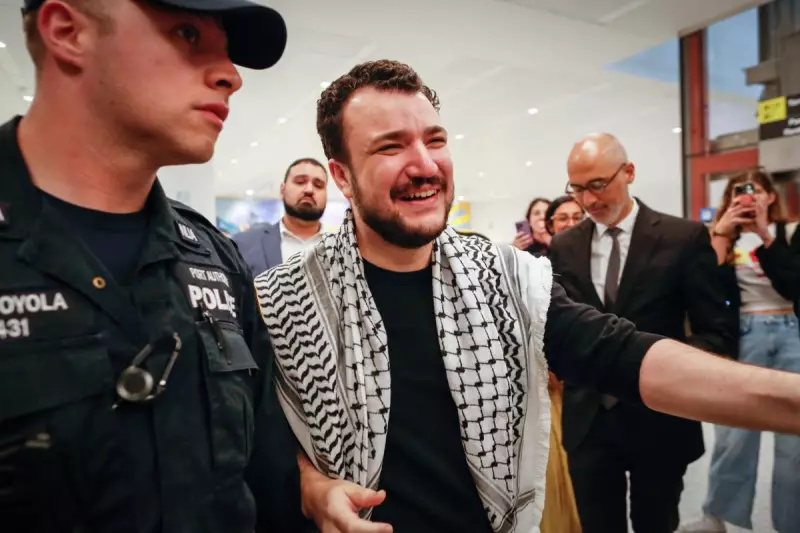
Mahmoud Khalil was arrested on 8 March by ICE agents in the lobby of his university residence in Manhattan, New York. A leading voice in campus protests against Israel's war in Gaza, he became the first individual targeted under a policy announced by President Trump, who had labelled such demonstrations as antisemitic and vowed to deport involved foreign students.
Following his arrest in front of his then-pregnant wife, Khalil was stripped of his green card and transferred to an ICE detention centre in Louisiana, approximately 1,300 miles from his New York home.
Although officials acknowledge Khalil has not been accused of any crime, Secretary of State Marco Rubio sought to justify the action. He invoked a rarely used law, arguing that Khalil's presence in the United States undermined foreign policy interests aimed at preventing antisemitism.
Khalil and his legal team have forcefully rejected allegations of engaging in "antisemitic activities."
Legal Journey and Implications
Khalil's case saw complex jurisdictional moves. Initially detained in New York, he was moved to New Jersey by immigration officials by the time his lawyer filed suit, leading to the case being transferred.
His release in June came by order of U.S. District Judge Michael Farbiarz of Newark, New Jersey, who directed the Department of Homeland Security to free him from the Louisiana facility. This latest appeals court ruling nullifies that judicial intervention.
The dissenting judge in the 3rd Circuit's decision has not yet publicly issued an opinion. Khalil did not immediately respond to requests for comment following the ruling, which now sends his immigration battle back into the standard removal proceedings.