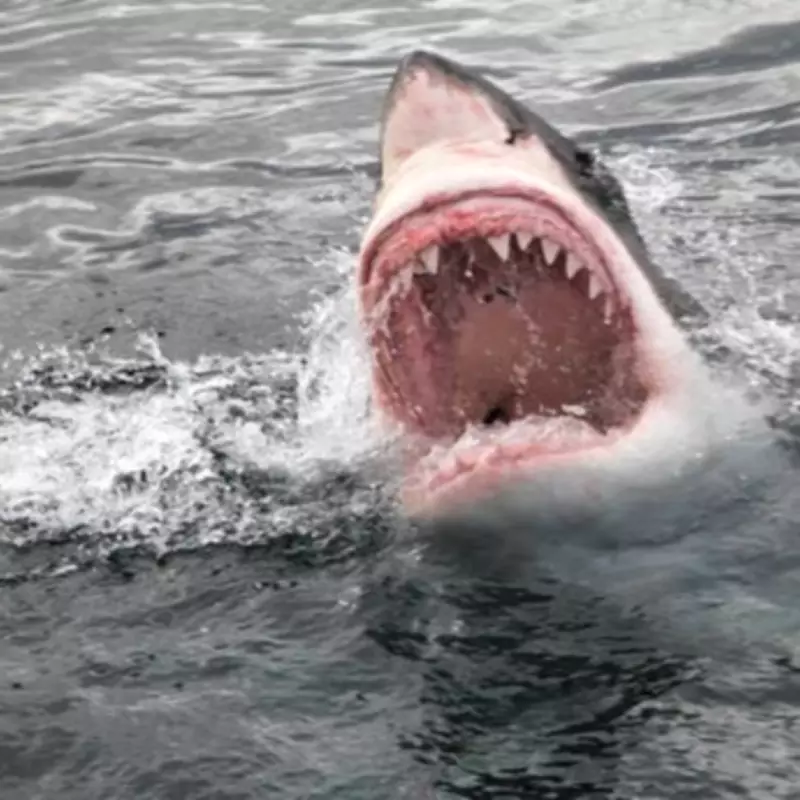
Diver's Horror Death: Eaten Whole by Great White Shark 'Size of a Submarine'
What is considered one of the most beautiful beaches in the world and a premier diving destination in the United States became the backdrop to a scene that would haunt one man forever after his friend was eaten alive as he watched in helpless horror.
Thirty-three-year-old Robert Pamperin dove into the famous waters of La Jolla Cove in San Diego on an overcast day with his friend Gerald Lehrer and was never seen alive again. The pair were free-divers, diving for abalone—a type of sea snail—one evening when the unimaginable occurred.
The Moment of Terror
As they swam down off the west end of La Jolla Cove, the two men slowly drifted apart. It wasn't until they were around thirty feet apart that Lehrer heard the haunting cries of "help me." He quickly turned to see his friend shoot out of the water, his dive mask missing from his face.
Glancing beneath the surface, Lehrer could see Pamperin's body thrashing violently in the water, his lower body trapped in the jaws of a massive great white shark. Lehrer recalled this moment with chilling clarity, stating they were only wearing swim trunks, fins, and masks.
"The surf of the cove was really big, so we decided to go off Alligator Rock, one at a time," Lehrer explained. "Bob went off first after a big wave had just passed, and he swam out past the surf line. I was waiting on the rock for a good spot between waves when I saw Bob shoot out of the water."
The Attack and Aftermath
The twenty-foot beast dragged his friend under the surface, blurring Lehrer's vision as Pamperin disappeared into a cloud of crimson red. Amidst the bloodied water, he could see his friend's face, chest, and arms, with his body held tightly between the shark's jaws around his waist.
His legs were not visible, and at that point, Lehrer was certain his diving buddy was dead. In a moment of panic, he took a breath and dove further, seeing the shark lying on the sandy bottom, erratically jerking its head from side to side. He believed this was the moment his friend was swallowed whole.
After trying and failing to scare the shark away, Lehrer swam toward the shore in a state of shock and alerted the lifeguards. An experienced team of ten divers then spent hours searching the shores for Pamperin's body, with no success.
Investigation and Speculation
Later that night, Lehrer was interviewed by Conrad Limbaugh, a biologist and head diver at the Scripps Institution, to help identify what exactly killed his friend. His description included a greyish-white belly, a grey back, and dimensions of twenty feet long by three feet in diameter, with two-inch-long teeth.
In 1959, the year of the terrifying attack, it was a hot summer in Southern California, with temperatures unusually warm by five to ten degrees. This meant that hammerhead sharks and other tropical species infiltrated the coast, though those kinds were far too small to fit Lehrer's description.
This led to speculation that the culprit in Pamperin's death was actually a large tiger shark. Just two days after the haunting death, a group of fishermen reported sighting a large shark just off the Mission Bay channel entrance.
Their estimates also put the shark at twenty to forty feet long, prompting wardens to hunt the beast from patrol boats. No such creature was found, and the reported killer was never seen. However, reports claim that a few days after the brutal incident, a swim fin with what appeared to be shark teeth marks washed ashore on La Jolla Shores beach.
Legacy and Personal Impact
The initials carved into the fin identified it as having belonged to Robert Pamperin. He left behind a wife, who later remarried one of his cousins, and she eventually left San Diego, according to Lehrer. Despite the traumatic events, Lehrer was not afraid to return to the water.
"I was back in the water, at the very spot, about a week after the attack," he claimed. "And I taught my niece to dive at the cove that same summer. I still skin dive and do underwater photography. But I stopped scuba diving after my gear was stolen in a burglary."
The attack occurred on June 14, 1959, and remains one of the most harrowing shark incidents in California history, a stark reminder of the dangers lurking beneath even the most picturesque waters.