Cuba Plunged Into Darkness Amid Deepening Energy Crisis
Cuba has been plunged into an islandwide blackout, affecting all 11 million residents, as the nation grapples with a severe energy crisis and a rapidly deteriorating power grid. This marks the third major blackout to hit the island in just four months, highlighting systemic failures in infrastructure and external pressures.
Complete System Disconnection
The Ministry of Energy and Mines confirmed a "complete disconnection" of the electrical system via social media platform X, stating that an investigation was immediately launched. Officials noted that no operational units had failed at the time of the grid's collapse, pointing to broader vulnerabilities.
Lázaro Guerra, the ministry's electricity director, informed state media that efforts were concentrated on gradually restarting several crucial thermoelectric plants. He cautioned, "It must be done gradually to avoid setbacks. Because systems, when very weak, are more susceptible to failure."

Residents Struggle in Darkness
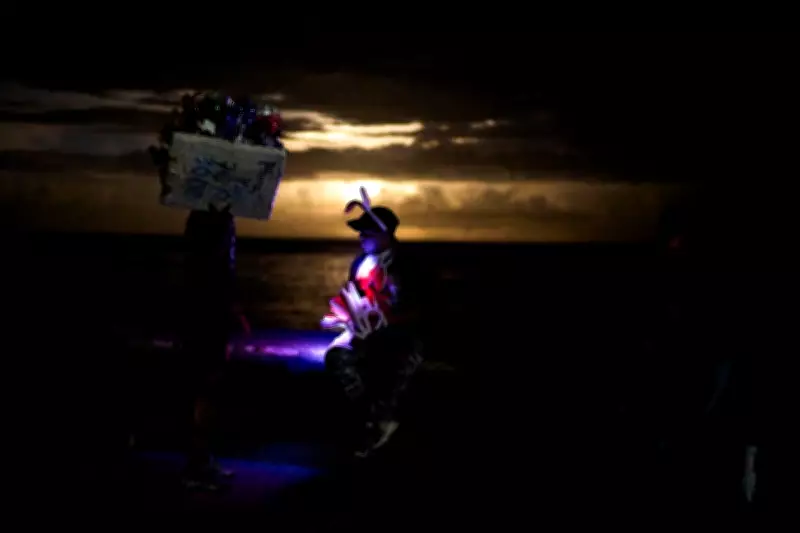
As darkness enveloped the island, residents resorted to candles and makeshift solutions. In Havana, the sounds of children playing and singing echoed from unlit homes, while families faced immediate hardships.
Yuneici Cecilia Riviaux described the challenges, saying, "We have to prepare a mattress for the girls here so that they can sleep because we have no choice. I don’t have a rechargeable fan or a generator."
Tomás David Velázquez Felipe, a 61-year-old Havana resident, expressed despair over the relentless outages. "What little we have to eat spoils," he said. "Our people are too old to keep suffering." He suggested that Cubans who can leave should consider doing so.
Partial Restoration and Ongoing Risks
By Monday night, state-owned media reported that crews had restored power to 5% of Havana's residents, equating to approximately 42,000 customers, along with several hospitals across the island. Officials announced they would prioritize the communications sector next, while warning that the small circuits restored so far could fail again due to the grid's fragility.
Aging Infrastructure and External Pressures
Cuba’s aging power grid has drastically eroded in recent years, leading to daily outages and an increase in islandwide blackouts. The government has blamed its woes on a U.S. energy blockade, intensified after U.S. President Donald Trump in January warned of tariffs on any country that sells or provides oil to Cuba.
The Trump administration is demanding that Cuba release political prisoners and move toward political and economic liberalization in return for lifting sanctions. Trump has also raised the possibility of a "friendly takeover of Cuba." On Monday, he stated, "I mean, whether I free it, take it. I think I could do anything I want with it," calling Cuba a "very weakened nation."
Political Negotiations and Leadership Changes
The Trump administration is seeking the departure of Cuban President Miguel Díaz-Canel as the United States continues negotiations with the Cuban government about the island's future, according to a U.S. official and a source familiar with the talks. Both spoke anonymously due to the sensitivity of the discussions, confirming the administration's desire for Díaz-Canel to leave power, a push first reported by The New York Times.
Expert Analysis on Grid Collapse
William LeoGrande, a professor at American University who has tracked Cuba for years, described the energy grid as poorly maintained and "way past its normal useful life." He praised the technicians as "magicians to keep it running at all given the shape that it’s in."
LeoGrande warned that without oil shipments, reducing consumption and expanding renewables might allow Cuba to struggle along temporarily. "But it would be constant misery for the general population, and eventually, the economy could collapse completely, leading to social chaos and probably mass migration," he said.
To accelerate solar power adoption, LeoGrande noted that other countries, principally China, would need to significantly increase their provision of such equipment.

Economic and Social Impacts
President Díaz-Canel revealed on Friday that the island had not received oil shipments in three months and was operating on solar power, natural gas, and thermoelectric plants. The government has had to postpone surgeries for tens of thousands of people due to the crisis.
Residents like Yaimisel Sánchez Peña, 48, expressed frustration over food spoilage, exacerbated by outages affecting her 72-year-old mother. "Every day, she suffers," she said.
Mercedes Velázquez, a 71-year-old resident, lamented the recurring blackouts. "We’re here waiting to see what happens," she said, noting she recently gave away fresh soup to avoid waste. "Everything goes bad."
Recent Blackouts and Oil Shortages
A massive outage over a week ago affected the island’s west, leaving millions without power, followed by another major blackout in western Cuba in early December. Critical oil shipments from Venezuela were halted after the U.S. attacked the South American country in early January and arrested its then-president, Nicolás Maduro.
While Cuba produces 40% of its petroleum and generates its own power, it has been insufficient to meet demand as the electric grid crumbles. LeoGrande described the situation as a "perfect storm of collapse," citing lack of hard currency for imports, spare parts, and upgrades, along with thermoelectric plants using corrosive heavy oil.
Economic Measures and Future Prospects
Óscar Pérez-Oliva Fraga, deputy prime minister of the Ministry of Foreign Trade and Foreign Investment, stated on Monday that Cuba is open to trading with U.S. companies despite embargo limitations. He announced new measures to boost the economy, including allowing Cubans residing abroad to partner with or own private companies in Cuba, participate in large-scale infrastructure projects, and open foreign currency bank accounts in Cuban banks to facilitate transactions.
He added that the government will grant land under usufruct for development projects, aiming to stimulate economic recovery amid the ongoing crisis.