On a January evening in the quiet suburb of Mulbarton, south Johannesburg, residents witnessed a disturbing scene: five young men standing in the street dressed only in their underwear. This was not an isolated incident, but a stark window into a growing and dangerous trend affecting thousands of Ethiopian migrants seeking a better life in South Africa.
The Suburban Captives: A New Smuggling Tactic
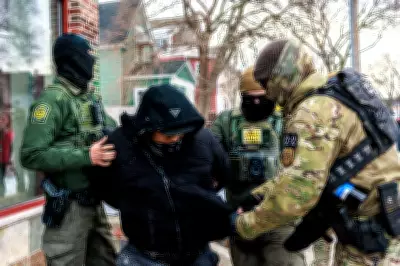
Police later picked up those five men along with seven others. A 47-year-old Ethiopian man was arrested and charged with kidnapping and failing to stop for police. The twelve men, initially thought to be teenagers but aged 22 to 33, were charged with being in the country illegally.
This event is the latest in a series of incidents where young Ethiopian men and boys have been discovered escaping from ordinary-looking houses in Johannesburg's suburbs. They were allegedly held captive in dire conditions while smugglers extorted money from their families back home to secure their release. This marks a sinister evolution in the people smuggling trade along the so-called 'southern route'.
A Long and Lethal Journey for Economic Hope
The flow of migrants from Ethiopia to South Africa began after apartheid ended and Nelson Mandela opened the country's doors, coinciding with political upheaval in Ethiopia. Today, the motivation is overwhelmingly economic. Tanya Zack, author of a book on Johannesburg's Ethiopian community, notes that while political repression still plays a role, "increasingly, the migration is inspired by economic opportunity here and lack of opportunity in Ethiopia."
The UN's International Organization for Migration estimates that as many as 200,000 Ethiopians now live in South Africa. Researcher Yordanos Estifanos provides an "educated guess" that tens of thousands arrive each year, undertaking an overland journey of more than 3,000 miles.
The journey has grown more perilous. In 2020, 64 people were found dead in a truck in Mozambique. Estifanos explains that the lucrative trade has attracted rival gangs who sometimes intercept migrant groups to trade them like commodities. The profile of travellers has also shifted, with most now coming from the region around Hosanna in southern Ethiopia—a trend partly catalysed by a former ambassador who helped dozens from his home region relocate.
Personal Stories of Pain and Survival
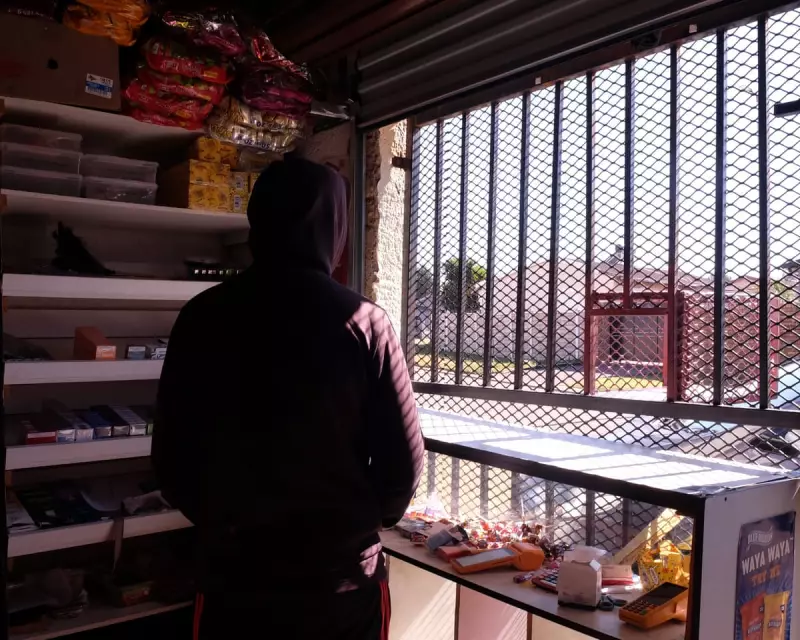
The human cost of this migration is etched in the stories of those who survive. Aseged Yohannes, who fled political persecution in 2012, considers himself lucky. He paid a smuggler and had a relatively smooth two-month journey via Kenya, Tanzania, Malawi and Mozambique. Now 36, he manages a shop in a township.
For Sahlu Abebe, who followed his brother in 2015, the experience was harrowing. His friend fell ill with severe diarrhoea and vomiting in a Tanzanian forest and was left behind. Abebe assumes he died, among over 40 others he later heard perished in Tanzania. "I was hoping to see him here," he said through a translator. "I never thought he would die on the road."
His group was then arrested in Malawi, where he spent six months in a jail cell crammed with up to 90 people. "The route was the most painful thing, as a human being," he recalled. Although not abused by his smugglers in Johannesburg—a fate that befell the Mulbarton captives—he has been violently robbed twice in South Africa, where xenophobic violence remains a constant threat.
Despite finding work in a township spaza shop, Abebe's advice to others in Hosanna is stark: "I can't say that you must come this side. It is not safe." His warning underscores the grim reality that for many Ethiopians, the promise of a better life in South Africa comes at an unimaginable and ever-increasing price.