Faith Leaders Demand ICE Detention Access During Lent and Ramadan Seasons
The long-standing tradition of faith leaders ministering to detained migrants has grown increasingly contentious and significant as detention numbers skyrocket across the United States. This surge coincides with the federal government's intensified immigration enforcement under the Trump administration.
Clergy Push for Enhanced Access During Holy Periods
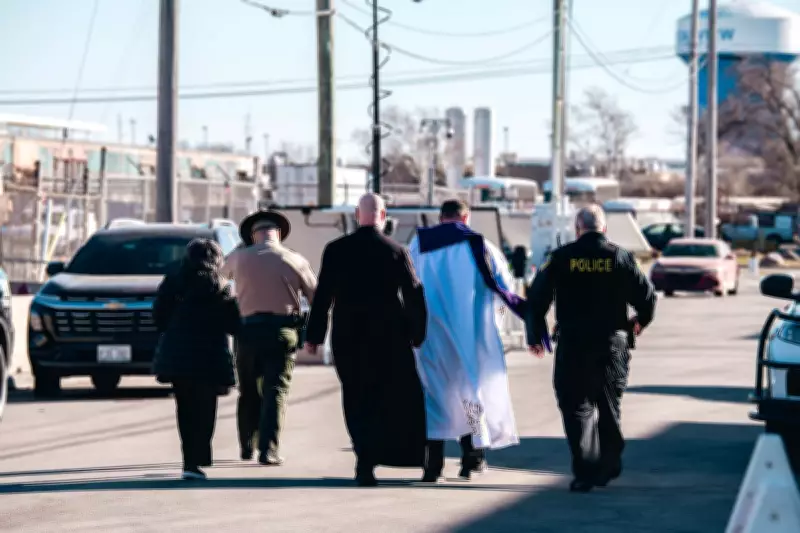
Religious leaders are advocating for greater entry to detention facilities, particularly during the sacred seasons of Lent and Ramadan. Following an Ash Wednesday service with four newly arrived migrants at a Chicago-area detention center, clergy are collaborating with immigration authorities to establish regular visitation schedules.
At Ramadan's commencement, Muslim chaplain Nosayba Mahmoud was permitted to visit two women detained for several months in the Dallas-Fort Worth region. She aims to continue visits throughout the fasting month. "In systems designed to break them, it's crucial they receive not just care, but adequate care from someone who can help them find meaning in their situation through God," Mahmoud emphasized.
After months of negotiations with Texas's Prairieland Detention Facility, Mahmoud was allowed to bring dates for breaking the Ramadan fast and softcover Qurans. However, a Catholic group required a lawsuit to gain Ash Wednesday access to the Broadview ICE facility near Chicago.
Rev. David Inczauskis, a Jesuit priest involved in the Chicago lawsuit, stated, "It's an important victory, but we recognize it's just one step toward migrant justice."
ICE Detention Expansion and Mounting Scrutiny
Since President Donald Trump's second term began, ICE detainee numbers have risen from 40,000 to approximately 75,000 individuals distributed across over 225 sites. The largest facility, Camp East Montana in El Paso, Texas, houses an average of 3,000 people daily.
While the administration characterizes mass deportations as targeting dangerous immigrants, Deportation Data Project statistics show decreasing percentages of arrestees with criminal histories. Recent Homeland Security leadership changes have raised questions about detention center policies, amid growing congressional criticism regarding living conditions and legal representation access.
ICE mandates that facilities holding detainees beyond 72 hours must provide chaplains or religious services coordinators, plus dedicated worship spaces. The agency requires advance notice and background checks for clergy and volunteers offering pastoral visits, counseling, and religious services.
Legal Battles Over Religious Freedom
Two lawsuits focus on access issues at federal buildings near Chicago and Minneapolis, where clergy claim detainees were held for multiple days during enforcement surges. Both cases allege religious freedom violations by denying ministerial access to migrants.
The Illinois lawsuit notes faith leaders were barred from the Broadview center starting last fall, reversing a decade of approved weekly prayer visits. Following a court order permitting Ash Wednesday access, leaders are "cautiously optimistic" about establishing regular schedules for visits, prayers, and religious item distribution like rosaries and Bibles.
In Minneapolis, Rev. Chris Collins was denied entry to a federal building amid daily protests during the surge. With Lutheran and United Church of Christ branches, Collins sued in February after being "categorically denied" pastoral care opportunities.
Inconsistent Access Challenges Faith Communities
Clergy and volunteers from diverse faiths have long ministered to immigration detainees. The U.S. Jesuit Refugee Service has maintained a Department of Homeland Security contract for fifteen years, providing in-house chaplains at six centers from New York to Guantanamo Bay.
Many religious workers express concerns about unpredictable access but remain committed to preserving worship rights and reminding migrants of their humanity. Simran Singh, who visits Indian detainees at California's Mesa Verde facility, explained, "I'm their only outside contact. Most relatives aren't in America, so I'm the only one who knows they exist beyond being a number."
The Sikh volunteer brings gurdwara food—often detainees' only appropriate vegetarian meals—and replaces confiscated turbans essential to religious identity. Similarly, Muslim chaplain Mahmoud seeks to provide prayer cloths during Ramadan but hasn't received permission.
Catholic Bishops Advocate for Uniform Access Standards
The U.S. Conference of Catholic Bishops recently urged Congress to ensure "consistent access to religious and pastoral services for all immigration detainees" with clear guidelines and uniform processes. Their fall statement, strongly endorsed by Pope Leo XIV, already highlighted pastoral care deficiencies.
For forty years, Miami Archbishop Thomas Wenski has visited migrants at Florida's Krome Detention Center, where weekly Mass continues. He also celebrated Mass at the remote Alligator Alcatraz facility, telling detainees last Christmas his presence proved they weren't forgotten.
At El Paso's largest detention center, Sunday Mass and confession visits occur but face "very limited" access due to alleged staff and space shortages. In Southern California, Auxiliary Bishop Brian Nunes recently celebrated Masses at Adelanto and California City detention centers, where many struggle with family separation.
"There's also, on a very important level, this sense that even when it's difficult to serve them, that they were served," Nunes reflected, expressing hope for expanded care.