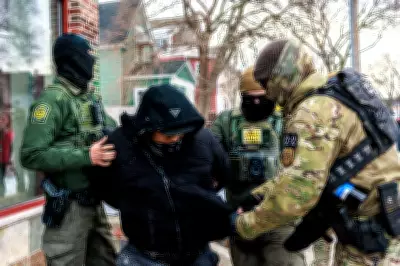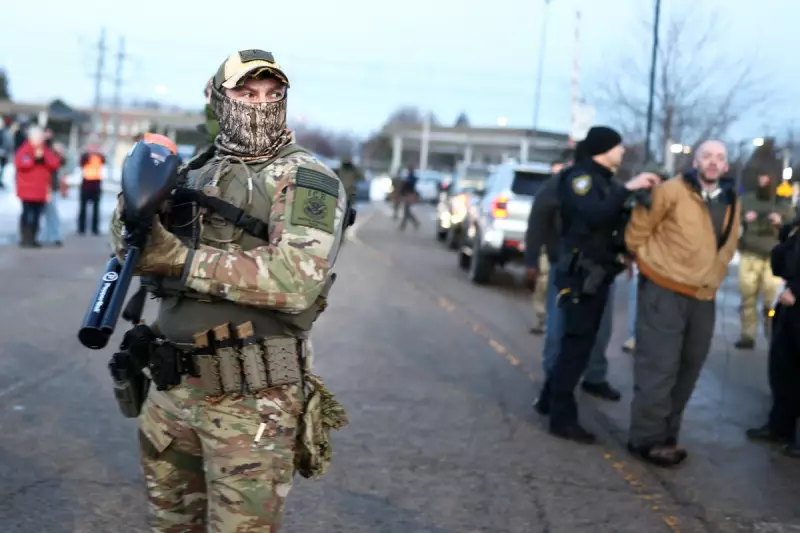
The Department of Homeland Security (DHS) has reaffirmed a controversial position that Immigration and Customs Enforcement (ICE) officers possess 'federal immunity' for their conduct while performing official duties. This assertion has gained prominence following the fatal shooting of an individual named Renee Good by an ICE officer, an incident now under federal investigation.
Political Backing for Broad Immunity Claims
The concept of sweeping immunity for ICE personnel was highlighted by a resurfaced video clip featuring Stephen Miller, a key architect of the administration's immigration policy. In the clip, Miller explicitly tells officers they have such protection. This stance was later echoed by Vice President JD Vance, who publicly stated the officer involved in the Good shooting had 'absolute immunity.'
These statements from high-ranking figures have placed the legal doctrine of immunity under intense public and legal scrutiny. The incident occurred on Wednesday 14 January 2026, and the subsequent claims have sparked a significant debate about accountability and the limits of state versus federal power.
Legal Experts Challenge the 'Absolute' Assertion
Constitutional law professors and other legal authorities have strongly contested the notion of 'absolute immunity' for federal agents. They clarify that while the Supremacy Clause of the U.S. Constitution does offer substantial protection, shielding federal officers from most state-level prosecutions, it is not an impenetrable barrier.
Experts point out that federal agents are not wholly protected from criminal prosecution, especially if their actions are deemed unlawful or fall outside the scope of their official duties. A significant complication in the Renee Good case is that the FBI's investigation has reportedly prevented state investigators from accessing crucial evidence, creating a jurisdictional hurdle.
The Nuances of Qualified Immunity and Federal Charges
The more common protection for law enforcement is 'qualified immunity,' which guards officers from frivolous civil lawsuits. However, this does not apply to criminal charges.
Furthermore, federal prosecutors can pursue charges for 'deprivation of rights under colour of law' under statutes like 18 U.S.C. § 242. Successfully bringing such charges requires prosecutors to meet a very high legal threshold: they must prove the officer acted with a willful intent to violate a person's constitutional rights. This makes convictions challenging, even in seemingly clear-cut cases of misconduct.
In essence, while certain immunities exist to allow federal officers to perform their duties without constant legal threat, the idea of 'absolute' protection from consequences is a legal myth. The ongoing investigation into Renee Good's death will serve as a critical test of where the line between immunity and accountability is ultimately drawn.