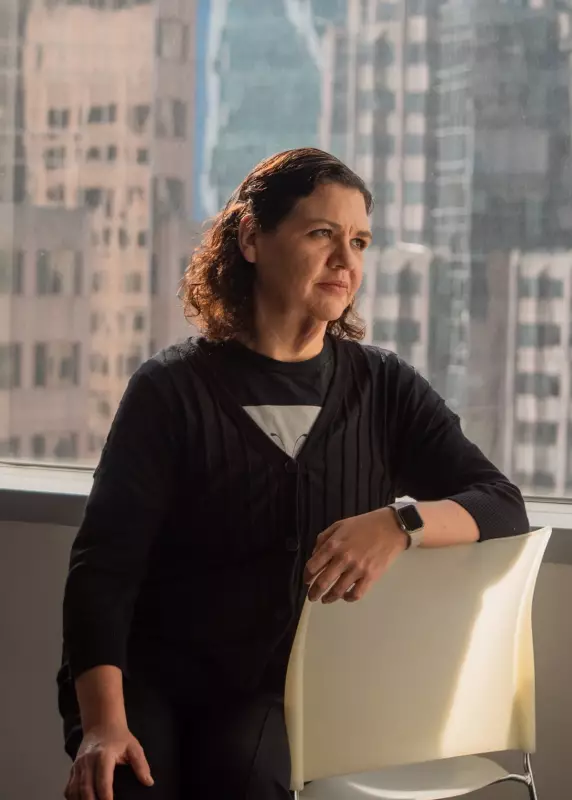
In the heart of San Francisco's federal courthouse, a climate of acute fear and uncertainty grips the immigration court. This past year has seen chaos escalate, with at least 88 asylum seekers arrested by Immigration and Customs Enforcement (ICE) at their hearings. Over half of the court's immigration judges have been removed. At the centre of this storm, immigration attorney Milli Atkinson works tirelessly to hold a fragile system together for those seeking safety.
A Day Defined by Crisis and Compassion
For Milli Atkinson, the director of the Bar Association of San Francisco's immigrant legal defence programme, every day is a high-stakes marathon. Her role is dual-faceted: she leads the 'Attorney of the Day' programme, offering free, last-minute counsel to undocumented immigrants from across Northern California, and she heads the city's Rapid Response Network, scrambling to find lawyers for anyone detained by ICE.
The Guardian recently shadowed Atkinson through a typically relentless day, built from her own accounts and additional reporting. It begins at 5am in her San Rafael home, where she checks encrypted messages for overnight ICE alerts. Despite not being a morning person, she must reach court by 8am. Missing that small window means missing clients who rely on her minutes of advice before their hearings begin—advice that can mean the difference between freedom, detention, or deportation.
The pressure has intensified markedly. During Trump's first term, the Rapid Response Network received one or two calls a month. Now, Atkinson dispatches attorneys two to three times a week. On her commute over the Golden Gate Bridge, she grasps for a mental break with apolitical radio, a brief respite before the fray.
Inside the Courtroom: A Race Against Time and Quotas
By 8am, with iced coffee in hand, she joins the queue at 630 Sansom Street. She knows that among those waiting for appointments with US Citizenship and Immigration Services (USCIS), 10 to 20 people will be detained by ICE daily to meet deportation quotas. In the fourth-floor courtroom, families huddle on wooden pews. Before the judge arrives, Atkinson addresses them in Spanish, explaining the free legal service.
Communication barriers present a constant, dangerous hurdle. Her staff speak over 32 languages, but it's never enough. On this day, an interpreter for Kazakh was unavailable; others needed help with Hindi and Mam, a Mayan language from Guatemala. A poor phone connection forced the judge to hang up on the translation service. A simple form-filling error or misunderstood question can lead to accusations of lying and a lost asylum case.
Atkinson whispers urgent advice to clients: if a government lawyer moves to dismiss their case and the judge agrees, ICE will likely arrest them immediately. She instructs them to clearly tell the judge they wish to continue. All the while, she knows ICE officers are waiting outside the courtroom door.
"This isn't your first rodeo," she reflects, comparing the current administration to the last. The first term was marked by confusion and harsh rhetoric. "This time, the administration seemed prepared to carry out policies as quickly as it can, whether they're lawful or not." The sheer volume of detentions makes the work feel like a daily onslaught.
Holding Cells, Trauma, and the Search for Hope
Later, Atkinson guides journalists and a city supervisor on a tour of the ICE holding facility on the sixth floor. Clients have reported being held for days in freezing, brightly lit rooms without proper beds, hygiene, or edible food. They describe a lack of medical care and limited legal access. A tiny room, bisected by thick glass, is where attorneys can meet detainees—but only if they have the person's exact official name, a particular hardship for trans asylum seekers.
Back at her office for a staff meeting, the emotional toll is palpable. While immigration lawyers are trained for vicarious trauma, Atkinson and her team now confront direct trauma. "There are days when you break down into tears. There's days when your staff breaks down into tears," she admits. They have seen breastfeeding mothers and pregnant women handcuffed and shackled after appearing for their hearings.
Leadership now means modelling sustainability to avoid burnout. She delegates where possible, and forces herself to stop work at 5pm for a walk or a run—a substitute for meditation. She escapes into 'trashy' historical romance novels and tries to avoid 'doomscrolling' on social media, though algorithms relentlessly show her videos of ICE arrests.
Amid the darkness, points of light persist. A strategy of filing Habeas Corpus petitions in federal court, arguing unlawful detention, has secured the release of 44 people since September. The solidarity of volunteers at the Attorney of the Day programme and community rallies reminds her she is not alone. As an American who grew up in a bilingual, multicultural Californian town, the current reality breaks her heart. It feels, she says, like a bizarre alternate universe where the law no longer applies. Her hope, and her fight, is rooted in the belief that these policies can and will be reversed.