Federal Judge Halts Trump Administration's Refugee Detention Operations in Minnesota
A federal judge has issued a significant ruling blocking the Trump administration from detaining refugees in Minnesota, following a series of controversial arrests under a Department of Homeland Security operation. The decision comes after more than 100 lawfully resettled refugees were apprehended in recent weeks, causing widespread panic within Minnesota's refugee communities.
Operation Parris and the Re-Vetting Initiative
US District Judge John R Tunheim ordered the temporary halt to arrests and detentions while a lawsuit challenging the administration's "re-vetting" policy continues. The judge mandated the immediate release of all detained refugees in Minnesota and required those taken to Texas to be freed within five days.
The ruling follows the Trump administration's announcement of "Operation Parris" earlier this month, described as a sweeping initiative to re-examine thousands of refugee cases through new background checks and intensive verification of refugee claims. According to Department of Homeland Security statements, approximately 5,600 refugees who had resettled in the US without yet obtaining permanent resident status would be subject to this vetting process.
Human Impact and Legal Challenges
The arrests have had profound human consequences, with refugees describing terrifying experiences of being taken from their homes and families. One plaintiff, identified as D Doe, recounted being tricked into leaving his home by someone claiming to have damaged his car, only to be surrounded by armed men and arrested. He was first detained in Minnesota, then flown to Texas for interrogation about his refugee status before being released and left to find his own way back home.
"I fled my home country because I was facing government repression," said Doe. "I can't believe it's happening again here." His wife, also a refugee, has been too frightened to remain in their home since her husband's arrest, staying with friends instead.
Community-Wide Fear and Legal Representation Challenges
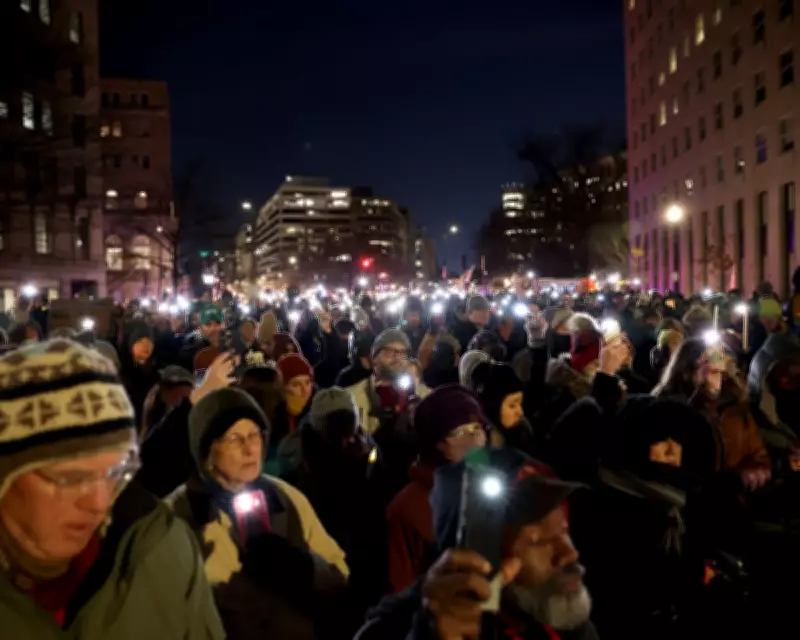
The arrests have generated widespread fear among Minnesota's refugee population, many of whom have become reluctant to leave their homes or go to work due to concerns about being stopped and racially profiled by immigration agents conducting aggressive sweeps throughout the state.
Michele Garnett McKenzie, executive director of The Advocates for Human Rights, praised the court's decision, stating: "Operation Parris's scheme of detaining lawfully present refugees is an unprecedented assault on core human rights that are enshrined in both the 1951 convention and the 1980 Refugee Act."
One of the most challenging aspects of these detentions, according to McKenzie, has been the speed with which refugees were being moved out of state - often within days or hours - leaving families scrambling to locate them and secure legal assistance. Because refugees had already undergone extensive vetting and legal resettlement processes, the vast majority did not have immigration attorneys.
Chaotic Releases and Judicial Response
In several documented cases, refugees endured the traumatic experience of arrest, detention, and interstate transfer only to be flown back to Minnesota and released without prior notice to their families. In at least one instance, this occurred in the middle of the night. Another refugee was placed on a plane from Texas without being told his destination, leading him to believe he was being deported to his home country, only to find himself back in Minnesota.
Judge Tunheim addressed these concerns directly in his ruling, stating: "The court finds that the threat of irreparable harm favors immediate relief in this case. The stories of terror and trauma recounted by named plaintiffs in their amended petition make this harm impossible to ignore."
The Department of Homeland Security has not immediately responded to queries regarding the ruling. The case continues as the lawsuit challenging the administration's re-vetting policy proceeds through the federal court system.