Federal Judge Considers Halting ICE's Controversial Refugee Operation in Minnesota
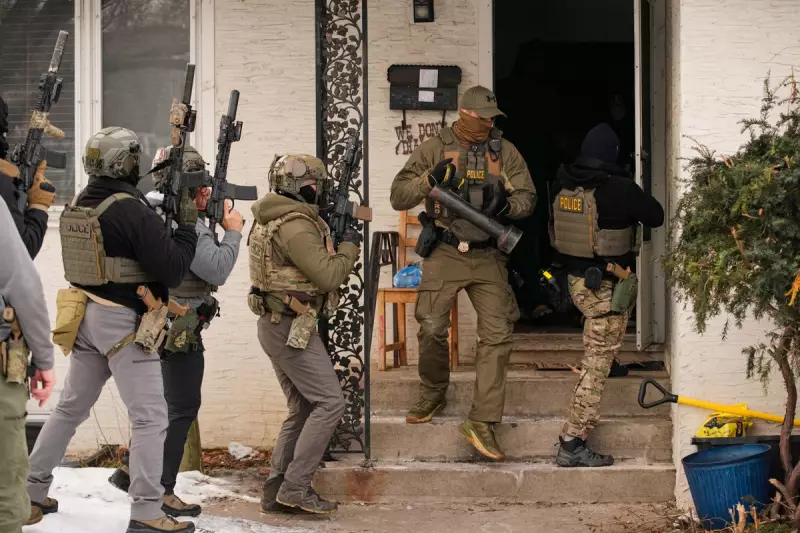
A federal judge is now deliberating whether to halt a sweeping immigration enforcement operation in Minnesota, where Immigration and Customs Enforcement officers are allegedly conducting "door-to-door" hunts for recently resettled refugees, including children, and transporting them to detention facilities in Texas.
Operation PARRIS Targets Legally Present Refugees
The Trump administration launched Operation PARRIS earlier this month, exclusively targeting Minnesota's 5,600 new refugees. These individuals are legally present in the United States after undergoing extensive vetting processes but have not yet attained lawful permanent resident status.
According to a recent class-action lawsuit, ICE officers have been arresting refugees during routine immigration check-ins, while they commute to work or school, and even appearing at their homes without warrants for their arrest.
"I fled my home country because I was facing government repression," wrote a plaintiff identified as D. Doe, who described being flown to Texas in shackles after an abrupt arrest at his home. "I can't believe it's happening again here. It's chilling and I'm scared."
Legal Challenge Alleges Political Animus
Lawyers representing the targeted refugees petitioned a federal judge on Monday to freeze the operation, arguing it is fueled by President Trump's documented animus toward Somali immigrants, whom he has previously derided as "garbage" who "come from hell."
The Twin Cities area is home to approximately 80,000 people of Somali ancestry, the vast majority of whom are legal residents or American citizens. However, the administration has seized upon a series of fraud cases involving government programs where most defendants have Somali roots to justify the operation.
In a statement announcing Operation PARRIS, Homeland Security officials declared Minnesota "ground zero for the war on fraud," asserting that "the Trump administration will not stand idly by as the U.S. immigration system is weaponized by those seeking to defraud the American people."
Refugees Subjected to Extensive Vetting
Legal advocates strongly contest the administration's characterization. "These are people who entered this country legally under affirmative refugee programs," attorney Michelle Drake told District Judge John R. Tunheim. "They were vetted before they got here. Many people live in refugee camps in other countries for years, waiting for their admission to the United States."
Drake emphasized that refugees undergo extensive background screening, including biometric checks, before receiving work authorization and resettling in the country.
Kimberly Grano, staff attorney at the International Refugee Assistance Project, stated that ICE is "intentionally and illegally terrorizing resettled refugees who are not accused of any wrongdoing."
Plaintiffs Admitted Under Biden Administration
The plaintiffs in the lawsuit were admitted to the United States through the Refugee Admissions Program after undergoing painstaking vetting processes and waiting years for safe resettlement. They are not subject to deportation orders nor considered flight risks.
Their lawyers argue that Homeland Security officials have "arbitrarily determined, without any rational basis or legal authority, to intimidate and terrorize the refugees of Minnesota" specifically because they were admitted during President Joe Biden's administration.
This operation coincides with broader administrative actions. U.S. Citizenship and Immigration Services is reviewing thousands of refugees lawfully admitted during the Biden administration, while Homeland Security officials are cancelling legal protections for approximately 1 million immigrants who entered the country during that period.
Broader Policy Shifts in Refugee Admissions
The controversy unfolds against a backdrop of significant policy changes. President Trump directed an overhaul of the nation's refugee admissions program last year to study whether allowing refugees into the country serves U.S. interests.
Shortly after taking office, the administration cancelled previously arranged refugee flights, subsequently slashing financial aid and healthcare coverage for refugees. The president's One Big Beautiful Bill Act further restricts refugee eligibility for Medicaid, Medicare, children's health insurance, and emergency food assistance.
In a stark departure from traditional humanitarian-focused policy, the administration has drastically reduced the annual refugee admission ceiling from 125,000 to just 7,500 people. Most of these limited slots are now reserved for white South Africans, with the administration explicitly prioritizing Afrikaners for resettlement.
This shift was highlighted in May when a group of 59 white South Africans were admitted as refugees, with Trump stating the United States had "essentially extended citizenship" to them.
Human Rights Advocates Condemn Operation
"The federal government is tearing refugees from their homes and communities, shattering their hard-won safety and security," said Michele Garnett McKenzie of Advocates for Human Rights, the organizational plaintiff in the Minnesota case.
"International and U.S. law are clear—we have a legal and moral obligation to protect individuals who face persecution, not expose them to imprisonment, isolation, coercion, and abuse," she added. "The government must cease these illegal actions that undermine the commitment we made to these refugees, causing grave harm to individuals, families, and communities."
The Independent has requested comment from Homeland Security regarding the allegations and the pending legal decision.