Mahmood Urges Labour to Stay True to Its Values on Migration Policy
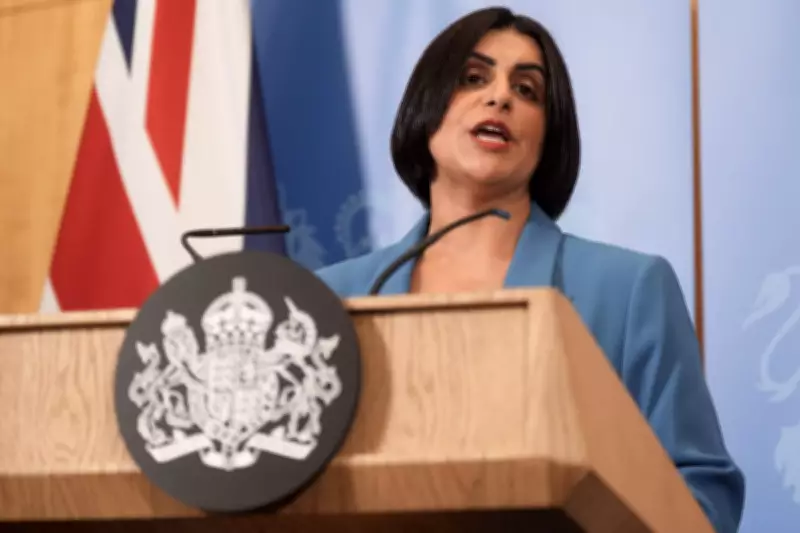
Home Secretary Shabana Mahmood has declared that the Labour Party should resist the temptation to become "more Green" or "more Reform" in its approach to migration, while acknowledging this represents a "difficult time" for her party. Speaking at the Institute for Public Policy Research (IPPR) on Thursday, Mahmood outlined her vision for a "firm but fair" asylum system, positioning it between what she described as Reform leader Nigel Farage's "nightmare" of isolationism and Green Party leader Zack Polanski's "fairytale" of open borders.
Backbench Revolt Over Asylum Reforms
The Home Secretary faces significant internal opposition from Labour backbenchers over her proposed reforms, which include making refugee status temporary for those granted asylum in the UK, subject to review every thirty months. Mahmood also announced a pilot scheme offering "increased incentive payments" of £10,000 per person and up to £40,000 per family to failed asylum seekers who voluntarily leave Britain.
"There is no denying that we meet at a difficult time for my party," Mahmood told the IPPR audience. "It is a time when who we are and what we stand for is contested, sometimes bitterly, and nowhere is that contest more keenly felt than in the politics of migration."
She added: "I have, of late, been offered wise counsel on this topic from certain quarters. I have been told that we must, quite simply, be more Labour. Well, you know what? I happen to agree we should be more Labour. Of course, we should be more Labour. The real question is, what does more Labour mean, because, in my view, more Labour doesn't mean more Green, just like more Labour doesn't mean more Reform."
Danish-Inspired Reforms and Financial Incentives
Mahmood's policy shift follows her recent visit to Denmark, where a social democratic-led government has dramatically reduced asylum applications to their lowest level in four decades and removed ninety-five percent of rejected claimants. The Home Secretary has openly expressed admiration for this approach, stating her reforms aim to create "a compassionate but controlled asylum system."
The pilot scheme for failed asylum seeker families mirrors elements of the Danish model. Mahmood explained: "This Government will now pilot a similar model for families who are failed asylum seekers, a small number of whom will now be offered an increased incentive payment of £10,000 per person and up to a maximum of £40,000 per family."
She argued these incentives could deliver "significant savings" to taxpayers if effective, adding: "Where a voluntary removal is refused, we will escalate to an enforced removal for those who can be returned to their safe home country. We are now consulting on precisely how the removal of families with children must take place in a way that is humane and effective."
Mahmood criticised previous policies for creating "a perverse incentive" for Channel crossings with children, stating: "For too long, families who have failed their claims have known that we are not enforcing our rules, which created a perverse incentive to make a Channel crossing with children in a small boat."
Response to Trump's Comments on London
When questioned about former US President Donald Trump's attacks on London Mayor Sadiq Khan and claims about sharia law in the capital, Mahmood dismissed the remarks as "misinformation." She said: "The US president will say some things that we agree with and others that we disagree with. We are getting our immigration system under control. That is my job. That's what I've been setting out today, and we will pursue that."
Defending Khan, she added: "And let me just say on Sadiq, I think he's doing an excellent job as mayor of London and there is a lot of misinformation that is often put out about what's happening in London."
The Home Secretary's speech underscores Labour's attempt to navigate a contentious political landscape while implementing substantial changes to the UK's asylum framework, balancing humanitarian concerns with stricter enforcement measures.