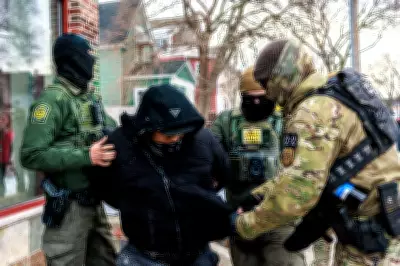
Tensions in Minneapolis have exploded following a second shooting involving federal immigration officers within a week, further inflaming a city already reeling from a massive federal enforcement operation.
Second Shooting Fuels Unrest
On Wednesday night, a federal law enforcement officer shot a man in the leg after being attacked with a shovel and a broom handle, according to the Department of Homeland Security. The incident occurred just days after an Immigration and Customs Enforcement (ICE) agent fatally shot Renee Good on January 7th.
The DHS stated that officers initially stopped a person from Venezuela who was in the US illegally. After the individual fled on foot following a car crash, two others emerged from a nearby apartment. All three then allegedly ambushed the officer, who fired a single defensive shot. The injured man was hospitalised with a non-life-threatening wound.
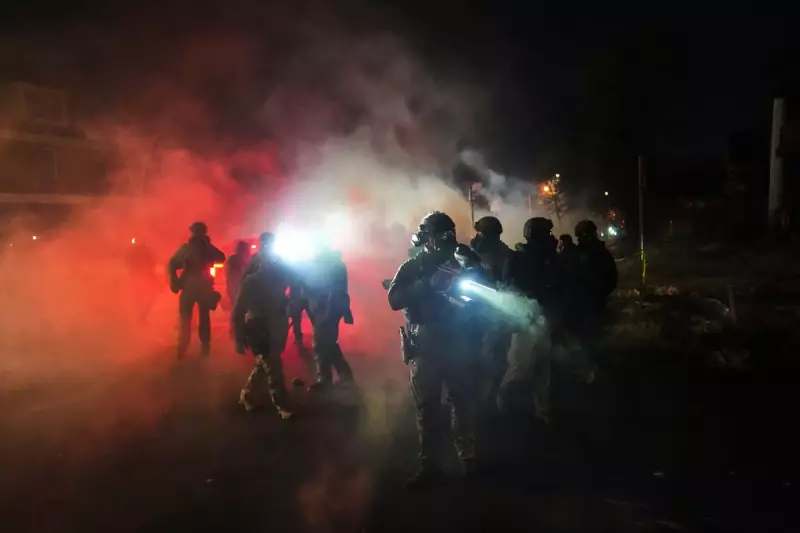
Minneapolis Police Chief Brian O’Hara declared the subsequent gathering an unlawful assembly as protesters clashed with federal officers in riot gear. The scene turned chaotic, with tear gas and fireworks filling the air near the shooting site, located roughly 4.5 miles north of where Good was killed.
A City Under Siege and Legal Pushback
Minneapolis Mayor Jacob Frey described an unsustainable situation, criticising a federal force he said is five times the size of the city's 600-strong police department and has effectively "invaded" the city. He warned of residents being scared and angered, with some calling for local police to confront ICE agents.
The DHS maintains its stance, vowing not to back down from an operation that has resulted in over 2,000 arrests in Minnesota since early December. However, the crackdown is facing significant legal challenges.
Earlier on Wednesday, a federal judge gave the Trump administration until Monday to respond to a lawsuit filed by the state of Minnesota and the cities of Minneapolis and St. Paul. They are seeking a restraining order to suspend the enforcement surge, arguing it violates constitutional rights. State Assistant Attorney General Brian Carter pleaded for a pause, stating, "The temperature needs to be lowered."
Military Lawyers and Scrutiny Over First Shooting
In a further escalation, the Pentagon is reportedly seeking to mobilise military lawyers to support the Justice Department's efforts in Minneapolis. Defence Secretary Pete Hegseth has asked branches to identify 40 Judge Advocate General (JAG) officers, with 25 slated to serve as special assistant U.S. attorneys in the city.
This move has raised concerns about diverting legal resources from the military's own justice system. Meanwhile, new details have emerged about the shooting of Renee Good. A Homeland Security official told The Associated Press that the ICE agent involved, Jonathan Ross, suffered internal bleeding to his torso during the encounter. The official spoke anonymously to discuss Ross's medical condition.
This claim contrasts with bystander video from the scene, which shows Ross and other officers walking without obvious difficulty after the shooting. Good's family has now hired the law firm that represented George Floyd's family, promising an independent investigation.
Governor Tim Walz, in a televised speech, condemned the federal actions, stating, "Let’s be very, very clear, this long ago stopped being a matter of immigration enforcement. Instead, it’s a campaign of organized brutality against the people of Minnesota by our own federal government." As legal battles loom and protests continue, Minneapolis remains a flashpoint in a deeply divisive national policy.