Minneapolis Activists Form Underground Network to Counter ICE Operations
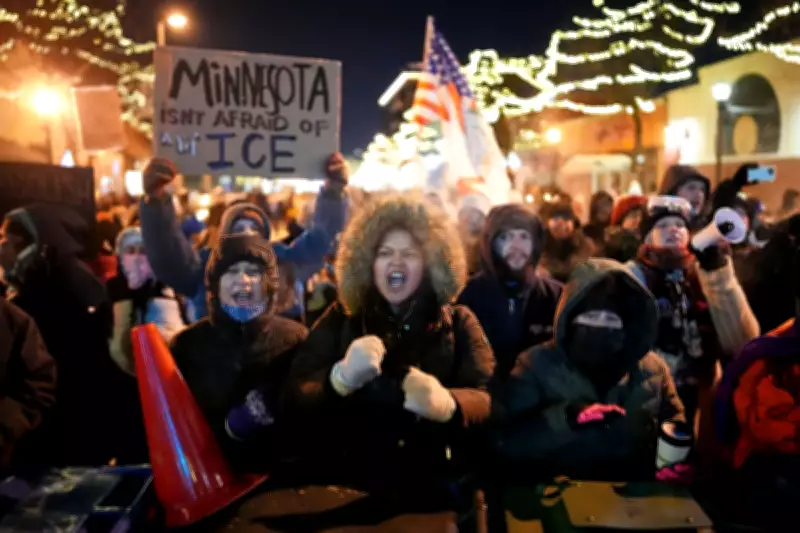
In recent weeks, the streets of Minneapolis have echoed with a distinctive soundtrack: the piercing shrieks of whistles and the persistent honking of car horns. This auditory landscape marks the presence of thousands of citizens who have mobilised to shadow immigration enforcement agents across the city, forming a vast, decentralised resistance movement.
The Shadow Network Emerges
This sprawling, often anonymous network comprises teachers, scientists, stay-at-home parents, small business owners, and service industry workers. Their primary objectives are straightforward yet profound: to assist immigrants, provide early warnings of approaching enforcement teams, and film encounters to document events for public scrutiny. The network's persistence continues unabated, even after the White House adopted a more conciliatory tone following the weekend killing of Alex Pretti. This shift included the transfer of Gregory Bovino, the senior Border Patrol official who had become the public face of the immigration crackdown in the region.
"I think that everyone slept a little better knowing that Bovino had been kicked out of Minneapolis," remarked Andrew Fahlstrom, who helps operate Defend the 612, a central hub for volunteer networks. "But I don’t think the threat that we’re under will change because they change out the local puppets."
Operation Metro Surge Intensifies
What began as scattered arrests in December escalated dramatically in early January, when a top Immigration and Customs Enforcement (ICE) official announced the "largest immigration operation ever." The sight of masked, heavily armed agents travelling in convoys of unmarked SUVs became commonplace in certain neighbourhoods. By this week, federal authorities reported more than 3,400 arrests, supported by at least 2,000 ICE officers and 1,000 Border Patrol officers on the ground.
While administration officials insist the focus remains on criminals residing in the U.S. illegally, the street-level reality has been markedly more aggressive. Local officials report that agents have stopped individuals seemingly at random to demand proof of citizenship, including off-duty Latino and Black police officers and municipal workers. In one incident, agents forced entry into a Liberian man's home without a proper warrant, despite his regular check-ins with immigration authorities. Other troubling actions include:
- Detaining children alongside their parents
- Using tear gas outside a high school following altercations with protesters
- Causing widespread fear in immigrant communities
Although federal presence remains minimal in many areas, the crackdown's ripple effects have been profound. Doctors report patients avoiding life-saving medical care, thousands of immigrant children staying home from school, and immigrant-owned businesses either shutting down, reducing hours, or locking doors to all but trusted regular customers.
Rapid Response and Community Mobilisation
Activist groups across deeply liberal Minneapolis-St. Paul and surrounding suburbs organised rapidly in response. Volunteers formed small armies to deliver food to immigrants afraid to leave their homes, provide transportation to workplaces, and maintain watch outside schools.
More significantly, they established interlocking webs of dozens, perhaps hundreds, of rapid response networks. These sophisticated systems involve thousands of volunteers who track immigration agents using encrypted messaging apps like Signal. Tracking typically involves quietly reporting convoy movements to dispatchers and recording license plates of suspected federal vehicles, though responses are not always subdued.
Protestor caravans regularly form behind immigration convoys, creating mobile demonstrations of anger and warning that weave through city streets. When agents stop to make arrests or conduct questioning, network signals summon additional people who sound warnings with whistles and horns, film the encounters, and shout legal advice to those being detained.
Confrontations and Strategic Divisions
These gatherings frequently lead to real confrontations. Protesters scream at immigration agents, who sometimes respond with physical force, pepper spray, tear gas, and arrests. During a recent afternoon in south Minneapolis, dozens of protesters—some wearing gas masks—clashed with agents, throwing snowballs and attempting to block vehicles. Agents responded by shoving protesters, firing pepper balls, and ultimately deploying tear gas grenades before driving away.
Minneapolis City Council member Jason Chavez, reflecting the city's long tradition of progressivism, defended these actions when asked about the confrontation. "I didn’t see anybody 'confronting,'" said Chavez. "I saw people alerting neighbours that ICE was in their neighbourhood. And that’s what neighbours should continue to do."
Inside the Network: A Volunteer's Perspective
To understand this underground world, consider the experience of a woman known only by her nickname, Sunshine, within rapid response networks. A healthcare worker who requested anonymity fearing retaliation, she has spent hundreds of hours patrolling an immigrant St. Paul enclave in her Subaru, watching for federal agents.
Sunshine has developed remarkable observational skills: spotting idling SUVs from minimal exhaust hints, identifying out-of-state license plates from a block away, and distinguishing unmarked immigration vehicles from local police cars. On encrypted apps, she remains simply Sunshine, knowing few real names even after working alongside others for weeks.
"Sometimes people just want to pick up their kid and walk their dog and go to work. And I get that. I get that desire," she said while driving through the neighbourhood last week. "I just don’t know if that’s the world we live in anymore."
She constantly weighs decisions: whether to report vehicles to dispatchers or sound her horn as warning, whether honking might unnecessarily frighten already terrified residents, whether agents might be leading observers on distractions while other teams make arrests elsewhere. While she avoids confrontation personally, she understands the anger driving those who face off directly against agents.
National Debates Over Protest Strategies
Not all activist groups agree on tactics. Some nationally have pushed back against protest strategies that could escalate clashes with enforcement agents. The Montgomery County Immigrant Rights Collective in Maryland recently explained on social media why their volunteers avoid using whistles, warning that such noises could "escalate already volatile ICE agents who don't respect our rights" and "increase the likelihood of aggression toward bystanders or the detained person."
"This is not an action movie," their post emphasised. "You are not in a one-on-one fight with ICE."
Despite these strategic disagreements, the Minneapolis network continues its daily operations, sustained by community solidarity and a shared determination to protect vulnerable neighbours from what many perceive as an overreaching federal crackdown.