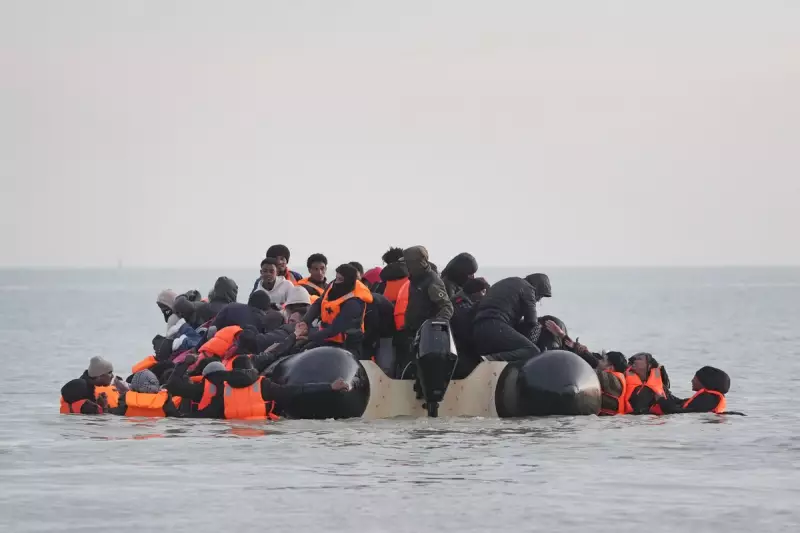
In a significant escalation of the UK's efforts to tackle small boat crossings, law enforcement officers have been granted new powers to seize mobile phones and SIM cards from migrants without needing to make an arrest. The move forms a central part of Prime Minister Keir Starmer's pledge to dismantle people smuggling networks operating across the English Channel.
New Powers Target Smuggling Intelligence
The powers, which came into force under the recently enacted Border Security, Asylum and Immigration Act, are designed to speed up investigations into smuggling gangs. Officers will begin confiscating electronic devices from individuals processed at the Manston facility in Kent. Data extracted from these phones is expected to provide crucial intelligence on smuggling routes, organisers, and methods.
Border Security Minister Alex Norris stated the government is delivering on its promise to restore control. "We are implementing robust new laws with powerful offences to intercept, disrupt and dismantle these vile gangs faster than ever before and cut off their supply chains," he said.
Record Arrivals and Hotel Closure Pledge
The policy announcement follows the release of official figures showing 41,472 people arrived in the UK via small boats in 2025. This marks the second-highest annual total on record, representing a 13% increase from 2024 and coming just 9% below the peak of 45,774 in 2022.
Amidst this backdrop, Prime Minister Starmer used a BBC interview to announce he had ordered the Home Office to accelerate the closure of controversial asylum hotels. The current deadline for closure is 2029, but Starmer wants it brought forward. "I want us to close hotels. I think over coming months you'll see evidence of that," he told Laura Kuenssberg, though he declined to set a new public target date.
The use of hotels has sparked local protests, notably at the Bell Hotel in Epping, Essex, following a serious criminal case involving a resident asylum seeker.
Stiffer Penalties and Political Reaction
The new legislation also introduces severe criminal penalties for those facilitating crossings. These include:
- Up to 14 years in prison for storing or supplying boat engines intended for Channel crossings.
- Up to five years in jail for smugglers researching or downloading maps of departure points or equipment sources.
UK Border Security Commander Martin Hewitt called the enhanced seizure powers a "key moment," noting his unit has already disrupted smuggling operations over 4,000 times. Meanwhile, Shadow Home Secretary Chris Philp criticised the measures as "cosmetic tweaks," reiterating the Conservative call for the UK to leave the European Convention on Human Rights to create a stronger deterrent.
The government maintains these operational changes, combined with systemic asylum reforms, will make the UK less attractive for illegal migration and increase the speed of removals.