
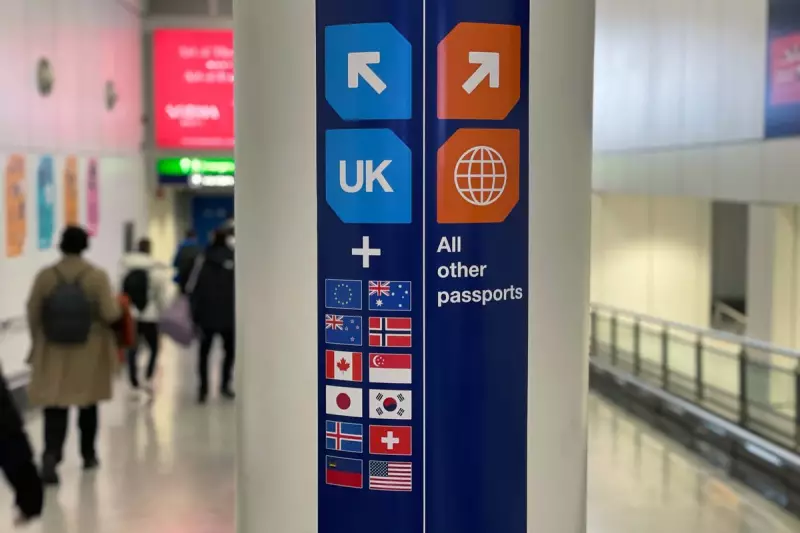
Millions of British citizens living abroad are facing a significant change to travel rules that could see them barred from boarding flights to the UK. From a key date in February 2026, dual nationals will no longer be able to enter the country using only a foreign passport.
What is Changing for British Dual Nationals?
Currently, British citizens who also hold citizenship of another country can use their foreign passport to travel to the UK for visits of up to six months. This is common for those residing in nations like EU member states, Australia, Canada, and the United States.
However, from 25 February 2026, this option will end. The Home Office has confirmed that from that date, all dual nationals must present either a valid UK passport, an Irish passport, or another foreign passport with a costly certificate of entitlement proving their right of abode.
The Reason Behind the New Rule: Electronic Travel Authorisation (ETA)
The change is a direct consequence of the UK's rollout of its Electronic Travel Authorisation (ETA) system. This digital permit is required for all foreign visitors who do not need a visa, including citizens from the EU, US, and other key nations.
The critical problem for dual nationals is that British citizens are prohibited from applying for an ETA. Therefore, from the enforcement date, a dual national presenting only a foreign passport at check-in will have no legal way to demonstrate their right to enter the UK. Airlines and ferry operators will be mandated to deny them boarding.
While the ETA system technically began in April 2025, full enforcement for all eligible nationalities commences on 25 February 2026.
What Are Your Options Before the Deadline?
Dual nationals need to act to ensure they can travel to the UK without disruption. There are several paths, with varying costs and processing times.
The most straightforward and economical choice is to obtain a British passport. In the UK, a standard adult passport costs £94.50 and typically takes around three weeks. For applications from abroad, the process is longer and more expensive.
An alternative is the "certificate of entitlement to the right of abode." This is a vignette placed in your foreign passport, but it comes with a steep price tag of £589. It also becomes invalid when that passport expires, requiring a new application.
For emergency travel where a passport cannot be obtained in time, you can apply for an Emergency Travel Document at a cost of £125, valid for a single journey to the UK.
Important travel note: When returning to your country of residence, you should use your foreign passport. Departing the UK involves no passport checks, but your airline or ferry company will need to see proof you can enter your destination. Using a British passport for this leg could cause complications.
If your airline's system expects you to use the same document for your inbound and outbound journey, you may need to contact them directly or use online check-in to specify your different travel documents for each leg of the trip.
Travelling Before the Cut-Off Date
The Home Office confirms that the old rules remain in place until the deadline. If you enter the UK using your foreign passport on or before 24 February 2026, you will be admitted and can stay beyond that date. The new rule applies to arrivals from 25 February onwards.
The government states the ETA system is part of creating a "more streamlined, digital immigration system" intended to be quicker and more secure. Irish passport holders remain unaffected, enjoying continued free travel to both the UK and the EU.
For the millions of British dual nationals worldwide, the message is clear: check your documentation now to avoid being told you cannot come home.