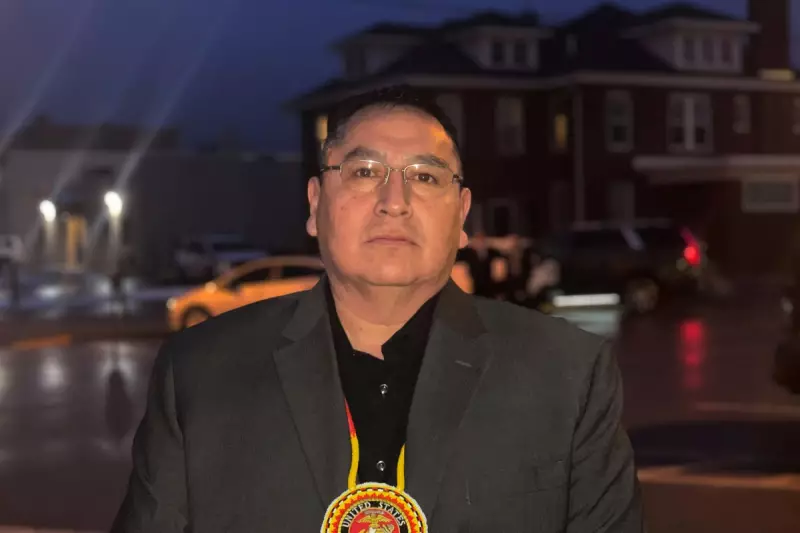
The president of the Oglala Sioux Tribe has publicly retracted serious allegations made earlier this week concerning the arrest of tribal members by immigration authorities and pressure from the federal government.
Claims of Arrests and Pressure Walked Back
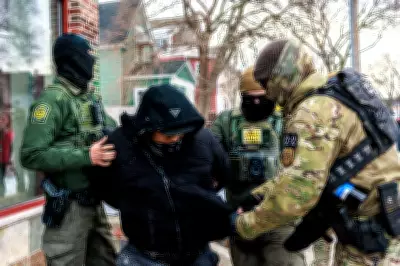
In a significant reversal, Tribal President Frank Star Comes Out has walked back claims detailed in a memo and press release issued earlier this week. He had initially stated that U.S. Immigration and Customs Enforcement (ICE) detained four Oglala Sioux tribal members in Minneapolis and labelled the actions a "treaty violation." Furthermore, he alleged that federal officials told the tribe it could only access information about the arrests if it entered into an "immigration agreement" with ICE and the Department of Homeland Security (DHS).
However, in an updated memo released on Thursday 15 January 2026, Star Comes Out said his earlier statement had been "misinterpreted." He clarified that federal officials did not make such a demand. Instead, he stated that during "cooperative communications," officials suggested that one option for easier access to information would be to enter into an immigration agreement. He did not specify what type of agreement this might entail.
The president also adjusted his position on the alleged arrests, noting the tribe was now "working with Tribal, State, and Federal officials to verify" the reports, whereas earlier he said he had been "made aware" of the detentions and had the first names of those involved.
DHS Denies All Allegations
The U.S. Department of Homeland Security has firmly pushed back against the original claims. A DHS spokesperson stated the agency cannot verify that any of its officers arrested or "even encountered" members of the Oglala Sioux Tribe. They also confirmed they have not found anyone in their detention centres claiming tribal membership.
"ICE did NOT ask the tribe for any kind of agreement," said Homeland Security spokeswoman Tricia McLaughlin. "We have simply asked for basic information on the individuals, such as names and date of birth so that we can run a proper check to provide them with the facts."
President Star Comes Out has not responded to repeated requests for comment following the release of his clarifying memo.
A Broader Context of Tension and Mistrust
This controversy unfolds against a backdrop of heightened concern among many Native American communities regarding immigration enforcement and racial profiling. Several tribes are currently grappling with whether to engage in agreements with DHS.
The Oglala Sioux Tribe itself has a history of tension with DHS, linked to Homeland Security Secretary Kristi Noem. When Noem was governor of South Dakota in 2024, Star Comes Out banned her from the Pine Ridge Reservation after she claimed, without evidence, that cartels were infiltrating state reservations. Noem further inflamed tensions by telling federal lawmakers that a gang called the "Ghost Dancers"—a name deeply sacred to the Oglala Sioux—was affiliated with cartels and committing murder on Pine Ridge.
This incident is not isolated. Last year, Navajo Nation President Buu Nygren reported members being stopped and detained by ICE in Arizona and New Mexico. In November, actress Elaine Miles, a member of the Confederated Tribes of the Umatilla Indian Reservation, said ICE officers in Washington state told her her tribal ID looked fake. Another case in Iowa saw a member of the Salt River Pima-Maricopa Indian Community mistakenly slated for transfer to ICE before being released.
Simultaneously, some tribes are reconsidering collaborations with immigration agencies. A tribal entity linked to the Prairie Band Potawatomi Nation terminated a near-$30 million federal contract to design immigrant detention centres after fierce internal criticism. In Alaska, Indigenous shareholders of the Bering Straits Native Corporation have advocated for divestment from all immigration detention centres.
The retraction by President Star Comes Out highlights the delicate and often fraught relationship between tribal sovereignty and federal immigration policy, a issue causing deep reflection within Native American communities across the United States.