Britain's citizenship system is facing a major crisis after official statistics revealed the number of people being granted British nationality has soared to an unprecedented high. The controversy has been ignited by the case of an Egyptian activist with a history of extremist online posts, raising serious questions about the integrity of the vetting process.
Record Numbers and a System Under Fire
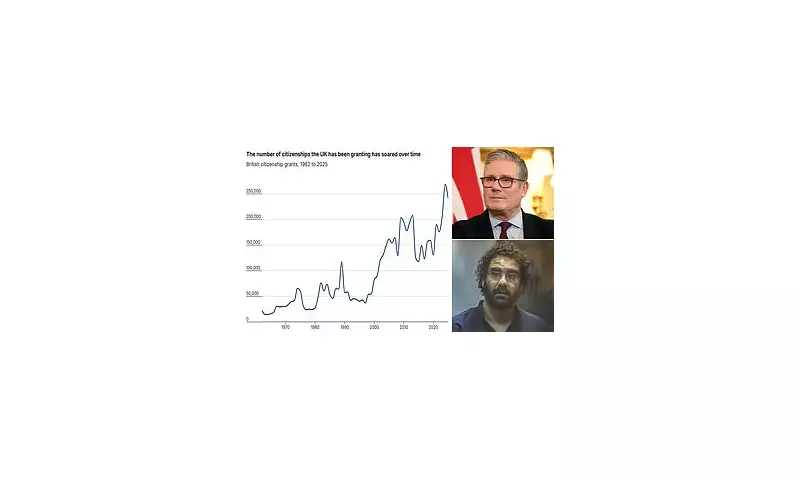
Home Office data shows that in 2024 alone, almost 270,000 applications for British citizenship were approved. This staggering figure is enough to populate a city the size of Newcastle or Plymouth and represents a doubling of the grant rate compared to a decade ago. The two highest annual totals on record have both occurred under the current Labour government, with 269,000 in 2024 and 241,000 in the year to September 2025.
Migration campaign groups have reacted with alarm, accusing the authorities of operating a superficial 'box-ticking' exercise. Robert Bates of the Centre for Migration Control told the Mail that Britain's laws are a 'soft touch', arguing that the value of a British passport has been 'cheapened'. Alp Mehmet of Migration Watch UK echoed this, stating citizenship is now handed out 'like confetti', with Britain granting more in one year than Japan did in nearly sixty.
The Alaa Abd El-Fattah Scandal Exposes Flaws
The debate has been supercharged by the case of Egyptian pro-democracy activist Alaa Abd El-Fattah. He was granted British citizenship in 2021 based on his mother being UK-born, a route that, following a Supreme Court ruling on human rights grounds, did not require him to pass the standard 'good character' test.
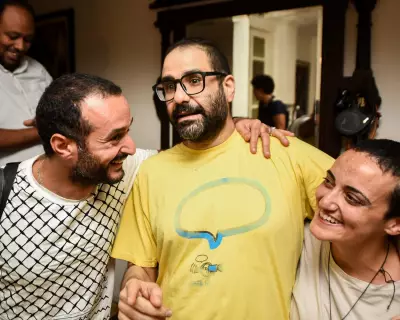
El-Fattah arrived in London on Boxing Day after a long campaign for his release from an Egyptian prison, where he was held on charges of spreading false news. Prime Minister Sir Keir Starmer publicly stated he was 'delighted' by his arrival. However, this welcome was swiftly overshadowed when a torrent of historical social media posts by El-Fattah resurfaced.
The posts, dating back to 2010 and 2011, contained vile racist and violent rhetoric. He called for the killing of Zionists and police officers, described British people as 'dogs and monkeys', and expressed pride in his racism against white people. In one post during the 2011 London riots, he encouraged people to 'hunt police'.
Political Fallout and Calls for Reform
The revelation has triggered a fierce political row. Tory leader Kemi Badenoch acknowledged it was a mistake to grant him citizenship, blaming officials for 'rubber-stamping' the application without escalating it. Shadow Justice Secretary Robert Jenrick branded El-Fattah a 'scumbag' who should be deported, while Reform UK pledged to change the law to make deporting dual nationals with anti-British views easier.
Foreign Secretary Yvette Cooper has ordered an urgent inquiry into the 'serious information failures' that left ministers unaware of his extremist background. Sir Keir Starmer has since called the posts 'abhorrent', though Downing Street insists he was not aware of them when he issued his welcome.
The case has intensified scrutiny on the entire settlement model. Home Secretary Shabana Mahmood has already announced plans for the biggest overhaul in 50 years, which will include doubling the minimum time to qualify for settled status from five to ten years. A Home Office spokesperson stated that becoming a British citizen is 'a privilege, not a right' and that the new system will be based on contribution and integration.
With record-breaking grant numbers and a high-profile case exposing critical vetting gaps, the pressure is now on the government to prove it can restore both rigour and public confidence in the path to British citizenship.