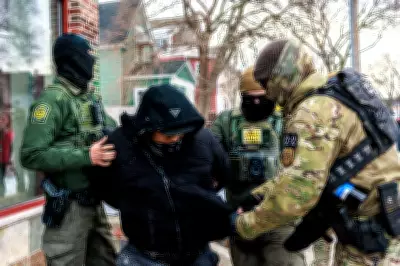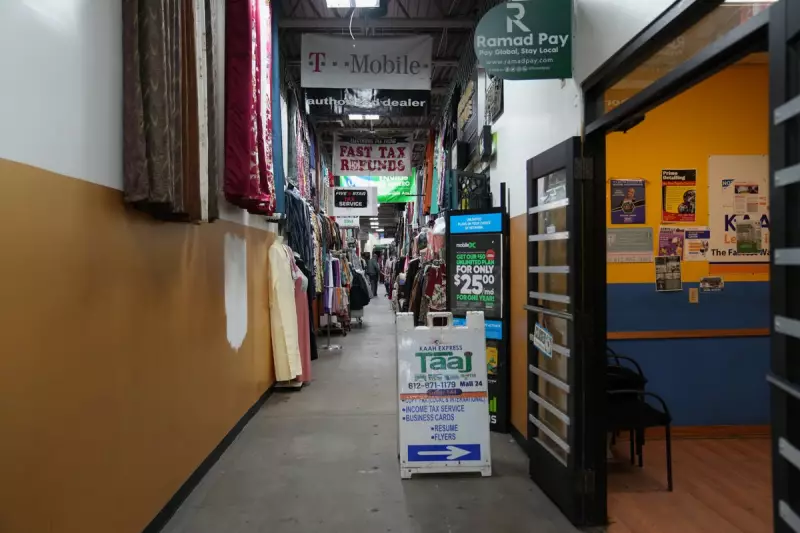
The bustling corridors of a major Somali shopping centre in Minneapolis have fallen silent, with rows of shuttered storefronts painting a stark picture of an economic and community crisis triggered by a federal immigration crackdown.
A Community Hub Paralyzed by Fear
On a recent Thursday afternoon, the usually vibrant Karmel Mall in south Minneapolis was unnaturally quiet. The sprawling complex, home to over a hundred small businesses offering everything from clothing and food to insurance and accounting, stood as a ghost of its former self. While the scent of fried food lingered and the central heating hummed, the noisy hallways were still, punctuated only by occasional, hushed conversations between vendors.
Business owners report a climate of profound fear, affecting both sellers and customers, regardless of their citizenship status. Many shops have simply stopped opening, anticipating no customers. "It's been like this for three weeks now," said Abdi Wahid, who works at his mother's convenience store in the mall. "Everywhere it's all been closed up, all the stores."
The Economic and Social Fallout of 'Operation Metro Surge'
Karmel Mall is more than a shopping destination; it's an economic and social heart for the largest Somali population in the United States, featuring housing, a mosque, and Quran classes. The chilling effect of the Trump administration's "Operation Metro Surge" has rippled far beyond this community, putting many immigrants across the city on edge.
However, President Donald Trump has singled out the Somali community in his deportation rhetoric following a recent government fraud case in Minnesota involving Somali defendants. Since December 2025, he has repeatedly targeted the community with derogatory language.
The economic impact is severe and quantifiable. Abdi Wahid noted that his family business once saw 15 to 20 customers in the early afternoon; now, securing even one is a challenge. He emphasised that fear extends to U.S. citizens, particularly after the killing of Renee Good and an ICE raid at Roosevelt High School in south Minneapolis, making people afraid of being targeted "just because of their race."
Homeland Security assistant secretary Tricia McLaughlin defended the operations in a statement, asserting that enforcement actions are based on "reasonable suspicion" regarding immigration status, not race or ethnicity.
Businesses Crippled, Travel Plans Cancelled
Upstairs in the mall, Bashir Garad, who runs Safari Travel & Accounting Services, has witnessed a near-total loss of customers. Furthermore, his existing clients, nearly all of whom are U.S. citizens of East African heritage, are cancelling travel plans, terrified they might not be allowed back into the country.
"The government is not doing the right thing," Garad stated. "If there's a criminal, there's a criminal. Regardless, there are ways to find the criminal, but to marginalize the community's name, and a whole people, that is unlawful."
For electronics seller Ibrahim Dahiye, the traditional winter slowdown has become a catastrophe. "No one comes here. All the stores are closed, few are open," he said. His monthly revenue has plummeted by $20,000 since the crackdown began, forcing him to pool funds just to pay rent. His employees are too frightened to come to work, and he now carries his passport constantly.
"I don't know what we can do," Dahiye said, expressing a sentiment of powerless despair shared by many. "We believe in Allah, but we can't do anything." The future of this vital community institution remains deeply uncertain as the enforcement operation continues.