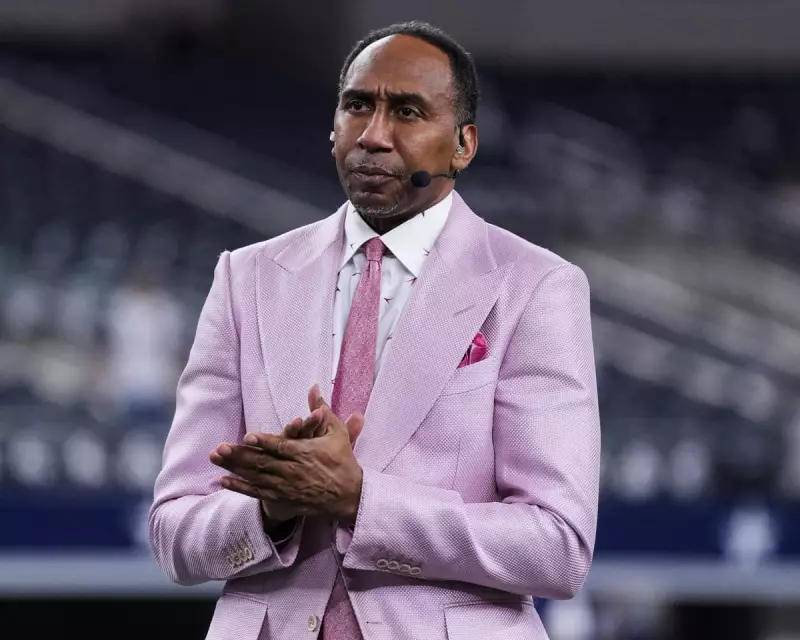
The sports media landscape in the United States has been rocked by a fierce controversy surrounding prominent ESPN broadcaster Stephen A Smith. His comments regarding the fatal shooting of American citizen Renee Good by an Immigration and Customs Enforcement (ICE) officer in Minnesota have ignited a firestorm of criticism and drawn parallels to political rhetoric he has previously condemned.
Outcry Over a Fatal ICE Encounter
This past weekend, hundreds of demonstrations erupted across the United States following the death of Renee Good, a mother of three. She was shot and killed by ICE officer Jonathan Ross during an encounter in Minnesota. The incident has reverberated far beyond immigration circles, penetrating the world of professional basketball.
High-profile NBA head coaches Steve Kerr of the Golden State Warriors and Doc Rivers of the Milwaukee Bucks publicly labelled Good's death as "murder". Kerr went further, condemning the Trump administration's efforts to characterise Good as a terrorist. "It's shameful that the government can come out and lie about what happened when there's video and witnesses who have all come out and disputed what the government is saying," Kerr stated. Public sentiment was also displayed when a fan at a Minnesota Timberwolves home game shouted "Go Home ICE" during a moment of silence for Good, a cry met with cheers from many in attendance.
Stephen A Smith's Controversial 'Hot Take'
Amid this widespread condemnation, Stephen A Smith offered a perspective that aligned more closely with the official stance. Analysing video of the incident, Smith argued from a "lawful perspective" that the officer's actions were justified and he should not expect prosecution. However, his subsequent remarks placed significant blame on the victim.
"She was parked in the middle of the street, and rather than get out the car, she wrongfully tried to drive off and wrongfully disregarded a law enforcement official, which is exactly what ICE is, and, as a result, lost her life because of it," Smith said. Critics were swift to point out that his emphasis on Good's failure to comply appeared to hold her responsible for being shot, despite posing no immediate threat to the officer.
Backlash and a Flawed Defence
The reaction to Smith's commentary was immediate and severe. CNN's Don Lemon labelled him a "disappointment", while former ESPN personality Keith Olbermann called for his dismissal. Veteran broadcaster Soledad O'Brien criticised Smith for routinely opining on complex social and legal issues far outside his sports expertise without the requisite knowledge.
In response, Smith claimed his words were taken out of context, insisting he was speaking purely on legality, not morality. "I'm talking about legality when I'm talking about justification, nothing else," he clarified. "Everything else about it is wrong. Morally and ethically wrong." Yet, he reiterated his core position, stating, "Renee Good did not do that," in reference to obeying law enforcement orders.
This defence was widely seen as inadequate. Commentators noted that simply stating an action was legal under statutes like qualified immunity is not a sufficient moral stand. The argument was made that failing to criticise an unjust law implicitly endorses it, a dangerous precedent given America's history of legalised injustices like slavery and Jim Crow segregation.
Echoes of a Familiar Political Playbook
Analysts observed that Smith's rhetoric has begun to mirror that of another controversial media figure, Jason Whitlock, whom Smith has long criticised. Both have echoed talking points popular with the pro-Trump 'MAGA' movement, positioning themselves as Black voices that the political right can showcase to deflect accusations of racism. This alignment, as Soledad O'Brien suggested, may be a calculated move to cultivate a specific, loyal audience with significant financial value.
The controversy underscores a deeper tension in sports media, where personalities like Stephen A Smith wield immense influence. The incident raises critical questions about the responsibilities of broadcasters when commenting on matters of life, death, and social justice far removed from the playing field. For now, the backlash serves as a stark reminder that public figures who venture into these charged debates face intense scrutiny over both the logic and the humanity of their positions.