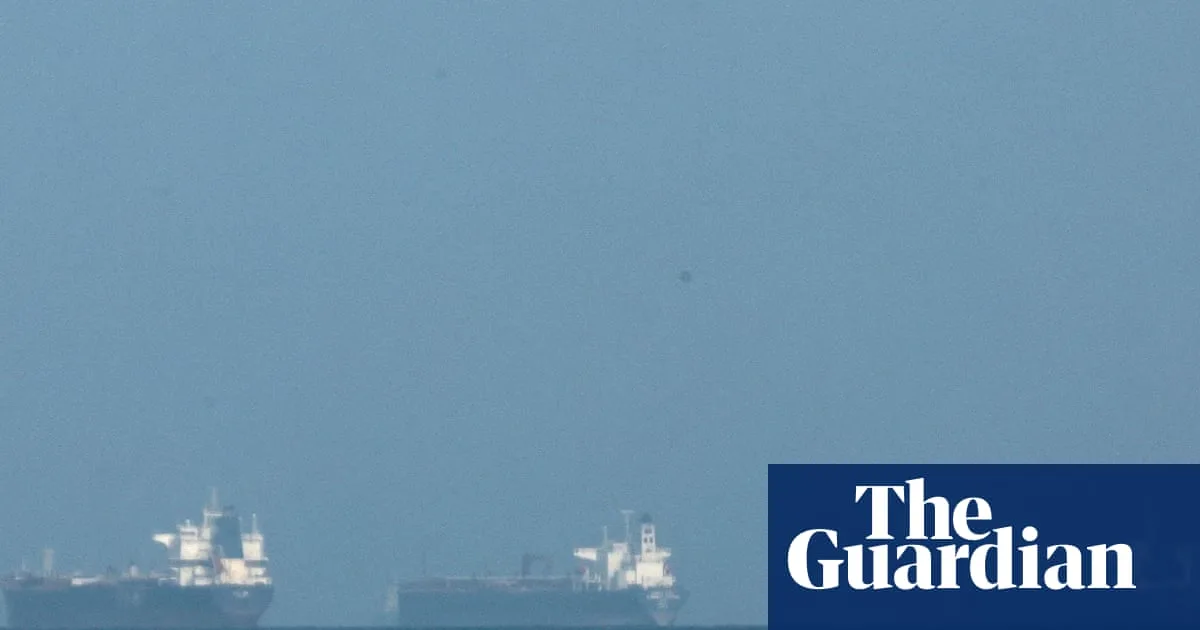
Thousands of seafarers are stranded on tankers in the Gulf after the Strait of Hormuz was effectively closed to shipping due to the escalating war on Iran, leaving crews trapped in a war zone with limited communication and growing anxiety.
A crew member on one of the stranded tankers described watching explosions light up the sky while loading crude oil at an industrial complex in the Gulf. The crew was initially told to stop loading but later ordered to continue. 'At the time we had no GPS, no communications, and we were sitting on more than a million barrels of floating oil,' the seafarer said. 'Now we're at anchor off the coast of Dubai and it looks like we're stuck here indefinitely. We're powerless; just waiting and hoping that nothing hits us.'
After war broke out on Saturday, Iran's Revolutionary Guards threatened to 'set ablaze' any western tanker attempting to transit the strait, through which about a fifth of the world's oil and liquefied natural gas passes. Marine traffic has evaporated as insurance costs have soared or cover has been withdrawn. About 200 tankers not under sanctions are stranded in the strait, according to Lloyd's List, along with hundreds of other vessels.

The seafarer, who has been on the tanker for three months and was due to head home to Europe, said the crew sends messages every few hours to the tanker owner reporting they are OK. 'In response we have received generic messages about a mental health hotline. But that's about that,' they said. The crew includes nationals from the Philippines and India. The seafarer added that internet access is limited and GPS signals are often jammed, making it difficult to contact family.
The effective blockade has caused oil and gas prices to surge and threatens to upend the global economy. At least six vessels have been attacked and two seafarers killed. Stephen Cotton, general secretary of the International Transport Workers' Federation, said the union is fielding desperate queries about repatriation but noted that 'you can't just get off a ship' and that most ship owners consider the region a no-go zone.