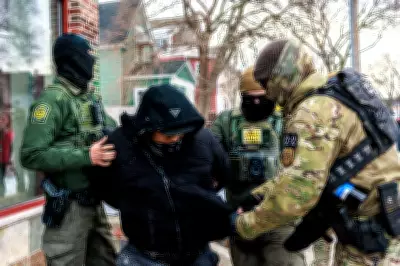
Since January of last year, a significant surge of armed federal officers has been deployed to several major US cities led by Democratic administrations. This escalation forms a core part of President Donald Trump's agenda for mass arrests and deportations within the United States.
The Agencies Driving the Enforcement Surge
The operation, described by the Department of Homeland Security (DHS) as its largest in history, has transformed cities like Minneapolis into focal points. While these high-profile deployments to Democratic strongholds capture headlines, federal agents are conducting raids nationwide in homes, businesses, and even sensitive locations like schools and hospitals.
The efforts have galvanised the President's core supporters but are also resulting in separated families and widespread fear within communities. The primary engine of this crackdown is Immigration and Customs Enforcement (ICE), whose budget was nearly tripled to $28.7bn by the One Big Beautiful Bill Act last year. Its officer count more than doubled from roughly 10,000 to 22,000 in 2025.
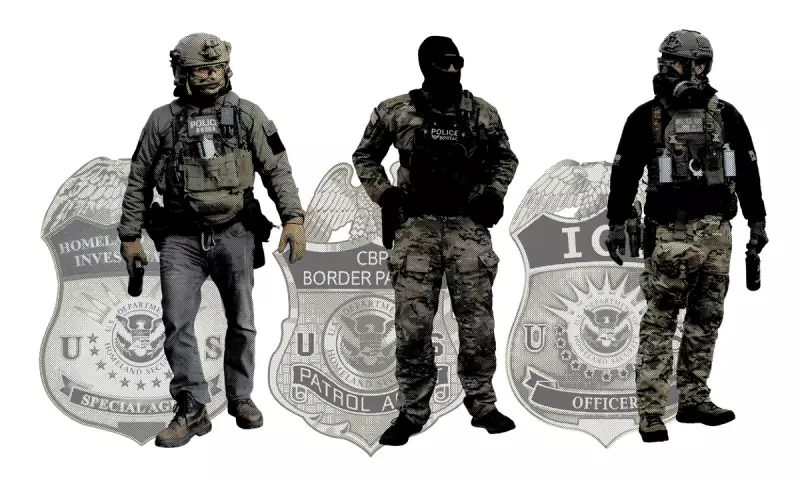
ICE's Key Branches: ERO and HSI
Within ICE, the Enforcement and Removal Operations (ERO) division is responsible for most deportations. Historically reliant on local police transfers, ERO's tactics have shifted under Trump. With cooperation restricted in many 'sanctuary' cities and a White House mandate to increase interior enforcement, ERO now conducts unprecedented arrests in public spaces and workplaces.
Meanwhile, agents from Homeland Security Investigations (HSI), ICE's investigative branch traditionally focused on complex international crimes, are increasingly being reassigned to support ERO's deportation operations on the streets.
Border Patrol's Expanding Role
Customs and Border Protection (CBP) and its Border Patrol component are playing a growing and controversial role away from the border. Border Patrol commander Gregory Bovino has maintained a high-profile presence in cities including Minneapolis, New Orleans, and Chicago. This urban enforcement represents a shift from their traditional role of apprehending individuals at the border, especially as unauthorised crossings have plummeted.
A Wider Net of Federal and Local Forces
The Trump administration has also drafted other federal agencies into the effort, including the FBI, DEA, ATF, and the US Marshals Service. At the local level, the dynamic is split: some Republican-led jurisdictions actively cooperate through formal 287(g) agreements, while many Democratic-led areas limit collaboration, creating a patchwork of enforcement intensity across the country.
Leading the political charge is DHS Secretary Kristi Noem, who has become the face of the push, frequently appearing with ICE on raids. Her tenure has been marked by actions such as overseeing the removal of over 200 Venezuelans to a prison in El Salvador without due process.
The result is a complex and often bewildering landscape of federal agents from multiple agencies, sometimes operating in masks and without identification, conducting interior enforcement on a scale not seen before, with profound social and political consequences.