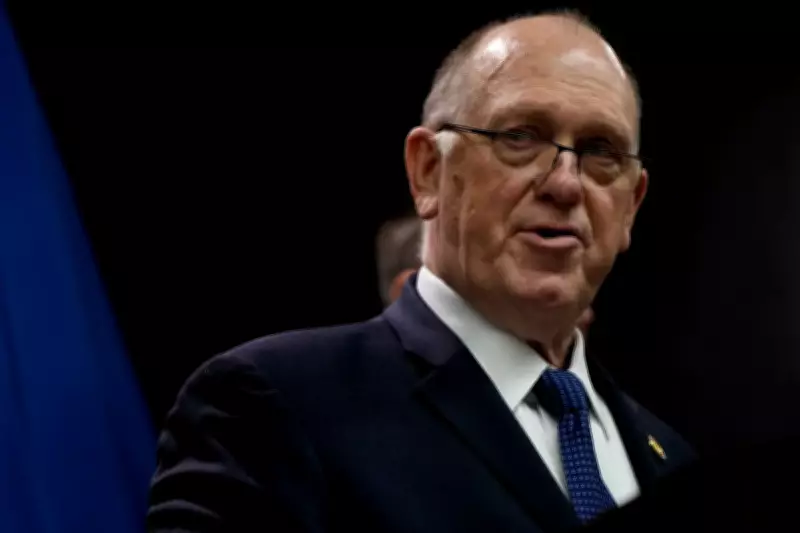
Tom Homan, serving as President Donald Trump's border czar, has indicated that immigration enforcement operations in Minnesota could see a reduction in the number of federal officers deployed. However, he emphasised that any such drawdown would be strictly conditional upon achieving "cooperation" from state officials in Minnesota.
Conditional Enforcement Reduction
Speaking at a news conference on Thursday, Homan outlined the administration's stance, suggesting that a decrease in officer presence on the streets of Minnesota would only occur if local authorities align with federal immigration policies. This marks his first public address since being dispatched to Minneapolis by the president, following a tragic incident where a federal immigration officer fatally shot a protester on Saturday.
Focus on Jail Cooperation
Homan strongly reiterated the necessity for local jails to notify Immigration and Customs Enforcement (ICE) about individuals in their custody who are eligible for removal from the country. He argued that this practice would lead to fewer officers needing to actively search for immigrants residing in the country illegally. According to Homan, transferring immigrants to ICE while they are still detained in jail environments enhances safety for officers and reduces risks associated with street-level operations.
"Provide us with access to illegal aliens and public safety threats within the secure confines of a jail," Homan stated, highlighting the administration's preference for coordinated enforcement efforts.
Targeted Operations and Mission Commitment
While acknowledging that immigration enforcement in Minnesota has faced challenges and imperfections, Homan remained resolute that the Trump administration is not abandoning its core mission. He pointed towards a renewed emphasis on what ICE terms "targeted operations," which are designed to concentrate efforts on apprehending immigrants who have committed crimes.
Homan elaborated that future actions would involve "targeted strategic enforcement operations" that prioritise individuals deemed as "public safety threats." This approach aims to streamline enforcement activities and focus resources on high-priority cases, potentially influencing the overall deployment of officers in the state.
The statements from Homan reflect ongoing tensions between federal immigration policies and state-level cooperation, with Minnesota serving as a focal point in this broader national debate. The potential for a drawdown in officer numbers remains contingent upon the level of collaboration forthcoming from Minnesota's state officials, underscoring the complex dynamics at play in immigration enforcement strategies.