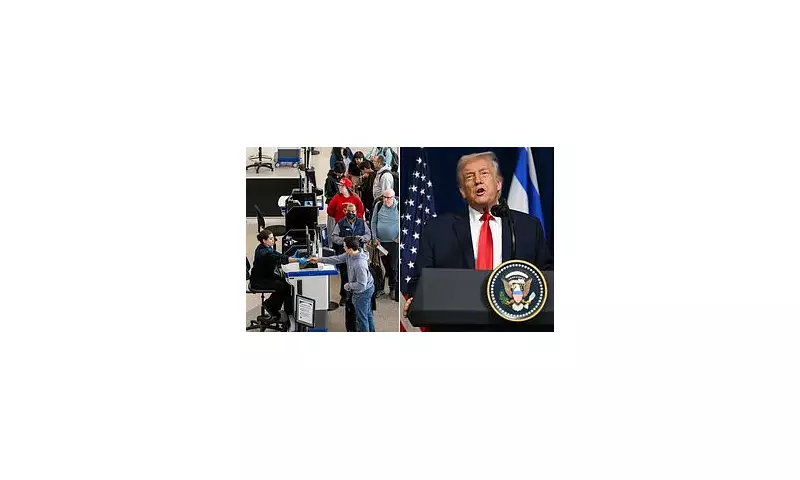
The administration of former President Donald Trump has ushered in the new year of 2026 by enacting a significant expansion of its controversial travel ban policy. Effective immediately, immigrants and nonimmigrants from seven nations—Burkina Faso, Laos, Mali, Niger, Sierra Leone, South Sudan, and Syria—are barred from entering the United States under fresh guidance issued to Customs and Border Protection officials.
Security Rationale and Expanding Restrictions
According to reports from ABC News, the White House justified the move, first signalled in early December, as targeting foreigners who 'intend to threaten' American citizens. Washington officials stated the decision stemmed from security assessments revealing what they termed 'persistent and severe deficiencies' in the affected countries' processes for screening travellers, vetting applicants, and sharing information.
Specific problems cited include high rates of visa overstays, refusals to accept deported nationals, terror threats, and unreliable local records that compromise background checks. This latest action brings the total number of countries facing US entry restrictions based solely on nationality to nearly 40.
Trigger Event and Aftermath
The policy shift follows a pledge from the Trump administration to toughen border security after a tragic shooting in Washington, DC, on 26 November, the day before Thanksgiving. Rahmanullah Lakanwal, an Afghan immigrant granted asylum in April 2024, has been charged with murder over the killing of 20-year-old Specialist Sarah Beckstrom. A second soldier, 24-year-old Staff Sergeant Andrew Wolfe, remains hospitalised.
Reports indicate Lakanwal, a father-of-five who arrived in the US in 2021 following the Biden administration's withdrawal from Afghanistan, struggled with PTSD and mental health issues. Community leaders had reportedly raised concerns about his deteriorating condition prior to the attack.
In the shooting's immediate aftermath, authorities paused Afghan visa processing and initiated retroactive reviews of green cards and asylum grants for individuals from banned countries. Benefits for immigrants from 19 nations were also halted.
Broader Policy Context and Reactions
This ban resurrects a hallmark of Trump's first term. In June, he announced bans for citizens of 12 countries and restrictions for 7 others. The latest order also imposes partial travel restrictions on Nigeria, Ivory Coast, and Senegal—the latter two having qualified for the 2026 FIFA World Cup, to be hosted in North America. While the administration has promised to admit athletes for the tournament, it has made no such assurances for fans from blacklisted countries.
In a related development, a new system for H-1B visas that prioritises migrants who would earn higher salaries took effect this week. A spokesman for US Citizenship and Immigration Services stated the previous random selection process was 'exploited and abused' to import cheaper foreign labour.
The bans have drawn sharp criticism. Immigration activists and Democratic lawmakers warn the measures are excessively broad and jeopardise family reunifications. In a tit-for-tat response, Mali and Burkina Faso have announced reciprocal travel restrictions on American nationals.
Homeland Security Secretary Kristi Noem set a hardline tone in December, promising a 'full travel ban' on countries sending what she called 'killers, leeches and entitlement junkies' to the US, in a post on the social media platform X.