Trump's Deportation Push at Critical Juncture as Border Czar Takes Charge in Minnesota
Former President Donald Trump is confronting a significant rebellion from his most devoted MAGA supporters amid mounting concerns that the most extensive mass deportation initiative in American history could collapse within the next twenty-four hours. This crisis emerges as high-stakes negotiations commence to potentially wind down federal immigration enforcement operations in Minneapolis, placing Trump's signature immigration policy in unprecedented jeopardy.
Leadership Shake-Up Sparks Fears of Strategic Capitulation
The arrival of White House Border Czar Tom Homan on the ground in Minnesota has created a palpable sense of anxiety among Trump's staunchest allies. While Homan's presence may reassure rank-and-file Immigration and Customs Enforcement agents who have grown increasingly disillusioned with what they perceive as Kristi Noem's haphazard leadership, there is a deepening fear that this leadership transition signals a dramatic shift in immigration strategy.
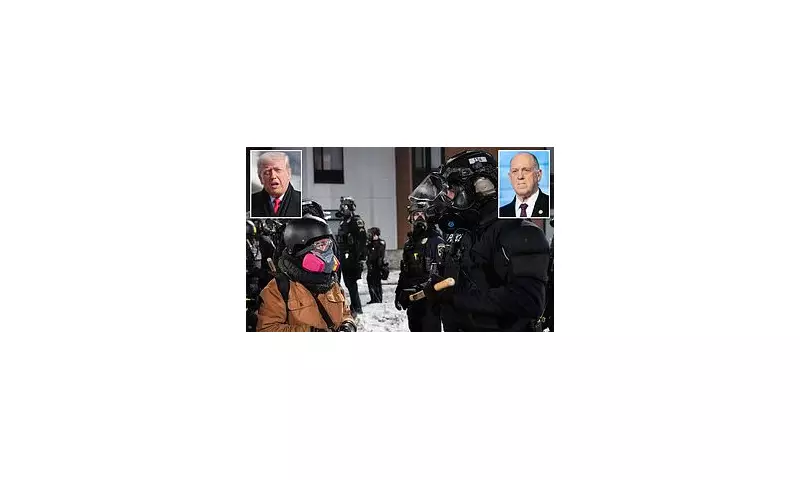
Many hardline supporters now worry this change could represent a capitulation to left-wing political pressures, fundamentally undermining the administration's deportation agenda. According to informed sources, Homan's primary objective will be to coordinate delicate negotiations between Minnesota's Democratic state leadership and the White House, a task made more urgent following the fatal shooting of ICU nurse Alex Pretti by an immigration agent.
Hardliners Warn of Historic Betrayal
Immigration hardliners are issuing stark warnings that any agreement brokered by Homan which results in ICE scaling back its Minnesota presence will be interpreted as the complete collapse of Trump's mass deportation platform and a major victory for liberal protesters. These concerns have intensified following Trump's own comments during a Fox News interview on Tuesday, where he suggested Homeland Security would 'deescalate a little bit' in Minneapolis.
Mike Howell, president of the Oversight Project and a longtime professional associate of Tom Homan, has been dispatched to Minnesota and is fervently hoping his friend will not strike any deal with the state's Democratic leadership. Howell argues that Homan must instead hold the line and potentially surge additional forces into the Twin Cities to prevent protesters from claiming a victory that could spell the end of the entire deportation movement.
'The mass deportation agenda could be completely wound back within the next 24 hours,' Howell told the Daily Mail, emphasising the critical nature of this moment. He added that this pivotal juncture will determine the trajectory of immigration enforcement operations for years to come, warning that allowing a 'rioters' veto' to limit federal operations means the administration has lost control of its agenda.
Internal White House Tensions and Political Repercussions
A source with close ties to the White House delivered an even more dire warning, suggesting that if Trump retreats on mass deportations, it would constitute the 'biggest betrayal' of Republican voters since President George H.W. Bush broke his famous 'no new taxes' pledge in 1990, an event that contributed to his electoral defeat. 'If Trump backs down on deportations, he might as well pack it in,' the insider stated bluntly.
These internal tensions come as protests have intensified across Minneapolis following two fatal shootings by immigration agents—the killing of Alex Pretti and earlier, Renee Good, a 37-year-old mother of three. Protesters have actively hampered ICE operations connected to the president's deportation push, creating a volatile standoff.
Personnel Changes and Operational Confusion
Further complicating the situation, the Department of Homeland Security has controversially reassigned Border Patrol commander Gregory Bovino, a close ally of Kristi Noem, to California as Homan prepares to assume control of Minnesota operations. This move has drawn criticism from conservative influencers who support mass deportation, accusing DHS leaders of abandoning Bovino following the deadly shootings.
Conservative media personality Nick Sortor claimed in a Tuesday interview that border patrol agents have received orders not to arrest 'non-criminal' undocumented immigrants. Sortor pointed to complaints from agents remaining in Minnesota after Bovino's departure, alleging they were told to stand down even when encountering clear evidence of illegal presence.
Howell expressed concern that withdrawing Bovino and his agents benefits Democratic leaders like Governor Tim Walz, questioning why the administration would negotiate with officials he associates with violent riots against federal authority.
The Stakes for Trump's Political Future
The pressure on Trump is immense, given that he centered his entire 2024 presidential campaign on instituting mass deportations nationwide in response to what he characterised as an immigration crisis at the southern border. However, his approval ratings on immigration have fallen by double digits since his first day in office, and a new YouGov survey reveals nearly half of Americans now view ICE unfavorably, with significant support for abolishing the agency.
During Trump's first year back in office, the administration fell short of its promise to deport one million individuals, with DHS year-end figures for 2025 showing approximately 675,000 deportations. Howell is now urging the White House to ignore public perception driven by media coverage and focus purely on deportation quantity, suggesting targeted operations in areas with high concentrations of undocumented individuals, such as worksite enforcement.
As Tom Homan enters negotiations with Minnesota's Democratic leadership, the ultimate decision will rest with President Trump. The coming twenty-four hours will determine whether the largest mass deportation effort in U.S. history advances or unravels, with profound implications for Trump's political legacy and the future of American immigration policy.