The Architects of Trump's Deportation Drive: Key Figures and Agencies
Overseeing Donald Trump's expansive mass deportation campaign and government-wide anti-immigration efforts is a complex network of long-standing loyalists, law enforcement veterans, and influential advisers dispersed across multiple federal agencies. The president has systematically reshaped the government apparatus to align with his mission to locate, arrest, and deport tens of thousands of individuals, deter new arrivals, and impose stringent restrictions on legal immigration. This has resulted in stranded refugees and compelled many immigrants to flee the country.
This mission increasingly intersects with his broader campaign of "retribution" against political adversaries, whose cities have seen occupation by federal officers and National Guard troops under his direct orders. The following outlines the principal agencies and key players steering these operations.
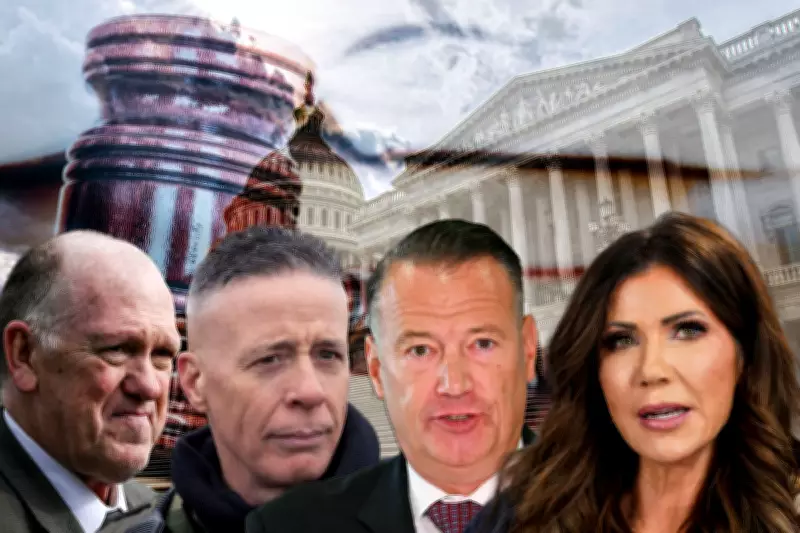
Stephen Miller: White House Deputy Chief of Policy
The architect of the Trump administration's stringent immigration policies during the first term has returned to the White House as a dominant force behind mass deportations and the president's unilateral attempts to redefine citizenship eligibility. Months into Trump's second term, the far-right adviser, aged 40, allegedly directed officials to execute mass arrests targeting at least 3,000 individuals daily to meet the president's ambition of removing one million people annually.
Miller has persistently advocated for terminating birthright citizenship, a contentious issue now before the Supreme Court. He has also proposed suspending the fundamental right of habeas corpus to expedite deportations without judicial hearings. However, following months of aggressive statements defending sweeping immigration operations that have provoked widespread public outrage, Miller recently suggested for the first time that federal officers in Minnesota who fatally shot Alex Pretti "may not have been following" established protocols.
Kristi Noem: Homeland Security Secretary
The former South Dakota governor leads the nation's third-largest Cabinet-level department, overseeing 22 agencies including Immigration and Customs Enforcement and Customs and Border Protection, the primary enforcement arms executing street-level operations. Homeland Security's annual budget exceeds $103 billion, with billions allocated for recruiting new ICE agents and expanding a detention network that currently incarcerates over 60,000 immigrants at any given time.
Corey Lewandowski, a former Trump campaign adviser, serves as a special government employee working closely with Noem, while her deputy secretary, Tricia McLaughlin, acts as a prominent department spokesperson. Facing mounting bipartisan criticism over her handling of chaos in Minnesota, Trump removed Noem's top official from the state, replacing him with a White House adviser reporting directly to the president, thereby effectively sidelining Noem from the chain of command.
Tom Homan: White House Border Czar
Deployed to Minnesota in what appeared to be a rebuke of Noem's performance, Homan previously played a significant role in immigration enforcement during the Obama administration, a period when the former president was labelled "deporter in chief" by immigrant communities. The United States conducted 432,000 deportations in 2013, the highest annual total on record.
Homan's work during that era is widely viewed as laying the groundwork for family separation policies that marred Trump's first term. He signalled a return to family detentions and the separation of families with U.S. citizen children even before Trump assumed office. Homan appointed David Venturella, a former executive for private prison contractor GEO Group, to support the administration's deportation agenda. Venturella now holds a senior role at ICE managing contracts for immigrant detention centres.
Gregory Bovino: Commander-at-Large, Customs and Border Protection
After leading surges of federal officers into Democratic-led cities throughout 2025, leaving a trail of lawsuits alleging brutality against immigrants and citizens alike, Noem's boots-on-the-ground commander has returned to his California base. Bovino, CBP's "commander-at-large," is a long-time border patrol officer whose career gained public prominence through the Trump administration's street-level operations.
Rather than reporting through CBP's standard chain of command, Bovino reported directly to Noem. Last summer, he joined his masked and heavily armed officers on streets, supporting ICE in several cities to block protesters and bystanders from operations, resulting in violent clashes. Following fatal shootings in Minnesota, Trump indicated Bovino may have overstepped, remarking, "You know, Bovino is very good. But he's a pretty out-there kind of a guy. And in some cases, that's good. Maybe it wasn't good here."
Todd Lyons: Acting Director, Immigration and Customs Enforcement
Lyons oversees an agency with over 27,400 personnel, an annual budget nearing $10 billion, and more than $74 billion in funding from Trump's domestic spending bill enacted last year. Previously a top official in ICE's Enforcement and Removal Operations bureau, he has shaped logistics for moving thousands of detainees through an extensive detention system, bluntly comparing the process to commercial parcel delivery.
"We need to get better at treating this like a business, where this mass deportation operation is something like you would see and say, like, Amazon trying to get your Prime delivery within 24 hours," Lyons stated at a law enforcement conference in Phoenix in 2025.
Joseph Edlow: Director, U.S. Citizenship and Immigration Services
Under Edlow's leadership, USCIS has undergone a radical transformation from a largely administrative body into a key law enforcement instrument. Immigrants attending routine check-ins or appointments have faced arrest at agency offices. USCIS is also establishing its own law enforcement arm with powers to investigate, arrest immigrants and their lawyers, execute warrants, and carry firearms.
Marco Rubio: Secretary of State
As Secretary of State, the former senator has been central to Trump's anti-immigration agenda, from engaging with El Salvador on imprisoning immigrants to revoking visas for hundreds of international students and threatening deportation for activists protesting Israel's war in Gaza. Internal documents revealed in court show Rubio personally approved the arrest and removal of five international student activists for Palestinian advocacy.
A federal judge determined that Rubio and Noem engaged in an "unconstitutional conspiracy" and violated First Amendment rights. Rubio has also overhauled the nation's refugee system and reshaped the State Department to advance Trump's America First approach, including plans for an Office of Remigration to track repatriation and support voluntary returns.