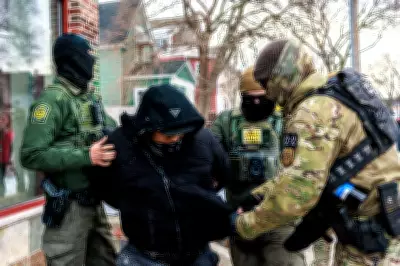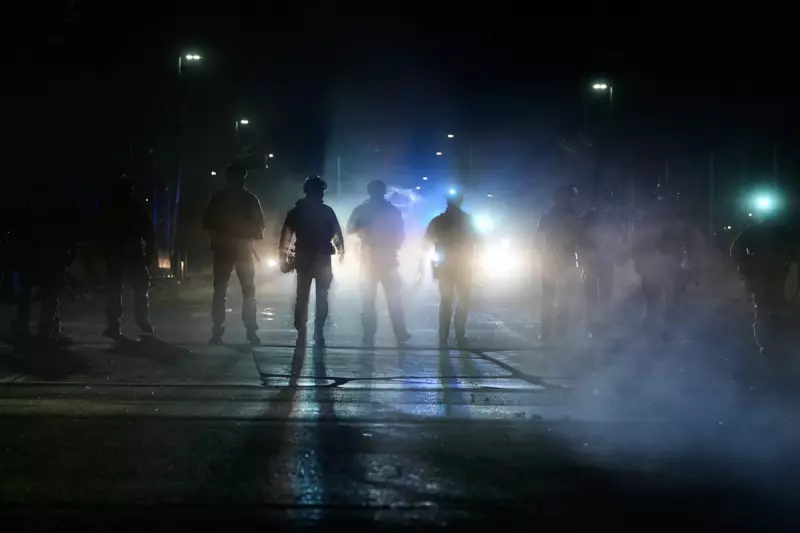
In the frosty dawn of the Twin Cities, a daily ritual of tension unfolds. Shortly after sunrise, hundreds of federal officers clad in tactical gear pour from an unremarkable office building near Minneapolis-St. Paul International Airport. Within minutes, their unmarked convoys of SUVs and vans fan out across Minneapolis, St. Paul, and surrounding suburbs, a now-feared sight that has redefined daily life for millions.
A Region Gripped by Fear and Protest
This is Operation Metro Surge, the Trump administration's largest and most aggressive immigration enforcement action to date. With more than 2,000 officers participating, the operation has ignited a fierce standoff between city and state officials and the federal government, sparked daily clashes, and resulted in tragedy with the death of a 37-year-old American citizen, Renee Good.
Protesters arrive early, gathering opposite the fenced federal compound that houses immigration courts. Their chants of "Go home!" and "ICE out!" greet the departing convoys. As night falls, tensions frequently escalate, with fences shaken, cars struck, and federal officers responding with tear gas and flash grenades before making arrests. "We're not going anywhere!" one woman recently vowed, encapsulating the defiant mood.
The Uneven Weight of Enforcement and Community Response
The crackdown's impact is starkly uneven. In wealthier, predominantly white suburbs, life continues with little disruption. Yet across immigrant neighbourhoods, the effect is profound. Minneapolis Mayor Jacob Frey, a Democrat, described the influx of thousands of federal agents as an "invasion," starkly contrasting it with his police force of just 600 officers.
The fear is palpable. Children are kept home from school, families avoid places of worship, and many businesses have shuttered temporarily. On Lake Street, a historic immigrant corridor, activists now crowd the sidewalks, whistles at the ready to warn of approaching convoys. Popular spots like Taqueria Los Ocampo are closed due to "current conditions," while the Somali community's Karmel Mall bears signs warning, "No ICE enter without court order."
Shadow of the Past and a Fractured Present
The operation casts a long shadow over a region still scarred by the murder of George Floyd nearly six years ago. That trauma was reopened when an ICE officer shot and killed Renee Good on January 7, after she stopped to help neighbours during an enforcement raid. Federal authorities claim the officer acted in self-defence, while local officials point to bystander footage contradicting that account.
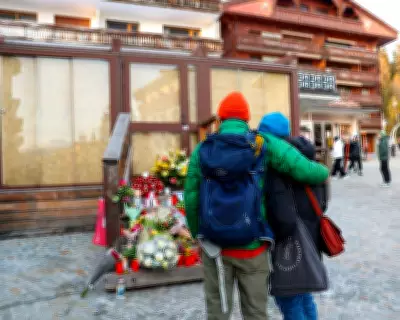
Residents like Johan Baumeister, who laid flowers at the scene, fear a return to the violent unrest seen after Floyd's death. While most clashes have involved shouting, graffiti, and damaged vehicles, the potential for escalation remains. Protesters provoke officers with snowballs and bullhorns; officers respond with pepper spray, broken car windows, and tear gas. Drivers now encounter intersections blocked by armed, masked officers, with helicopters thrumming overhead.
In response, a characteristically Minnesotan spirit of communal aid has emerged. Governor Tim Walz urged peaceful action and helping neighbours, whether by shovelling walks or volunteering. Residents distribute water to flush tear gas from eyes, stand watch at schools to warn parents, and deliver care packages. Organisations like Open Market MN report a surge in requests for food aid from families too afraid to leave home.
The human cost is often personal and bewildering. Christian Molina, driving to a mechanic, found himself followed, rammed, and questioned by officers he believes targeted him for his Hispanic appearance. Left with a wrecked car and no answers, his plaintive question—"Who's going to pay for my car?"—echoes the confusion and injustice felt by many across the Twin Cities, where chaos and tension have become the unsettling new normal.