Since Russia launched its full-scale invasion of Ukraine in 2022, more than 1,100 Ukrainians have been accused of committing arson, terrorism, or sabotage against their own country, according to Ukraine's security service, the SBU. Alarmingly, one in five of those accused are minors. Roughly half of the minors accused of betraying their country have been convicted, while the others have been acquitted, freed on bail, or sentenced to community service, per Ukraine's justice ministry. These young people are typically recruited online by strangers using aliases, believed by Ukrainian investigators to be working for Russia's special services.
The Case of Vitalii: A Teenager's Ordeal
Fifteen-year-old Vitalii and a group of friends were accused of sabotaging railway equipment near Chernihiv in September 2024. According to prosecutors, they poured flammable liquid over cabinets containing railroad communication and signaling equipment and set them on fire. They filmed the act and shared the video with a man called "Sania," who had offered them money online for specific tasks. Sania failed to mention that these tasks amounted to sabotage against the Ukrainian state. Vitalii received the equivalent of $23 for his role. More than a year later, he barely remembered how he spent the money, possibly buying a gift for his brother or school supplies. "You could say I was duped," Vitalii said. His lawyer is attempting to have the charges downgraded from sabotage to intentional property damage, arguing the boys had no intent to harm Ukraine.
Broader Implications and International Concerns
In most cases, those charged with arson or sabotage are motivated by money rather than pro-Russian sympathies. A March 2025 report by the United Nations Office of the High Commissioner for Human Rights noted a surge in "credible allegations" that Russia had used Ukrainian children for surveillance and sabotage. Last year, a 17-year-old died and a 15-year-old was seriously injured when an explosive device they were instructed to build detonated. In March, two police officers were injured in explosions near Kyiv, which the SBU called a terrorist attack orchestrated by Russia. The UN report stated, "Should these incidents be linked to the armed conflict, such use of children would be in violation of the prohibition in international law on the recruitment or use of children in hostilities." Recruitment of teen spies is not limited to Ukraine; across Europe, at least a dozen teens have been arrested in Russia-linked sabotage and spying cases.
Efforts to Combat Recruitment and Support Minors
The SBU and Ukraine's National Police launched an ad campaign to discourage young Ukrainians from working for Russia. A Telegram bot allows people to report acquaintances offered money for sabotage. As of February 2026, 240 minors were involved in crimes against national security, arson, or terrorist acts linked to Russia's special services, with 102 detained. Schools are also on the front lines. Physics teacher Hennadiy Yachnyi teaches at a detention center in Chernihiv, part of a program pairing school teachers with minors in detention. "I don't see them as criminals," Yachnyi said. "These are students, just students." School director Antonina Kharchenko, who sends teachers to the detention center, emphasized that children are often duped into making easy money. "They all come from Ukrainian families. They decide to earn a penny but they're still children," she said. "And look around – this is a place with poverty, with war, fathers being away on the front, this is fertile recruiting ground for Russians."
Vitalii's Release and Ongoing Struggle
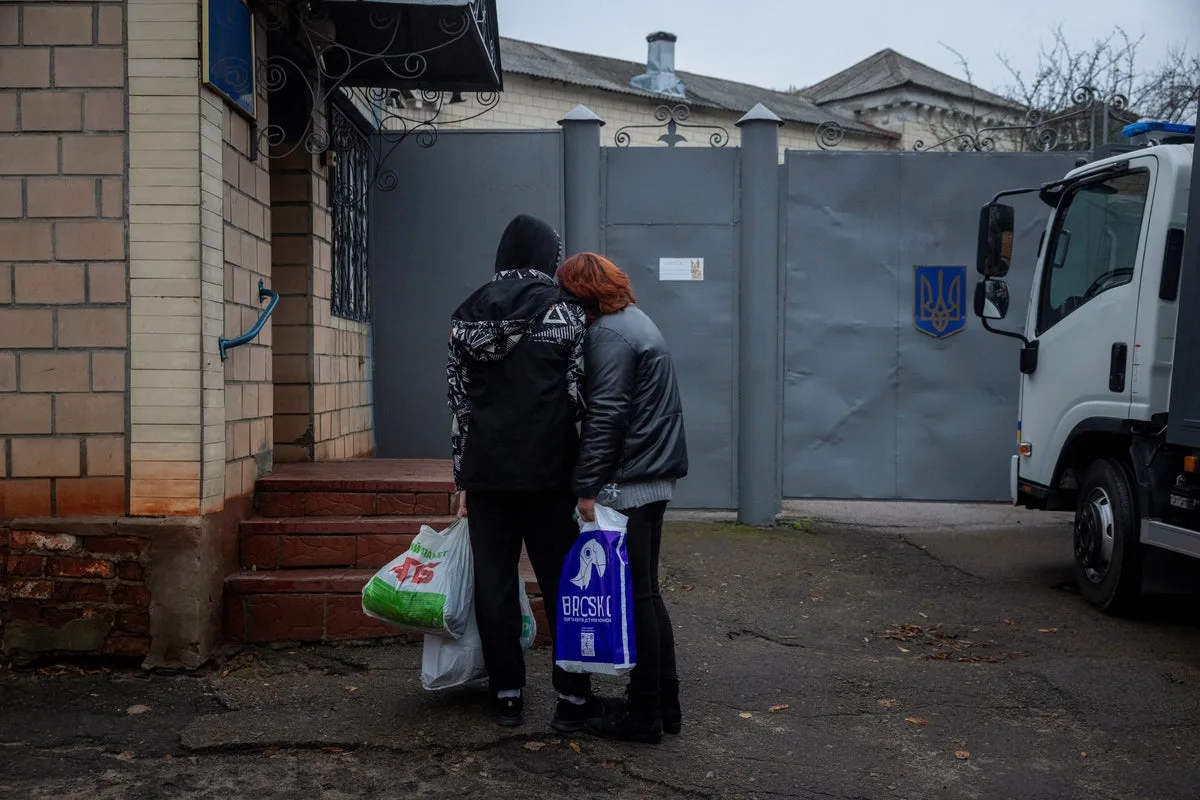
After spending over a year in pre-trial detention, Vitalii was released on bail in November 2025. His mother Nataliia gathered $6,000 through a bank loan and help from relatives. "This year was probably the most terrible in my life," she said. Vitalii's trial is ongoing, and his lawyer plans to appeal any conviction. Vitalii's mother still defends him: "I think these boys, they also didn't understand what they were doing." Standing outside his home, Vitalii bowed his head, listening in silence. The case highlights the difficult questions Ukraine faces: What is justice for minors induced to betray their country? Can they return to a society battered by war? And what does Ukraine owe these children who grew up in wartime?