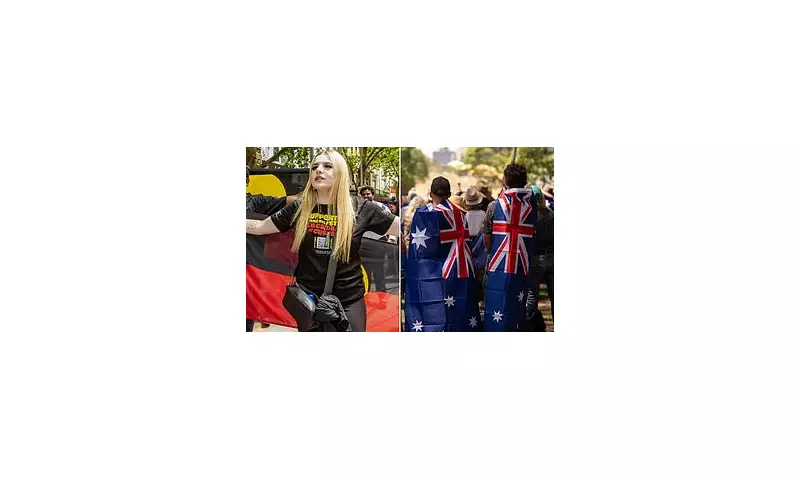
In a significant decision balancing public safety with democratic rights, New South Wales Police have confirmed that both the annual Invasion Day rally and a separate anti-immigration demonstration will be permitted to proceed on Australia Day. This comes despite authorities extending a general protest ban across parts of Sydney for another fortnight, maintaining restrictions established after December's devastating terrorist attack at Bondi Beach.
Targeted Restrictions Remain in Place
The Public Assembly Restriction Declaration continues to apply to specific areas of Sydney, though police have lifted bans for Hyde Park and other central business district locations south of Liverpool Street. Restrictions remain firmly in place for Darling Harbour, the northern CBD, and the eastern suburbs command area that includes Bondi Beach itself.
Commissioner Mal Lanyon emphasised that the decision represents careful calibration between competing priorities. 'It's about getting the balance right between community safety and a right to protest,' he stated, acknowledging that previous Invasion Day gatherings had been 'incredibly peaceful.'

Separate Rallies Receive Green Light
Hundreds are expected to converge on Hyde Park for the Invasion Day rally, which opposes the national holiday marking the First Fleet's arrival in 1788. Commissioner Lanyon explained that this protest would be managed along College Street and directed away from southern Sydney, a route he believes 'reduces the risk to the community.'
Simultaneously, the March for Australia anti-immigration rally will proceed from Prince Alfred Park to Moore Park, operating outside the restricted zones. Commissioner Lanyon clarified that the police decision 'is not protest agnostic' and noted that any group could now submit formal applications for protest authorisation.
Community Safety Remains Paramount
With tens of thousands expected in the CBD for Australia Day celebrations, police have underscored their commitment to maintaining public order. 'This is about making sure we enable people to protest, enable free speech, but make sure the community remains safe,' Commissioner Lanyon emphasised, adding that the period requires 'calm' and 'peace' as the state remains 'less than six weeks from the most serious and devastating terrorist attack ever in NSW.'
Police retain authority to issue move-on directions to anyone causing obstructions, behaving intimidatorily, or likely to 'cause fear' in others, ensuring they can respond dynamically to any emerging situations.
Mixed Reactions from Community Leaders
The exemption has sparked divided responses from political and civil liberties representatives. NSW Greens spokeswoman Sue Higginson criticised the underlying legislation, stating: 'The number of police required to prevent a peaceful street march on Sunday far exceeded the number of police that would be required to facilitate a peaceful march through the streets, I certainly hope police have woken up to the absurdity of these broken laws.'
Timothy Roberts, president of the NSW Council of Civil Liberties, offered measured criticism to The Australian Financial Review: 'While we welcome the NSW Police saying that it will not mass arrest people for marching in the Invasion Day rally in Sydney, what a very low bar that is for our democratic freedoms in NSW.'
Future Restrictions Under Review
Protest restrictions could potentially be extended for a third time on February 3rd, indicating that authorities remain vigilant about maintaining public safety in sensitive locations. The situation continues to evolve as police monitor both planned demonstrations and broader security considerations across Sydney's metropolitan area.