

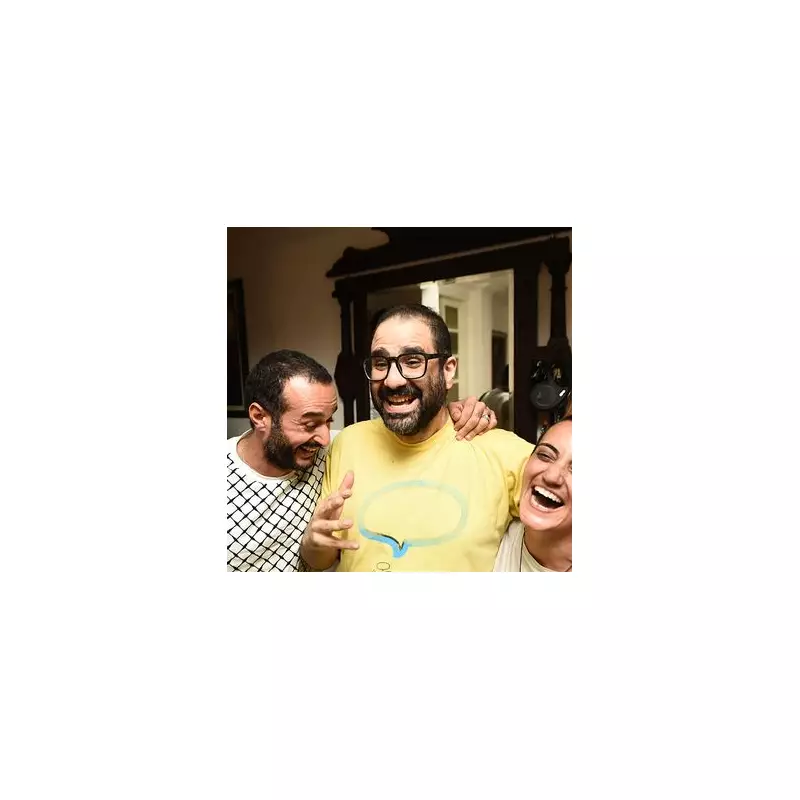
The British-Egyptian activist Alaa Abd El-Fattah has issued an unequivocal apology for a series of historic social media posts that appear to advocate violence against Zionists, sparking a fierce political backlash and calls for his citizenship to be revoked.
Apology Issued Amidst Reunion and Backlash
Mr Abd El-Fattah, a British citizen who was illegally detained in Egypt for six years, returned to the UK and was reunited with his family on Boxing Day. His release, secured after a long-running campaign supported by both Tory and Labour governments, was initially welcomed by Prime Minister Keir Starmer.
However, the mood shifted dramatically when posts from the activist's X (formerly Twitter) account, dating back to 2010 and 2012, came to light. In them, he described the killing of Zionists as heroic, stating "we need to kill more of them", and in a separate post referred to British people as dogs and monkeys.

Political Condemnation and Defence
The revelation prompted immediate and severe condemnation. The Conservative shadow Home Secretary, Chris Philp, labelled Mr Abd El-Fattah a "despicable scumbag" and demanded the government consider stripping him of his British citizenship, which was granted in December 2021 under Boris Johnson.
In a formal statement, a Foreign Office spokesperson said: "Mr El-Fattah is a British citizen... The Government condemns Mr El-Fattah's historic tweets and considers them to be abhorrent." It is understood the Prime Minister was unaware of the posts when he expressed delight at the activist's return.
In his apology, Mr Abd El-Fattah stated he was "shaken" that the tweets were being used to attack his integrity as he reunited with his family. "Looking at the tweets now... I do understand how shocking and hurtful they are, and for that I unequivocally apologise," he said. He attributed them to the "anger and frustrations" of a young man during regional wars and police brutality in Egypt.
Concerns from Jewish Community Groups
The Board of Deputies of British Jews and the Jewish Leadership Council voiced serious concerns, highlighting an "urgent need" to ascertain whether Mr Abd El-Fattah still holds the views expressed online. The latter group linked the rhetoric to recent antisemitic attacks, stating: "We know from Heaton Park, Manchester, and Bondi Beach that there are those who hear such words as a call to action."
Mr Abd El-Fattah defended some tweets as being misunderstood, claiming one alleged to be homophobic was actually mocking homophobia, and another was satirising Holocaust denial. "I take accusations of antisemitism very seriously," he added, citing his record of supporting minority rights in Egypt.
The activist's past posts previously cost him a nomination for the European Parliament's Sakharov Prize in 2014, after a 2012 tweet calling for the murder of Israelis was discovered.
Despite the controversy, Mr Abd El-Fattah expressed gratitude for the public support that helped secure his release from detention, which UN investigators had branded a breach of international law. He was pardoned by Egyptian President Abdel-Fattah el-Sisi in September before his travel ban was lifted.






