China Escalates Pressure on Underground Catholic Communities
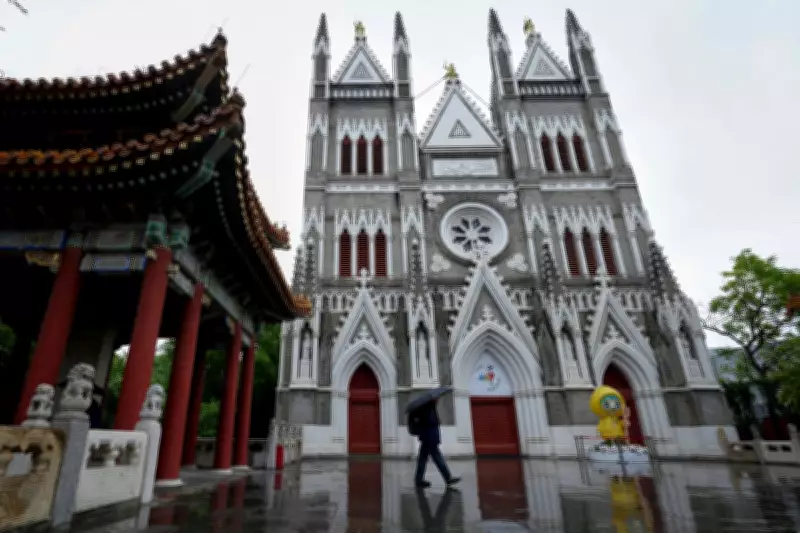
Chinese authorities are significantly increasing pressure on underground Catholic communities to join the state-controlled official church while simultaneously tightening surveillance and travel restrictions on all of China's estimated 12 million Catholics, according to a comprehensive new report from Human Rights Watch released on Wednesday.
Decade-Long Campaign of Religious Control
The detailed report from the international rights organization indicates this heightened pressure forms part of a decade-old campaign designed to ensure religious denominations and independent churches demonstrate loyalty to the officially atheist Communist Party. China's Catholic population has long been divided between an official, state-controlled church that historically didn't recognize papal authority and an underground church that maintained loyalty to Rome despite decades of persecution.
"Catholics in China face escalating repression that violates their religious freedoms," stated Yalkun Uluyol, a China researcher at Human Rights Watch. "Pope Leo XIV should urgently review the agreement and press Beijing to end the persecution and intimidation of underground churches, clergy, and worshippers."

2018 Vatican-China Agreement and Its Aftermath
Pope Francis sought to ease Vatican-China tensions in 2018 through a landmark agreement that granted the state-controlled church influence in naming bishops—a responsibility traditionally exclusive to the pope. Under this arrangement, Beijing proposes bishop candidates whom the pope can then veto, though the complete text of the agreement has never been publicly disclosed.
Since the agreement's implementation, Human Rights Watch asserts Chinese authorities have pressured underground Catholic communities to join the state-controlled Chinese Catholic Patriotic Association "by arbitrarily detaining, forcibly disappearing ... and subjecting underground Catholic bishops and priests to house arrest."
Expanding Religious Restrictions and Surveillance
The government has dramatically intensified ideological control, surveillance mechanisms, restrictions on religious activities, and limitations on foreign connections within official churches, according to the rights group. Regulations adopted in December now subject foreign travel by Catholic clergy to mandatory state approval.
China officially recognizes only five religions—Buddhism, Taoism, Catholicism, Protestantism, and Islam—and maintains strict supervision over all permitted religious practice. In 2016, President Xi Jinping announced plans to "Sinicize" the country's religions, increasing oversight and ideological control to align religious practice with Communist Party ideology and leadership.
Widespread Religious Repression Documented
Since the Sinicization campaign began, authorities have demolished hundreds of church buildings or removed crosses from their rooftops, prevented adherents from gathering in unofficial churches, restricted access to Bibles, and confiscated religious materials not authorized by the government. The campaign has also resulted in severe repression of Tibetan Buddhism and Islam, according to Human Rights Watch.
In October, Pastor Ezra Jin Mingri of the prominent underground Zion Church was detained at his home in Guangxi province alongside dozens of other church leaders across China, according to his daughter, fellow church pastors, and religious monitoring groups. Zion Church represents one of the largest so-called underground or house churches that remain unregistered with Chinese authorities, defying government restrictions requiring worship only in registered congregations.
International Response and Calls for Action
Last month, ChinaAid—a U.S.-based group advocating for religious freedom in China—urged U.S. President Donald Trump to demand Mingri's release ahead of his planned meeting with Xi in May. "The Chinese Communist Party has escalated its systematic campaign to eradicate independent religious life," stated Bob Fu, ChinaAid's president. "The United States must respond with consequences—not just concern."

Human Rights Watch researchers are not permitted entry into China, and their report relies on input from individuals outside China "who had firsthand knowledge of Catholic life in China," along with experts on religious freedom and Catholicism in China. The Vatican spokesman, Matteo Bruni, did not immediately respond to requests for comment on the report, nor did China's Foreign Ministry when queried by The Associated Press.
Pope Leo XIV, who assumed the papacy last year, made his first appointment of a Chinese bishop under the 2018 agreement in June and indicated in a subsequent interview that he would continue with the agreement "in the short term." The pontiff acknowledged the complexity of the situation, stating, "I'm also in ongoing dialogue with a number of people, Chinese, on both sides of some of the issues that are there. It's a very difficult situation."