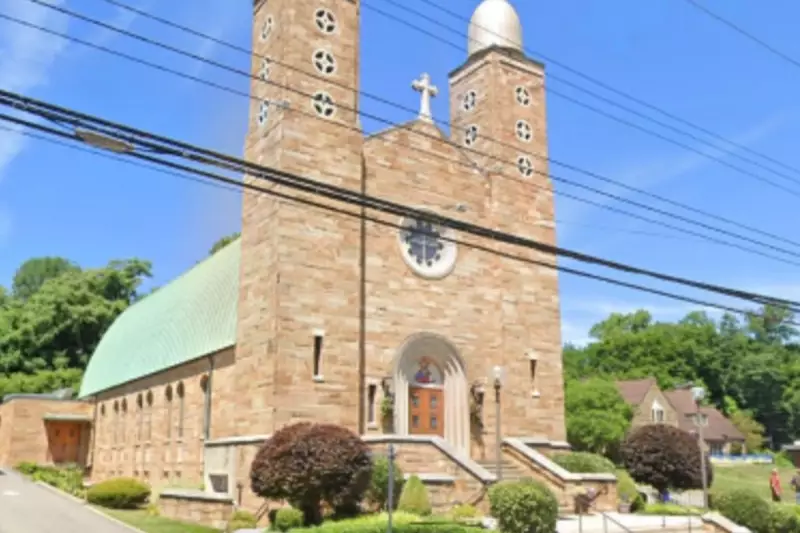
A Ukrainian Catholic church in Pennsylvania has initiated legal proceedings against local authorities, claiming religious discrimination following the rejection of its plans to construct a bell tower over noise pollution fears.
Chapel Proposal Denied Over Noise Concerns
Holy Trinity Ukrainian Catholic Church had submitted an application to Collier Township in 2023, seeking approval to build a substantial 13,000-square-foot chapel complete with a bell tower. According to legal documents filed by the church earlier this month, township officials denied the proposal citing potential "economic hardship and inconveniences" for local residents, with particular concerns raised about the noise that would be generated by the chapel's bells.
Scaled-Back Approval With Stringent Conditions
Following the initial rejection, the township later granted approval for a modified version of the project, but imposed several restrictive conditions. In a letter dated June 10, 2025, officials stipulated that bells could only be rung for a maximum of three and a half minutes per day, and solely for funeral or memorial services. Furthermore, they specified that memorial services could only be conducted for individuals who had passed away after June 9, 2025.

The township has consistently maintained that religion played no part in their decision-making process, framing the matter purely as a land use issue that underwent standard procedural review.
Church Alleges Unequal Treatment and Discrimination
In their lawsuit, the church has presented several arguments challenging the township's position. Legal representatives for Holy Trinity have pointed out that the proposed chapel would be situated directly within the flight path of Pittsburgh International Airport, suggesting that aircraft noise represents a "much more disruptive" source of noise pollution than any church bells could produce.
Jeremy Dys, attorney for the church, told The Independent: "The township is treating them unfairly as compared to other like institutions in the area, and then they're also acting arbitrarily when it comes to their religion."
Dys specifically questioned the rationale behind the three-and-a-half-minute bell ringing restriction, stating: "That's picked out of thin air. They may say that it's because of noise, and that's sort of funny given the fact that the 757s make a fair bit more noise than any bell's going to make."
Comparison With Nearby Non-Religious Development
The legal complaint highlights that a local carpenters' union situated near the proposed chapel site operates from a 93,000-square-foot complex, significantly larger than the church's planned development. The church argues this demonstrates unequal treatment, claiming the township has "blatantly violated" the Religious Land Use and Institutionalized Persons Act.
Dys explained the legal framework: "You have to treat religious land use on equal terms, meaning you can't say yes to the carpenter's union and no to the chapel because the chapel is religious. That's discrimination if you engage in that behavior, which we believe the township has done here."
Substantial Burden Argument
The attorney further elaborated on the legal standards, noting that the law prohibits placing "a substantial burden on the free exercise of religion and someone's religious use of their property, unless you have a compelling reason for doing so."
Dys argued that the township's conditions clearly constitute such a burden: "Clearly, picking out three and a half minutes of a bell ringing or saying you can't memorialize the dead before June 9th, 2025. That's a substantial burden. There's been no compelling interest that has been articulated; if any has been articulated, it has failed."
Township's Defence
Brian P. Gabriel, legal counsel representing Collier Township, has firmly rejected allegations of religious discrimination. He told The Independent: "These were land use issues that went through a process and there was certainly no ... from the township's perspective, consideration of religion as a reason to say, well, we're gonna require this or that."
The case continues to develop as both parties prepare their legal arguments, with the church seeking to overturn what it perceives as discriminatory restrictions on its religious practices and property use.