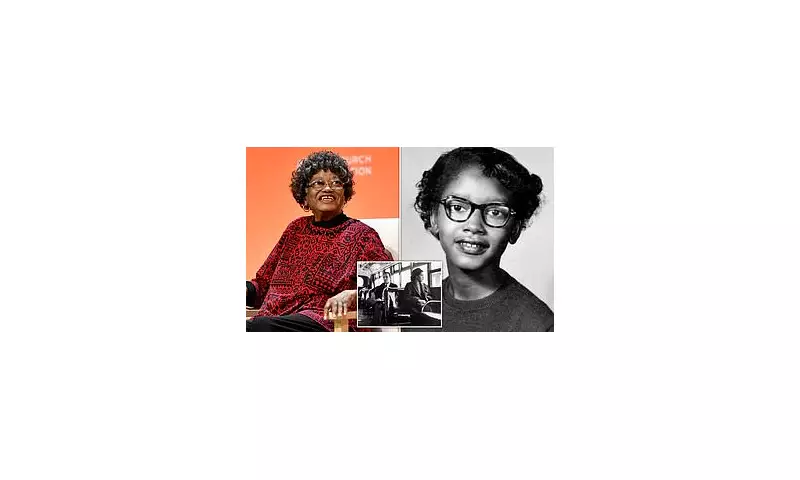
The civil rights movement has lost one of its foundational figures with the death of Claudette Colvin at the age of 86. Her foundation announced her passing on Tuesday, celebrating her as a 'beloved mother, grandmother, and civil rights pioneer.' The statement poignantly noted: 'To us, she was more than a historical figure. She was the heart of our family, wise, resilient, and grounded in faith.'
The Defiance That Preceded a Movement
Long before Rosa Parks' famous act of resistance, a 15-year-old Claudette Colvin took a stand. On March 2, 1955, in Montgomery, Alabama, Colvin refused an order to surrender her bus seat to a white woman. She was arrested for her defiance, an event that occurred a full nine months before Parks' more widely recognised protest in the same city.
Colvin later recalled that on that fateful day, 'rebellion was on my mind.' When the bus driver demanded she and three other Black girls vacate their row, she held her ground. 'So I was not going to move that day. I told them that history had me glued to the seat,' she said in a 2021 interview. Officers forcibly removed her from the bus, and she was charged with assault, disorderly conduct, and violating segregation laws.

Why History Overlooked a Pioneer
Despite her courageous act, Colvin did not become the public face of the burgeoning bus desegregation campaign. In a 2009 interview, she revealed her mother advised her: 'Let Rosa be the one. White people aren't going to bother Rosa, her skin is lighter than yours and they like her.'
Civil rights leaders of the time, including those at the NAACP, made a strategic decision. As biographer Philip Hoose discovered, they worried they 'couldn’t win with her.' Colvin was a teenager from a lower-class family, and she soon became pregnant. Leaders believed the more respectable, lighter-skinned Rosa Parks, a secretary for the local NAACP, would be a more sympathetic figure to white audiences and the media.
'They wanted someone, I believe, who would be impressive to white people, and be a drawing,' Colvin told The Guardian. 'They didn't think that a dark-skinned teenager, low income without a degree, could contribute.'
A Lasting Legal Legacy and Late Recognition
Colvin's role was far from over. She became a key plaintiff in the landmark 1956 federal court case Browder v. Gayle, alongside Aurelia Browder, Susie McDonald, and Mary Louise Smith. Represented by attorney Fred Gray, who also acted for Rosa Parks, the women successfully challenged bus segregation laws. The case reached the U.S. Supreme Court, which ruled segregation on public buses unconstitutional.
'I don’t mean to take anything away from Mrs. Parks, but Claudette gave all of us the moral courage to do what we did,' Fred Gray stated.
For decades, Colvin lived a quiet life, working as a nursing aide in New York City. Her story gained wider public attention following the 2009 publication of Hoose's biography, Claudette Colvin: Twice Toward Justice. In a significant act of justice, her juvenile court record from the 1955 arrest was expunged in 2021.
Claudette Colvin is survived by her younger son, Randy, her sisters, and her grandchildren. Her eldest son, Raymond, predeceased her in 1993. Her family's statement promised they would 'remember her laughter, her sharp wit, and her unwavering belief in justice and human dignity.'