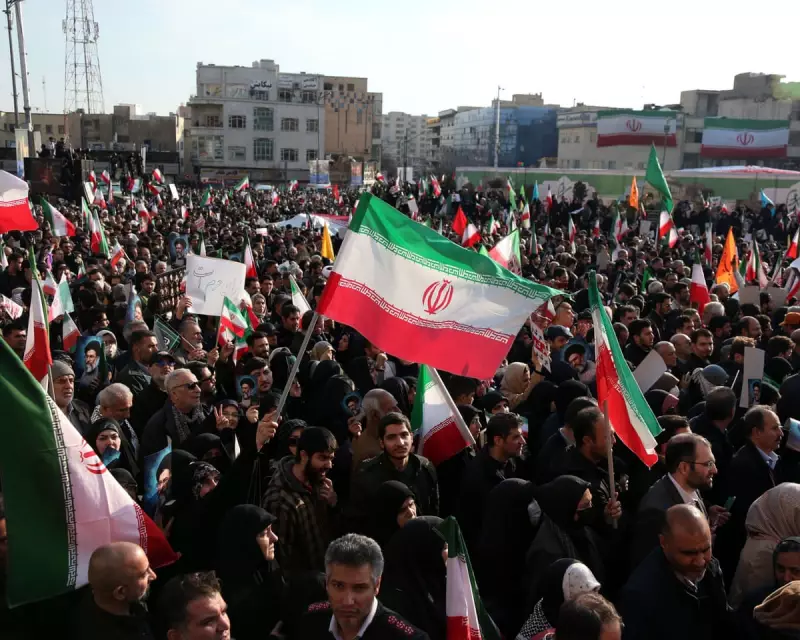
Medical staff in Iran's capital are facing a horrific influx of patients with severe gunshot wounds, as a major wave of anti-government demonstrations meets a violent security crackdown. An ophthalmologist in a single Tehran hospital has documented more than 400 cases of eye injuries caused by gunfire, with many victims suffering permanent blindness.
A Deliberate Strategy of Maiming
Doctors communicating with the Guardian have described a deliberate pattern in the injuries inflicted by security forces. The gunshot wounds are overwhelmingly concentrated on the heads and eyes of protesters, a tactic reminiscent of the 2022 Woman, Life, Freedom protests. One Tehran physician stated that security forces are intentionally aiming for these areas "so they can no longer see." The result has been a staggering number of enucleations, where the eye must be surgically removed.
Rights groups corroborate these accounts, accusing authorities of systematically using shotguns firing metal pellets and rifles with live ammunition to mutilate and terrorise the population. A spokesperson for the US-based Abdorrahman Boroumand Center for Human Rights said the evidence shows the Islamic Republic deliberately targets vital organs, "transforming these tools into instruments of systematic mutilation and permanent disability."

Protests Swell into a Major Movement
The current unrest, which began on 28 December following a sudden currency devaluation, has rapidly evolved into the most significant challenge to Iran's leadership since 2009. Tens of thousands have taken to the streets nightly across the country, chanting slogans like "death to the dictator" in reference to Supreme Leader Ayatollah Ali Khamenei.
The scale of the state's response has been severe. In an attempt to stifle communication and organisation, authorities imposed a nationwide internet and mobile blackout. Rights organisations allege this media blackout has been exploited to conduct a brutal suppression away from the world's eyes.
A Staggering and Underreported Human Cost
According to the US-based Human Rights Activists News Agency (HRANA), the toll is already devastating. More than 2,000 people have been killed, over 90% of whom were protesters, and over 16,700 have been arrested. This death toll, which is expected to rise, is already four times higher than that of the months-long 2022 protests sparked by Mahsa Amini's death.
However, medical professionals on the ground warn the true figures are likely far worse. Doctors report a sharp spike in casualties immediately after the internet was cut, suggesting a hidden wave of violence. One doctor described scenes akin to a war zone, with insufficient blood supplies and medical staff forced to treat the wounded in freezing outdoor conditions due to overcrowded hospitals.
Security forces have also been entering hospitals to arrest injured protesters, further complicating medical efforts and intimidating both patients and staff. The psychological toll on healthcare workers is immense, with one doctor reporting colleagues are "distressed, tired and horrified," often breaking down in tears.
Despite the ferocity of the crackdown, which has now entered its 17th day, protests show no sign of abating, with thousands continuing to gather each night. Yet, as one physician who left Iran noted, the images reaching the international media "do not represent even one percent of the reality," leaving the world vastly underestimating the human catastrophe unfolding within the country's borders.