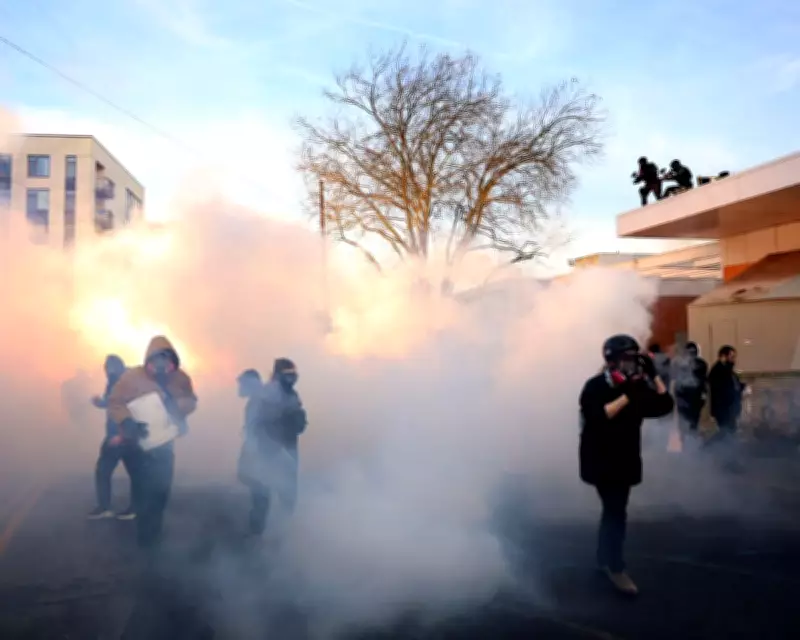
A federal judge in Oregon has issued a significant temporary restraining order, halting Immigration and Customs Enforcement (ICE) agents from using teargas and projectile munitions against protesters outside the agency's building in Portland. The ruling, delivered by US District Judge Michael Simon, comes after a weekend of intense clashes where federal officers fired chemical agents and less-lethal rounds into crowds that included children, described by local officials as peaceful prior to the escalation.
Judge's Ruling Targets Excessive Force
The order explicitly restricts federal officers from deploying chemical or projectile munitions unless the targeted individual poses an imminent threat of physical harm. Judge Simon further mandated that officers cannot aim at the head, neck, or torso unless legally justified in using deadly force. This 14-day restraining order responds to a lawsuit filed by the American Civil Liberties Union of Oregon on behalf of protesters and freelance journalists, arguing that ICE's actions chill First Amendment rights.
Plaintiffs Detail Harrowing Experiences
The court documents recount disturbing instances of alleged abuse. Laurie Eckman, an 84-year-old protester, was struck in the head by a pepper ball during a peaceful rally, resulting in a concussion and a blood-soaked walk home with her 83-year-old husband, Richard. Jack Dickinson, known for wearing a chicken costume at demonstrations, was pepper-sprayed directly in the face twice and shot in the back with munitions from close range, with teargas canisters burning holes in his attire.

Freelance journalists covering the events also faced aggression. Video journalist Mason Lake was maced and shot in the groin, while photojournalist Hugo Rios had his camera broken, was targeted with a teargas canister at his feet, and shot with pepper balls twenty times despite being alone in the area. The order condemns these actions, stating defendants treat peaceful Portlanders and journalists "as if they are enemy combatants".
Broader National Context and Criticism
This ruling intersects with a wider national debate over federal agents' use of force at protests. Similar legal battles have emerged in Minnesota and Chicago, where courts have grappled with restrictions on teargas and pepper spray. The issue gained urgency following incidents like the blinding of two demonstrators in Santa Ana, California, and a ProPublica investigation revealing over two dozen cases of immigration officers firing less-lethal munitions at vital body areas or into crowds with children.
Local Officials Condemn Federal Actions
Portland Mayor Keith Wilson has vocally criticised ICE, demanding the agency leave the city after what he termed a "peaceful daytime protest" met with chemical munitions. In a stark statement, he urged ICE employees to resign and decision-makers to reflect on gassing children. The protests in Portland are part of a nationwide wave against the Trump administration's immigration crackdown, with tragic outcomes in cities like Minneapolis, where federal agents recently killed two residents.
The temporary restraining order underscores a pivotal moment in policing protests, emphasising the need for restraint and accountability in federal law enforcement practices. As the 14-day period unfolds, all eyes will be on Portland to see if this judicial intervention curbs the violence that has marred these demonstrations.