Home Secretary Defends National Rollout of Live Facial Recognition to Police Forces
Home Secretary Shabana Mahmood has robustly defended controversial government plans to expand the use of live facial recognition technology to all police forces across England and Wales. The announcement comes despite an ongoing public consultation regarding the regulation of this surveillance tool, which is not due to conclude until mid-February.
"No True Liberty" Without Safety, Says Mahmood
In a radio interview with LBC, Ms Mahmood argued that public safety must be the paramount concern. "There is no true liberty if people are too scared of crime to leave their houses," she stated, framing the technology as a crucial tool for modern policing. She emphasised that while the system is not infallible, it represents "a really big opportunity" to pursue criminals and secure more convictions.
The Home Secretary drew parallels with other forensic evidence, stating: "In any criminal trial, it's part of a package of evidence, in the same way that fingerprinting would be or DNA would be. And we know, of course, none of these things are 100% bang-on perfect all the time. That's why evidence is tested in a court." She highlighted that the Metropolitan Police's use of the technology has already led to approximately 1,700 arrests.

Expansion Plans and Legal Framework
The sweeping reforms, announced on Monday, would see a significant increase in operational capacity:
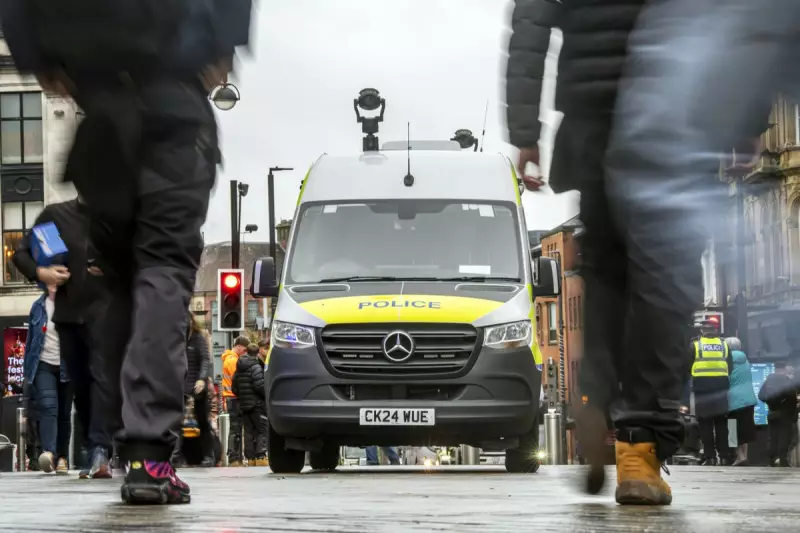
- The number of camera-equipped vans would rise from 10 to 50 nationwide.
- All police forces in England and Wales would gain access to the technology.
- The national rollout would adhere to the current standards established by the Metropolitan Police, who have utilised live facial recognition for several years.
Currently, the legal basis for deploying facial recognition is described as "piecemeal," relying on a combination of common law, data protection legislation, and human rights laws. The government's public consultation, launched in December, seeks to establish clearer regulatory frameworks for its use.
Civil Liberties and Accuracy Concerns Mount
The announcement has sparked immediate criticism from human rights organisations and political figures. Ruth Ehrlich, director of external relations at Liberty, accused the government of "undermining its own consultation" and showing "disregard for our fundamental rights."
She warned: "We have seen what happens when facial recognition technology is rolled out without clear safeguards: children are wrongly placed on watchlists, and black people are put at greater risk of being wrongly identified. These have created real harm to people's lives." Liberty has called for an immediate halt to the rapid rollout until robust guardrails are established.
Conservative MP Sir David Davis voiced similar apprehensions, pointing to documented lower accuracy rates for some ethnic minorities and invoking the Post Office scandal as a cautionary tale where courts "believed computers rather than people," potentially leading to miscarriages of justice.
Pilot Programme and Consultation Timeline
The technology is not entirely untested. An expanded pilot programme in November granted access to live facial recognition systems for several forces, including:
- Greater Manchester Police
- West Yorkshire Police
- Bedfordshire Police
- Surrey Police
- Sussex Police
- Thames Valley Police
- Hampshire Constabulary
These forces joined the Metropolitan Police, South Wales Police, and Essex Police, who were already using the technology. The government's 10-week public consultation on the use of live facial recognition was launched in December and is scheduled to finish on February 12, raising questions about the timing of the national rollout announcement.
As the debate intensifies, the government faces a delicate balancing act between leveraging technological advancements for public safety and addressing profound concerns over privacy, accuracy, and the protection of fundamental civil liberties.