Victoria Police have been granted unprecedented powers to conduct random stop-and-search operations across inner Melbourne for the next six months, raising significant concerns about racial profiling and civil liberties.
Unprecedented Expansion of Police Powers
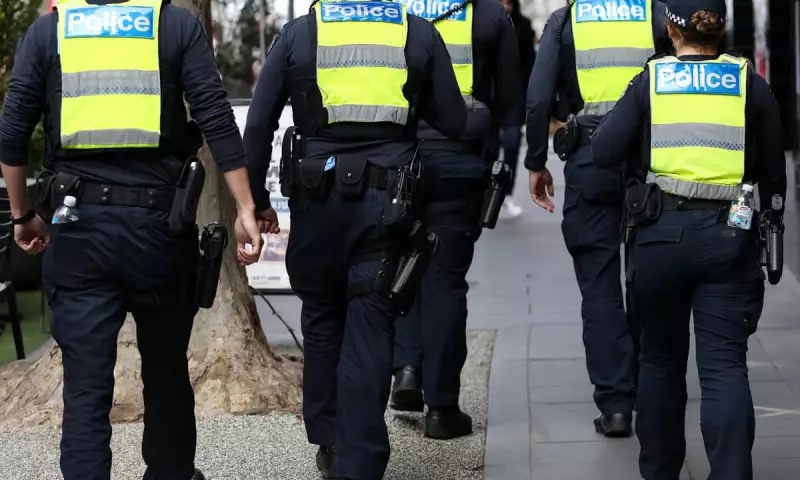
From Sunday until 29 May 2026, Victoria Police and Protective Service Officers (PSOs) will have authority to randomly stop and search any individual in designated areas of inner Melbourne without requiring a warrant or reasonable suspicion. The designated zone encompasses the CBD, Docklands, Southbank, the sporting and entertainment precinct, and parts of East Melbourne and South Melbourne.
Police can employ electronic wands or pat-down searches during these stops. Individuals may be required to remove outer clothing such as jackets and headwear, and empty bags or pockets. Vehicles within the area are also subject to search.

Victoria Police Deputy Commissioner Bob Hill compared the initiative to random breath testing, stating: "It matters not your ethnicity. It matters not your race. It matters not your culture, age, any demographic." He emphasised the focus would be on preventing specific crimes through general deterrence.
Racial Profiling Concerns and Research Findings
Despite police assurances, legal and human rights groups remain sceptical based on historical interactions between police and minority communities. Senator Lidia Thorpe has joined critics describing the powers as "outrageous."
A forthcoming report from the Inner Melbourne Community Legal (IMCL) centre reveals that Victoria Police's efforts to eliminate racial profiling have largely failed over the past decade. The research analyses the period since the force settled the landmark Haile-Michael case, where 19 young people of African background alleged assault and discriminatory stop-and-search practices between 2005 and 2009.
The report states: "It is time for the Victorian government to accept that the police cannot be left to deal with the problem of racial profiling." It calls for limiting discretionary powers and implementing effective oversight mechanisms.
Despite policies introduced to combat racial profiling, including a ban in the Victoria Police Manual and restrictions on "targeted interactions" without reasonable grounds, the report found no meaningful compliance monitoring and continued disproportionate targeting of non-white backgrounds.
Police Justification and Community Response
Deputy Commissioner Hill justified the six-month designation by citing "a number of serious assaults involving edged weapons" in the CBD over the past year. He revealed that during similar eight-hour operations, police have seized up to 20 edged weapons daily.
Hill estimated officers could search up to 1,000 people in a single day depending on pedestrian numbers. The Victorian government recently amended the Control of Weapons Act to extend designated area declarations from 12 hours to six months.
Nerita Waight, CEO of the Victorian Aboriginal Legal Service, condemned the expansion, stating there was "no reasonable rationale" for the measure. She expressed concern that vulnerable communities including homeless individuals, Aboriginal and Torres Strait Islander people, and peaceful protesters would be disproportionately affected.
Waight called for establishing a police ombudsman to ensure accountability, warning: "Melbourne is becoming a police state, with excessive layers of control and surveillance."