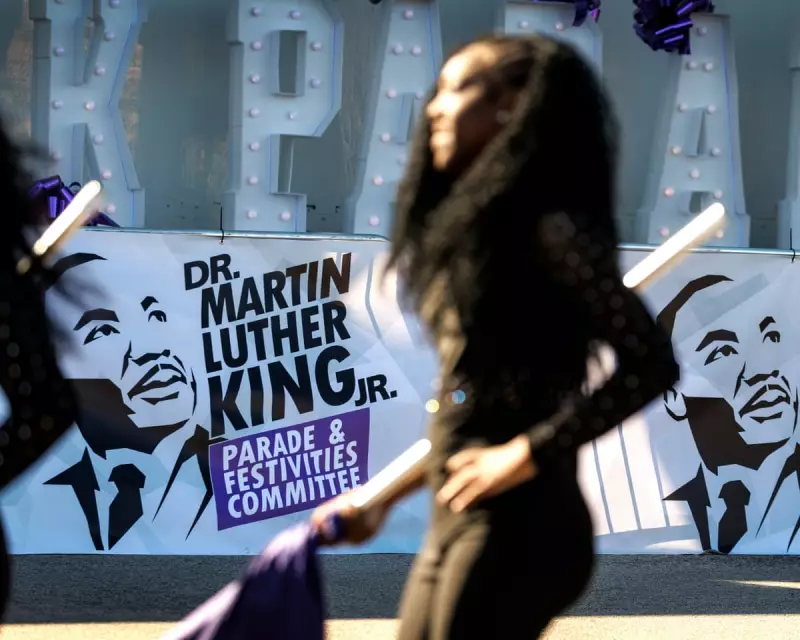
Communities across the United States marked Martin Luther King Jr Day on Monday with parades and church services, but the annual celebration of the civil rights icon's legacy was underscored by a palpable sense of political tension and fears for social justice.
A Day of Celebration Tempered by Anxiety
From the streets of Miami, Florida, to the National Mall in Washington D.C., citizens gathered to honour Dr King's life. However, speakers and participants framed the day not just as a remembrance, but as a urgent call to action. The celebrations coincided with the first anniversary of Donald Trump's inauguration for a second term, an administration that has rolled back diversity initiatives and launched aggressive immigration operations.
At a rally in Harlem, the Rev Al Sharpton directly referenced recent events, pointing to the case of Renee Good, a 37-year-old mother of three killed by an immigration officer in Minneapolis earlier this month. "We are in a state that Dr King would have been fighting against," Sharpton stated, criticising plans to send more ICE agents and the National Guard. He called for unity, urging supporters to "fight and make what should happen happen to preserve the dream of Dr King."

Economic Inequality and a "Radical Legacy"
In New York, the city's newly-installed mayor, Zohran Mamdani, addressed economic disparity at the Brooklyn Academy of Music's annual event. "While the city is wealthy beyond measure, it is also deeply unequal," he said, highlighting the gap between penthouse dwellers and those sleeping on sidewalks. He argued that King's legacy must be about rights people can actively exercise, not just those given to them.
This sentiment was echoed by activist groups. The Movement for Black Lives organised events in Atlanta, Chicago, and Oakland under the banner "Reclaim MLK Day of Action". Devonte Jackson, a national organising director for the coalition, said this year it was vital to "reclaim MLK’s radical legacy" and fight back against a "fascist regime."
Shifting Priorities and Cancelled Events
The political climate led to tangible changes in how the day was observed. The National Park Service announced it would no longer offer free admission on King Day or Juneteenth, instead offering it on Flag Day – which is also President Trump's birthday. Furthermore, several typical events were cancelled. A dinner at Indiana University was axed due to cited "budget constraints," though the Black Student Union suspected political pressures. A church in Westbrook, Maine, cancelled its service because ICE agents were reportedly in the area.
In Washington, hundreds marched along Martin Luther King Jr Avenue. Sam Ford, a retired broadcaster on the parade committee, summed up the mood: "The struggle continues." Parade participant Harold Hunter added, "It’s not just a white thing or Black thing. This is a people thing."
At the historic Ebenezer Baptist Church in Atlanta, where Dr King preached, Senator Raphael Warnock delivered a sermon. He accused the administration of "trying to weaponize despair" and later posted online, "You cannot remember Dr King and dismember his legacy at the same time."
Despite the sombre tone, traditions persisted. The National Civil Rights Museum in Memphis, located at the Lorraine Motel where King was assassinated on 4 April 1968, offered free admission. Museum president Russell Wigginton told the Associated Press the day was about recognising those who continue to make King's ideals real today.