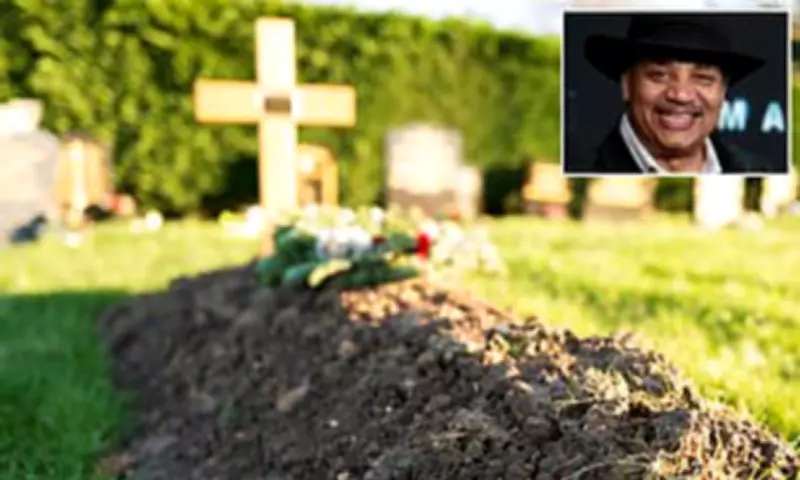
One of America's most popular scientists, Neil deGrasse Tyson, has revealed what happens after we die and why he chose burial over cremation. The famed astrophysicist, writer, and podcast host recently explained the science of death, detailing how the human body breaks down and is consumed by microbes and bacteria that feed on leftover chemical energy.
The Science of Energy After Death
Since scientists believe energy cannot be created or destroyed, Tyson noted that a person's body retains energy even after the heart and brain stop functioning. This energy mostly comes from the food consumed over a lifetime. There are two primary options for releasing this energy: cremation, which converts the body's remaining energy into heat that radiates into space, and traditional burial, which allows natural decomposition so Earth's microscopic organisms absorb the energy in a cycle of renewal between humans and nature.
Tyson's Choice: Burial
Tyson stated: 'That's my choice. So that the energy content of my body, which is still there when you die, your molecules were built up from your lifetime of eating and exercising and the building of your organs and your muscles and other tissue. In death, those molecules still contain energy. If I'm buried and I decompose, all that energy gets absorbed by microbes, by flora and fauna dining upon my body the way I have dined upon flora and fauna my whole life. In that way, giving back to the Earth.'

The Journey of Cremation
While the astrophysicist chose burial, he explained that cremation does not waste energy; instead, it sends a person's final journey further. The heat produced by cremation does not stay on Earth but radiates infrared energy into space at the speed of light. 'If they were cremated four years ago, they would have reached the nearest star system, Alpha Centauri. So that in a way you're still a part of the universe just in a different form,' Tyson detailed on his StarTalk podcast on March 31.
Grounded in the Laws of Science
Tyson's thoughts are based on the first law of thermodynamics, or the law of conservation of energy, which states that energy cannot be created or destroyed but only changed from one form to another. In natural burial, decomposition by bacteria, fungi, and other microbes breaks down proteins, fats, and carbohydrates, converting most chemical energy into heat that warms the soil. A small portion becomes new chemical energy in microbes, passing up the food chain. Cremation releases energy as radiation that travels through the cosmos.
Public Reaction
Tyson's comments have been viewed over a million times, sparking a conversation about how people want their remains handled. Many followers disagreed with his burial choice, with one saying, 'I will return to the stars,' and another noting that traveling to Alpha Centauri at light speed sounds more romantic than being eaten by bugs. Others countered that being recycled on Earth keeps the body a useful resource for billions of creatures and plants.
Some commenters pointed out that modern coffins may hinder microbes from reaching the soil. They suggested opting for a 'green burial,' where remains are placed directly in the ground without embalming chemicals, metal caskets, or concrete vaults. Families often plant a tree above the grave, allowing the decomposing body to release nutrients like nitrogen, phosphorus, and potassium into the soil, helping the tree grow strong.