Philippine Journalist Receives Lengthy Prison Term in Controversial Terrorism Financing Case
A court in the Philippines has convicted journalist Frenchie Mae Cumpio of financing terrorism and sentenced her to a minimum of twelve years imprisonment, in a ruling that has provoked widespread outrage among international media rights organisations. The verdict follows nearly six years of detention without trial for the 26-year-old reporter, whose case has become a focal point for advocates condemning what they describe as politically motivated prosecutions against critical voices.
Arrest and Allegations
Cumpio was arrested in February 2020 after soldiers conducted a late-night raid on her boarding house in the central Philippines. Authorities claimed to have discovered a grenade, a firearm, and a communist flag within her room. Her legal team has consistently maintained that these charges were "trumped up" and designed to target her journalistic work. In a handwritten note dispatched from prison last year, Cumpio herself dismissed the case as "a story that’s so absurd that if this was a class debate, you wouldn’t even try to rebut".
Court Verdict and Reaction
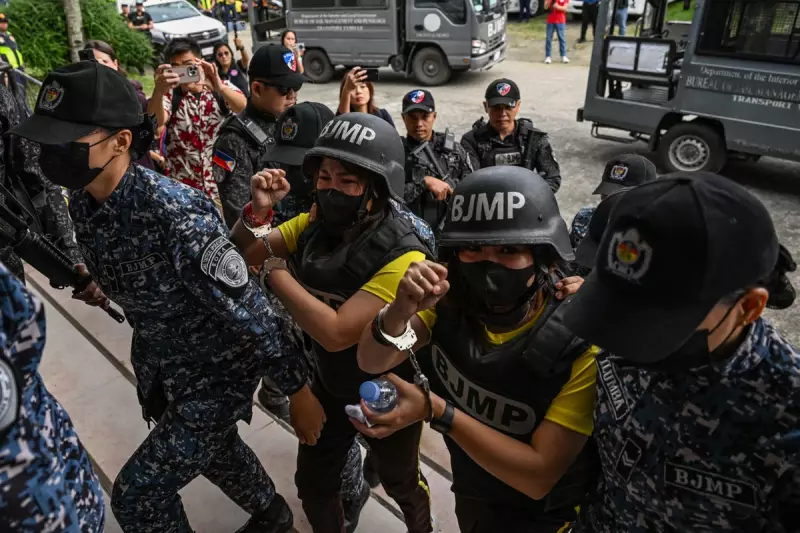
On Thursday 22 January 2026, after her prolonged pretrial detention, the court cleared Cumpio of charges related to the illegal possession of firearms and explosives. However, it found her guilty of financing terrorism, imposing a sentence that ensures she will remain incarcerated for at least the next twelve years. Her former roommate, Marielle Domequil, received an identical sentence. According to reports, both women broke down in tears and embraced as the verdict was delivered.

Atty Josa Deinla, one of Cumpio's lawyers, expressed profound concern to the BBC, stating: "We are deeply concerned about the implications of this conviction, considering that there are many other cases, and I would say, trumped up cases, of financing terrorism that are still being prosecuted all over the country." She emphasised the grievous consequences for community journalism, particularly for reporters working on the fringes who highlight conditions in rural areas where the poorest populations reside.
Background and 'Red-Tagging'
Campaigners argue that Cumpio was specifically targeted due to her reporting on alleged abuses by security forces in the Eastern Visayas region. This practice, known locally as "red-tagging", involves accusing journalists and activists of links to communist rebels to facilitate prosecution. Observers note this tactic became increasingly prevalent during the presidency of Rodrigo Duterte (2016-2022). Before her arrest, Cumpio reported extensively for the online outlet Eastern Vista, where she previously served as director, and hosted a radio programme on Aksyon Radyo-Tacloban DYVL.
International Condemnation
The conviction has drawn sharp international condemnation. In September last year, 250 journalists from across the globe urged Philippine President Ferdinand Marcos Jr to intervene. Beh Lih Yi, Asia-Pacific director of the Committee to Protect Journalists, declared: "This absurd verdict shows that the various pledges made by president Ferdinand Marcos Jr to uphold press freedom are nothing but empty talk. The ruling underscores the lengths that Philippine authorities are willing to go to silence critical reporting."
Aleksandra Bielakowska, Reporters Sans Frontiers (RSF) Asia-Pacific Bureau Advocacy Manager, stated: "We are appalled by this verdict. The RSF investigations and evidence presented in court by Frenchie Mae Cumpio’s lawyers clearly show how fabricated this case has been from the very beginning." She described the conviction as a devastating failure of the Philippine justice system and a blatant disregard for press freedom, calling for President Marcos Jr to act immediately to secure Cumpio's release.
Irene Khan, the UN Special Rapporteur on freedom of expression and opinion, had previously demanded accountability, expressing alarm at the length of Cumpio's pretrial detention. The journalist's case was also listed among the One Free Press Coalition’s "10 Most Urgent" press freedom cases of the past year.

Broader Context and Risks for Journalists
Local independent media group Altermidya condemned the ruling as "a miscarriage of justice", while the International Association of Women in Radio and Television in the Philippines labelled it "a blatant act of state-sponsored silencing". The case is part of the "Tacloban Five" prosecutions, involving Cumpio, Domequil, and three others charged in the coastal city of Tacloban; cases against the remaining defendants are still pending.
According to Reporters Without Borders, the Philippines remains one of the world's most dangerous countries for journalists, with community reporters facing particular risks. The organisation's 2025 World Press Freedom Index ranked the Philippines 116th out of 180 countries and territories, assessing press conditions as "difficult". The profession's perils were starkly illustrated in 2009 by the Maguindanao massacre, where 58 people, most of them journalists, were murdered to prevent a political challenge.
This conviction sends a chilling message about the state of press freedom and judicial independence in the Philippines, highlighting systemic issues that require urgent and comprehensive reform according to international observers and human rights advocates.