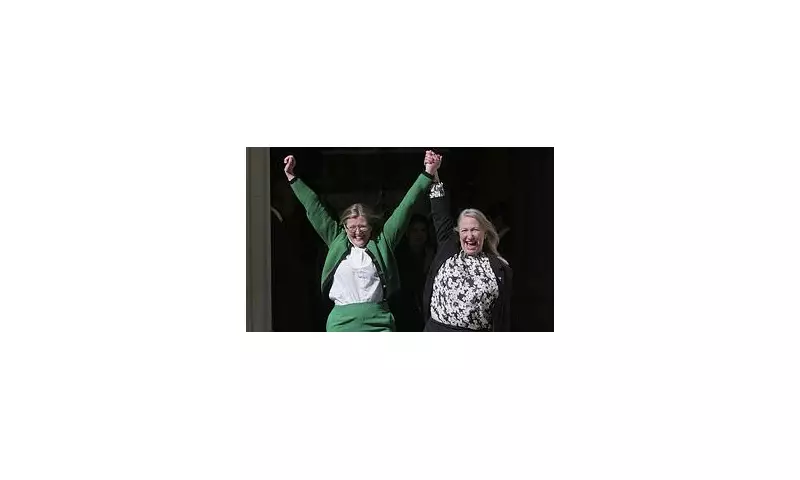
Staff at a JD Wetherspoon pub in Edinburgh refused to serve two gender-critical campaigners who were celebrating a major legal victory, it has been revealed. The incident occurred after the Supreme Court delivered a landmark judgment on the definition of a woman.
Celebration Snubbed in Edinburgh Pub
Susan Smith and Marion Calder, the co-leaders of the feminist group For Women Scotland, had travelled back to Edinburgh by train following the court's decision. They headed to a local branch of the pub chain to raise a glass to the ruling, which stated that the terms 'woman' and 'sex' in the Equality Act refer to biological sex.
However, upon recognising the women, several employees at the pub declined to serve them. Marion Calder, a 54-year-old NHS worker, promptly contacted a local journalist, exclaiming, "you'll never guess what's happened here at Spoons". The journalist then alerted Wetherspoon's communications manager, who called the branch manager.

Ms Calder later told The Times that after this intervention, the protesting staff members left their posts and "we got more drinks in".
Leadership Response and Wider Political Context
Sir Tim Martin, the founder and chairman of JD Wetherspoon, addressed the event, describing it as an "initial hiccup". He told The Telegraph, "If you win a court case, especially a Supreme Court case, you would expect to be allowed to celebrate in a pub, so glad they were able to do so – albeit after an initial hiccup."
The controversy unfolds against a backdrop of political delay in Westminster. Labour's Women and Equalities Secretary, Bridget Phillipson, has held back the publication of new official guidance from the Equality and Human Rights Commission (EHRC) for over three months. This guidance, drafted after April's Supreme Court ruling, would instruct businesses and public bodies on protecting single-sex spaces like women's toilets and changing rooms.
Ms Phillipson has branded the draft proposals "trans-exclusive" and criticised them in a High Court submission. She argues the guidance could unfairly exclude transgender women and have unintended consequences, such as preventing women from taking young sons into changing rooms.
Ongoing Legal Confusion and Calls for Clarity
The delay in issuing the EHRC guidance means hospitals, businesses, and other organisations currently lack clear instructions on applying the Supreme Court's ruling. There is no enforceable requirement to exclude biological males from women's spaces.
This legal ambiguity was highlighted earlier this month by an employment tribunal ruling that appeared to contradict the Supreme Court judgment. The tribunal found it was lawful for a biological male to use a female changing room in a case involving nurse Sandie Peggie.
Ms Calder called that tribunal decision "very concerning" and urged Labour leader Sir Keir Starmer to "show some leadership" on women's rights. She stated, "The reason we took our case to the Supreme Court was to stop individuals having to take these tribunal cases... But here we are, and the cases continue."
The incident at the Edinburgh Wetherspoon pub underscores the deep societal and political divisions surrounding gender identity and single-sex spaces in the UK, tensions that continue to play out in courts, pubs, and the corridors of Whitehall.