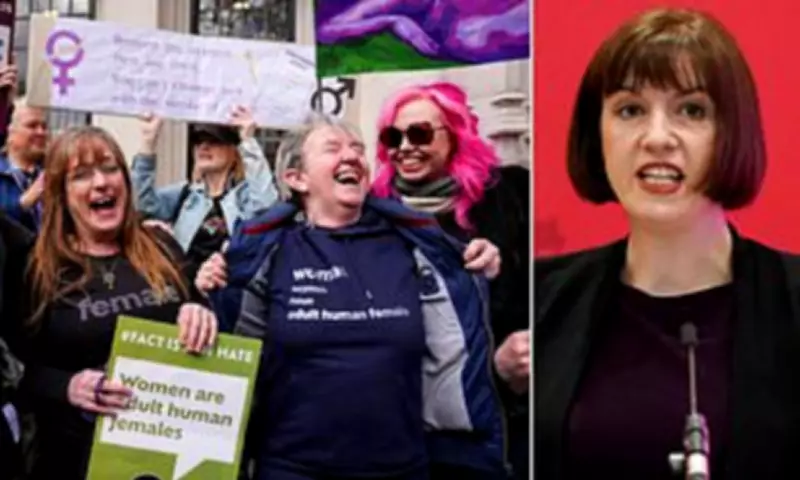
Widespread Non-Compliance Marks First Anniversary of Landmark Gender Ruling
On the first anniversary of the Supreme Court's landmark decision clarifying the definition of 'woman' in the Equality Act, hundreds of public bodies across the United Kingdom continue to defy the ruling. The judgment, delivered unanimously last April, specified that the term 'woman' refers exclusively to biological sex rather than self-identification or gender recognition certificates.
Damning Audit Reveals Systemic Failure
A comprehensive Daily Mail audit has uncovered that NHS trusts, police forces, town halls, and Whitehall departments are systematically failing to comply with the legal requirement. The investigation found nearly 400 organizations maintaining outdated policies that permit trans-identifying biological males to access women-only spaces including changing rooms, toilets, hospital wards, and changing facilities.
Critics have described the findings as 'inexcusable' and evidence of 'complete disregard for the law', with women's rights campaigners warning that this non-compliance has inflicted 'untold harm to women and girls' across the nation.

Government Guidance Delayed Amid Political Tensions
Ministers have been withholding guidance from the Equality and Human Rights Commission (EHRC) since September regarding how to enforce the Supreme Court ruling. Many audited organizations claim they are effectively in limbo due to this governmental delay, though critics argue the law is already clear and requires immediate implementation.
Tory leader Kemi Badenoch stated emphatically: 'A year after the Supreme Court's clear ruling, too many public bodies are acting as if the law is optional because Labour has failed to lead. The law is not optional – it must be enforced.'
Specific Sector Failures Documented
The audit revealed particularly alarming statistics across different public sectors:
- NHS Trusts: 97% of 190 NHS trusts in England with inpatient facilities maintain policies allowing biological males identifying as women to use female-only spaces
- Local Councils: More than half of England's 317 town halls are failing to comply with the court ruling
- Police Forces: Over 20 of 43 police forces in England and Wales have not updated policies, allowing transgender staff and detainees to choose facilities
- Whitehall Departments: Internal civil service guidance remains 'under review' with no departments confirming compliance
Legal Implications and Practical Consequences
The Supreme Court judgment has significant implications for single-sex spaces across the UK, affecting services including:
- Rape crisis centers and domestic violence refuges
- Female-only hospital wards and changing facilities
- Sports clubs and recreational facilities
- Educational institutions and workplace environments
The ruling clarified that service providers are legally required to enforce single-sex spaces based on biological sex, applying to any organization providing public services including shops, gyms, government departments, the NHS, policing, prisons, hotels, restaurants, theaters, cinemas, and hospitals.
Campaigners Express Outrage and Concern
Susan Smith, founder of For Women Scotland which secured the landmark ruling, expressed shock at the ongoing non-compliance: 'It's shocking that public bodies are using the discredited excuse that they need to wait for guidance to follow the law. They don't. The ruling is crystal clear and the EHRC has stated over and again that delay is unacceptable.'
Helen Joyce of the Sex Matters charity added: 'The failure of public bodies to adopt policies based on biological sex has caused untold harm to women and girls. Nobody – including public bodies – needs to wait for the EHRC guidance. It's the law.'
Political Responses and Future Outlook
Equalities minister Bridget Phillipson has indicated she aims to publish the EHRC guidance next month, though critics have accused her of prioritizing personal political ambitions. Former EHRC boss Baroness Falkner revealed she had no conversations with the minister about the guidance between September and November when she stepped down from the commission.

Amid the ongoing controversy, the government maintains its position: 'We have always supported the protection of single-sex spaces based on biological sex. The Supreme Court's ruling last year brings clarity for women and service providers.'
As the first anniversary passes, the gap between legal requirement and practical implementation continues to widen, with hundreds of public bodies effectively operating outside the Supreme Court's definitive ruling on biological sex definitions in the Equality Act.