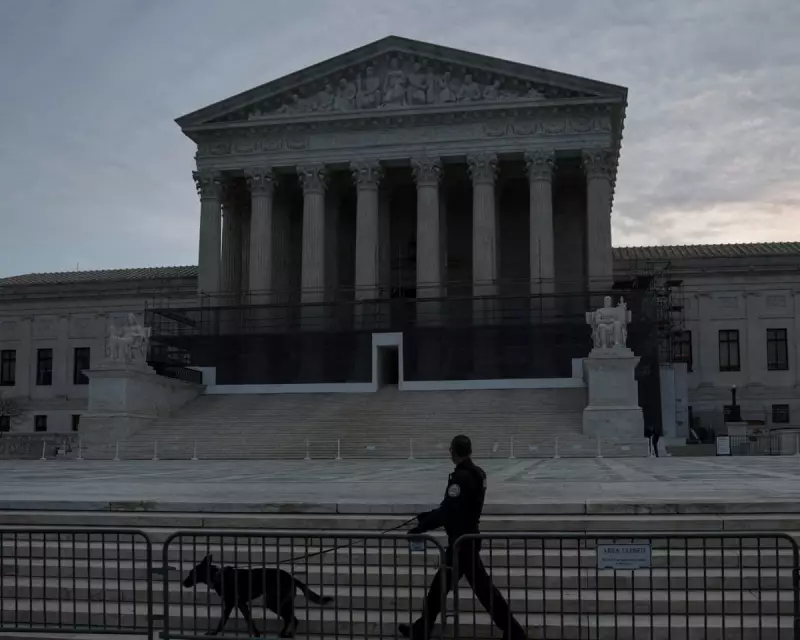
The United States Supreme Court is set to hear a significant challenge to one of Hawaii's strictest gun control laws this week, in a case that could have far-reaching implications for firearm regulations across the nation.
The Core of the Legal Dispute
The justices will scrutinise the legality of a Hawaiian state law that prohibits individuals from bringing firearms onto private property that is open to the public, unless they have obtained explicit permission from the property owner. The case, known as Wolford v Lopez, was initiated by three residents of Maui who hold concealed-carry permits, alongside a local gun advocacy organisation.
This legal battle follows the Supreme Court's pivotal 2022 ruling in New York State Rifle & Pistol Association v Bruen. In that decision, the court affirmed that the Second Amendment encompasses a right to carry concealed and loaded handguns in public. Prior to the Bruen ruling, Hawaii's county police chiefs had issued a mere six permits for public gun carry over a span of 21 years, according to reports from Hawaii Public Radio.

Hawaii's Response and the Ensuing Legal Fight
In the wake of the Bruen decision, Hawaii's legislature passed a new law designed to allow more people to carry concealed firearms. However, it simultaneously instituted bans on carrying in locations deemed "sensitive places," such as beaches, banks, and restaurants that serve alcohol.
The Maui residents and gun group subsequently filed a lawsuit, contending that these restrictions infringed upon their Second Amendment right to bear arms. A federal judge in Hawaii sided with them in part, issuing a temporary order that blocked the state from enforcing certain aspects of the law. The judge noted the state had failed to "establish a factual basis" for public safety concerns specifically regarding permit-holders.
This decision was later partially reversed by an appeals court. The higher court determined that Hawaii could not ban firearms in banks and some parking lots, but could maintain restrictions at bars, alcohol-serving restaurants, beaches, and parks. The appeals court opinion stated that some, but not all, of the designated places likely fell within the "national tradition of prohibiting firearms at sensitive places."
A Narrow Question for the Supreme Court
The Supreme Court has agreed to hear the case but will focus on a single, specific provision: the default rule that firearms cannot be carried on private property open to the public unless the owner gives verbal consent or posts a sign explicitly allowing them. Similar laws exist in California, Maryland, New York, and New Jersey.
In its defence, the state of Hawaii has told the justices that its restrictions aim to balance the right to bear arms with property owners' "undisputed right" to decide whether to allow armed individuals onto their premises. The plaintiffs, however, argue that Hawaii is attempting to circumvent the constitutional rights recognised in the Bruen ruling.
With a six-three conservative majority on the bench, legal observers suggest the court is more likely to overturn the Hawaiian ban. The outcome will be closely watched, as it tests the limits of state power to regulate firearms following the expansive Bruen decision.
Hawaii is ranked sixth in the nation for the strictness of its gun laws by the group Everytown for Gun Safety. Correspondingly, the state has the fifth-lowest rate of firearm deaths in the US, according to 2023 data from the Centers for Disease Control and Prevention (CDC).