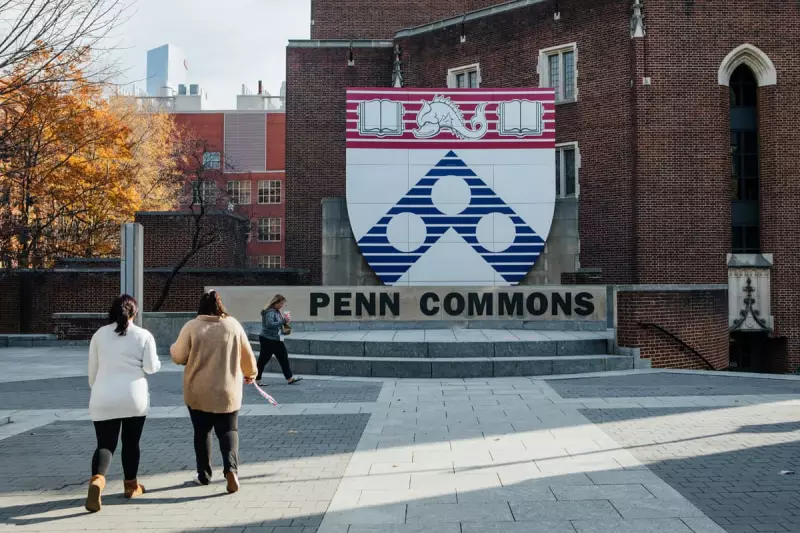
The University of Pennsylvania has issued a forceful condemnation of former US President Donald Trump, labelling his recent call for a list of Jewish students on campus as blatantly antisemitic. The controversy erupted from a post on Trump's Truth Social platform and has ignited a fierce debate about the boundaries of political speech and the protection of minority groups within academic institutions.
The Provocative Social Media Post
On Monday, Donald Trump used his social media channel to make a series of claims about the prestigious Ivy League university. He asserted that the institution was dominated by "Radical Left Lunatics" who had taken over its leadership and student body. The most incendiary part of his statement was a direct challenge: he demanded the names of Jewish students attending UPenn, implying they should be listed separately.
The former president wrote: "They should make a list of the Jewish students attending UPenn. You will find that 99% of them are not in favour of Israel's actions, but of Hamas." This characterisation, suggesting near-universal Jewish student support for the militant group, was immediately met with outrage and disbelief from the university community and beyond.

University Leadership's Swift Rejection
The response from UPenn's administration was swift and unequivocal. In a public statement, the university's leadership firmly rejected Trump's assertions. They clarified that the institution does not maintain, nor would it ever compile, registries based on religious belief or identity.
The statement emphasised: "We do not create lists of our community members based on their religious identity. Such a notion is abhorrent and fundamentally contrary to our values." The university officials went further, explicitly connecting Trump's rhetoric to historical acts of persecution, stating his words evoked "a dangerous trope" used to justify antisemitism throughout history.
This strong rebuke places UPenn firmly at the centre of a growing national conversation in the US about campus politics, free speech, and the rise of reported antisemitic and anti-Muslim incidents since the outbreak of the Israel-Hamas war in October.
Broader Context and Ongoing Tensions
This incident does not exist in a vacuum. The University of Pennsylvania has been navigating intense internal divisions for months. These tensions came to a head last autumn when the university's then-president, Liz Magill, resigned following a contentious congressional hearing. The hearing focused on allegations that the university had not done enough to address antisemitism on campus.
Trump's post appears to be a direct intervention into this ongoing crisis. By demanding a list of Jewish students, his comments have been interpreted by critics as an attempt to inflame existing divisions and to question the loyalties of American Jews based on their views on Israel. The university's forceful condemnation is seen as an effort to defend its community and to distance itself from rhetoric it views as not only false but deeply harmful.
The fallout continues to develop, highlighting the precarious balance universities must strike between upholding free speech principles and protecting students from hateful rhetoric. As political figures increasingly wade into campus culture wars, institutions like UPenn find themselves on the front lines, tasked with defending their core academic values against powerful external pressures.